

Whether you’re curled up on the couch after a chilly day or gathering friends for a quick lunch, Spicy Miso Ramen delivers a warm, vibrant hug in a bowl. This cozy noodle soup features a silky broth that’s been infused with fermented miso, a hint of sesame oil, and a fiery punch of chili paste—each spoonful sings with balanced heat and umami richness. Layered over fresh ramen noodles, tender shiitake mushrooms and cubes of silken tofu soak up that savory broth, while crisp spinach and steamed bok choy add pops of bright green freshness. Halved soft-cooked eggs float on the surface, their golden yolks blending luxuriantly into the soup with every stir, and a garnish of chopped green onions, sesame seeds, and crisp nori strips brings playful textures and a final flourish of flavor that makes you want to dive right in.
Crafting this Spicy Miso Ramen is a joy in itself, striking the perfect balance between rewarding and approachable for home cooks with an intermediate skill level. With just twenty minutes of prep and thirty minutes of simmering magic, you can go from pantry to piping hot bowl in about an hour when you factor in a ten-minute rest time. This recipe yields roughly 600 calories per serving and works beautifully for both lunch and dinner. Feel free to swap in vegetable broth if you want to keep things vegetarian, or toss in slices of chicken or pork belly for extra protein. Adding extra veggies like corn, carrots, or bamboo shoots is a breeze, so you can make this bowl truly your own. Whether you’re chasing down comfort on a winter evening or spicing up a weeknight meal, this homemade ramen promises layers of flavor and plenty of reasons to slurp with delight.
KEY INGREDIENTS IN SPICY MISO RAMEN
Every memorable bowl of Spicy Miso Ramen hinges on a handful of core ingredients that work together to build an unforgettable harmony of flavor, texture, and aroma. From the soul-warming broth to the vibrant green garnishes, each component plays a vital role in turning simple staples into a restaurant-worthy dish you’ll crave again and again.
- Chicken broth: Provides a deep, savory base that carries the rich miso and spicy chili notes.
- Water: Balances the intensity of the broth and prevents it from becoming overly salty.
- Miso paste: Anchors the soup with fermented umami complexity, offering depth and a subtle sweetness.
- Soy sauce: Enhances the savory profile while adjusting saltiness to perfection.
- Sesame oil: Delivers a nutty aroma and smooth mouthfeel, rounding out the broth.
- Chili paste: Injects the dish with heat and a vinegary kick—Sambal Oelek or your favorite variety works wonders.
- Grated ginger: Adds bright, zesty warmth that cuts through the richness.
- Minced garlic: Lends a pungent, comforting edge that melds seamlessly with the ginger.
- Fresh ramen noodles: Silky and springy, they soak up every bit of flavorful broth.
- Sliced mushrooms: Shiitake or your choice infuse earthy depth and a chewy contrast.
- Cubed tofu: Absorbs the broth’s essence and brings a gentle, creamy protein element.
- Spinach leaves: Wilt quickly for a tender, verdant bite.
- Bok choy: Offers crisp stems and soft leaves, elevating texture variety.
- Eggs: Soft-cooked centers burst with luscious yolk, enriching each spoonful.
- Green onions: Brighten the finished bowl with a fresh, oniony pop.
- Sesame seeds: Add a toasty crunch and visual interest.
- Nori sheets: Crisp strips lend a hint of oceanic flavor and decorative flair.
HOW TO MAKE SPICY MISO RAMEN
Before diving into the step-by-step process, let’s talk about how the magic unfolds. You’ll first build a robust, umami-packed broth, then prepare the noodles, eggs, and fresh vegetables. By layering flavors and textures thoughtfully, each element shines—culminating in a bowl that’s greater than the sum of its parts.
1. In a large pot, combine the chicken broth and water. Bring to a simmer over medium heat, allowing the liquid to gently bubble before adding other ingredients.
2. Add in the miso paste, soy sauce, sesame oil, and chili paste. Use a whisk or spoon to stir until the miso is fully dissolved, creating a harmonious, seasoned base.
3. Incorporate the grated ginger and minced garlic, letting them infuse the broth for a few minutes. Their aromatic oils will mingle, building layered warmth in the soup.
4. Add the sliced mushrooms and cubed tofu, letting them gently simmer in the broth for about 5 minutes. This soft-cooking phase allows them to soak up savory flavors.
5. In a separate pot, bring water to a rolling boil and cook the ramen noodles according to package instructions (usually 3–4 minutes). Drain and set aside, ensuring they stay springy and separate.
6. Gently place the eggs into another pot of boiling water. Set a timer for 6 minutes to achieve a soft-cooked center. Remove eggs and immediately transfer them to an ice bath to halt cooking. Once cooled, peel and slice each egg in half.
7. Add the spinach and bok choy to the simmering broth, cooking just until they wilt—about 1–2 minutes—so they remain bright and tender.
8. To assemble, place a serving of noodles into each bowl. Pour the spicy miso broth with tofu, mushrooms, and greens over the noodles, ensuring even distribution.
9. Top each bowl with a halved egg, slices of green onion, a sprinkle of sesame seeds, and nori strips for visual appeal and textural contrast.
10. Serve hot and enjoy your homemade Spicy Miso Ramen, savoring each layered spoonful!
SERVING SUGGESTIONS FOR SPICY MISO RAMEN
When it’s time to bring your steaming bowls of Spicy Miso Ramen to the table, presentation and accompaniments can elevate the experience from satisfying to spectacular. Serve directly in deep ramen bowls that showcase the vibrant layers, and encourage diners to customize their bowls further with extra toppings. Pair the ramen with light, refreshing sides to balance the heat and richness, such as a crisp cucumber salad or a simple pickled vegetable dish. Dim the lights for an intimate vibe or crank up lively music to turn dinner into a casual gathering. Don’t forget to have both soup spoons and chopsticks on hand—this dual utensil approach allows guests to scoop rich broth and pick up noodles or garnishes with ease. Finally, serve your ramen while it’s scorching hot so the noodles remain perfectly springy and the broth retains its steamy allure; letting it cool too much can make the noodles gummy and dull the aromas you’ve worked so hard to build.
- Chilled sides: Offer a small bowl of chilled cucumber ribbons dressed lightly with rice vinegar and sesame oil to refresh the palate between spicy bites.
- Pickled vegetables: Serve quick-pickled carrots or daikon for a tangy counterpoint, adding brightness and texture.
- Garnish station: Lay out extra toppings like sliced chilies, lime wedges, and toasted sesame seeds so guests can personalize their bowls.
- Beverage pairing: Complement the ramen with an iced green tea or a light, crisp lager to soothe the spice and cleanse the palate.
HOW TO STORE SPICY MISO RAMEN
Leftovers of Spicy Miso Ramen can be a treat—provided you store them correctly to preserve that hard-earned depth of flavor. Since noodles tend to absorb liquid over time, it’s best to separate components if you know you’ll be reheating later. Transfer the broth and solids into one airtight container, and keep noodles in another, so they hold their springy texture. Label each container with the date and refrigerate promptly, ideally within two hours of cooking to maintain food safety. For longer storage, freeze the broth (without the fresh greens, which can become mushy) in a freezer-safe bag or container, leaving some headspace for expansion. When you’re ready to enjoy leftovers, gently reheat the broth on the stove until it simmers again, then briefly blanch the noodles and wilt fresh spinach or bok choy to restore that just-cooked quality. Eggs can be stored peeled in a separate container for up to four days, but you may prefer to boil fresh ones for the best yolk texture.
- Refrigeration: Store broth, solids, and noodles separately in airtight containers; consume within 3–4 days for best quality.
- Freezing: Freeze only the broth in a freezer-safe container, leaving space for expansion; thaw overnight in the fridge before reheating.
- Noodle revival: Briefly dunk cold noodles in boiling water for 30 seconds to bring back their original springiness.
- Fresh garnishes: Keep green onions and nori strips at room temperature in sealed bags; add them just before serving to maintain their crunch.
CONCLUSION
We’ve journeyed from the moment you first simmer chicken broth and water to that gratifying slurp of spicy, miso-laced soup crowned with tender noodles, mushrooms, tofu, leafy greens, and a perfectly soft-cooked egg. You now have an intermediate-level recipe that’s adaptable for vegetarians, customizable with extra veggies or proteins, and structured around roughly one hour of active and rest time—20 minutes to prep, 30 minutes to cook, and 10 minutes to let flavors marry. With approximately 600 calories per serving, this Spicy Miso Ramen fits beautifully into both lunch and dinner rotations, offering a soul-warming, umami-packed escape on any given night. Feel free to print this article and save it in your recipe binder for those days when only a steaming bowl of homemade ramen will do. You’ll find a handy FAQ section below to address common questions, from adjusting heat levels to making it fully plant-based.
If you’ve made this ramen, I’d love to hear how it turned out! Comments, questions, or feedback are always welcome. Did you try adding extra veggies like corn or carrots? Or maybe you experimented with a different broth base? Drop a note below and let me know how you personalized your bowl—or ask for tips if you hit any snags along the way. Your cooking journey and stories make this kitchen community vibrant, and I can’t wait to read about your Spicy Miso Ramen adventures!
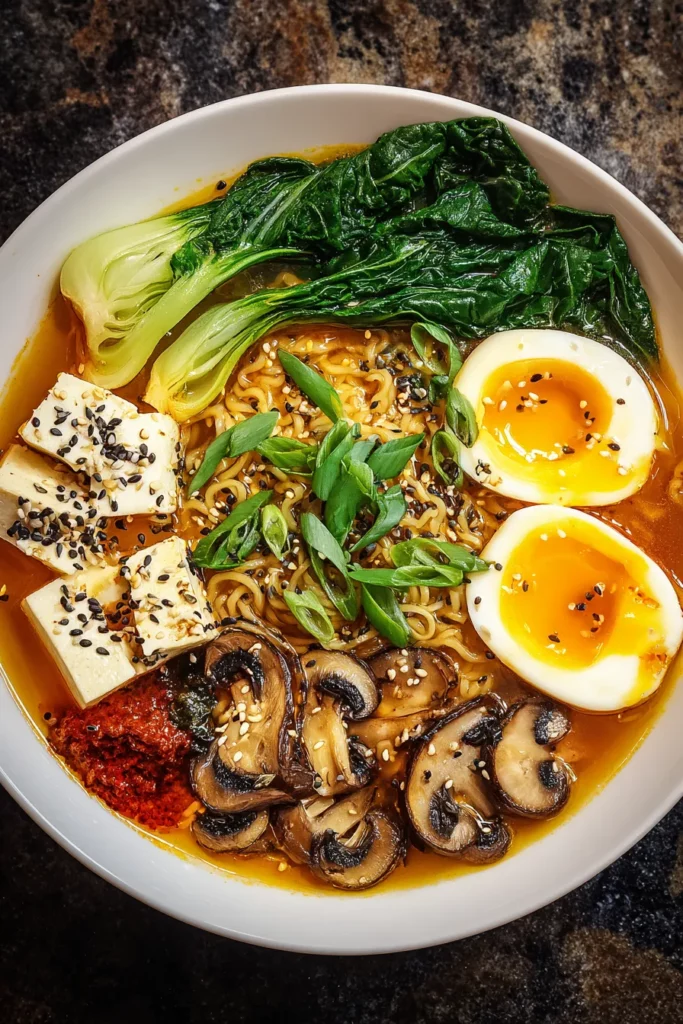

Spicy Miso Ramen
Description
This spicy miso ramen bursts with umami flavors, featuring silky noodles, savory broth, and a medley of fresh veggies that create a comforting bowl of goodness.
Ingredients
Instructions
-
In a large pot, combine the chicken broth and water. Bring to a simmer over medium heat.
-
Add in the miso paste, soy sauce, sesame oil, and chili paste. Stir to dissolve the miso thoroughly.
-
Incorporate the grated ginger and minced garlic, allowing the flavors to meld together.
-
Add the sliced mushrooms and cubed tofu, letting them simmer in the broth for about 5 minutes.
-
In a separate pot, boil water and cook the ramen noodles according to package instructions, usually for about 3-4 minutes. Drain and set aside.
-
Gently place the eggs in the boiling water for 6 minutes for a soft-cooked center. Remove them and place them in an ice bath. Once cooled, peel the eggs and slice them in half.
-
Add the spinach and bok choy to the broth, cooking just until they wilt.
-
To assemble, place a serving of noodles in each bowl. Pour the spicy miso broth with tofu, mushrooms, and greens over the noodles.
-
Top each bowl with a halved egg, slices of green onion, sesame seeds, and nori strips.
-
Serve hot and enjoy your homemade Spicy Miso Ramen.
Note
- Miso paste varies in saltiness, so adjust the soy sauce accordingly for taste.
- Feel free to add extra vegetables like corn, carrots, or bamboo shoots for more variety.
- This dish can be made vegetarian by substituting the chicken broth with vegetable broth.
- For an extra kick, consider adding a sprinkle of red pepper flakes.
- If you prefer meat, you can add sliced chicken or pork belly.

