

Braised Short Rib Ragu Pasta is the ultimate comfort dinner that marries melt-in-your-mouth beef with a rich tomato-infused sauce. Tender short ribs braise low and slow until they effortlessly shred, soaking up savory bay, rosemary, and thyme notes. Twirl thick pappardelle or rigatoni through this glossy ragù, finish with a shower of Parmigiano-Reggiano, and you’ve got a dish that feels like a warm hug on a plate—perfect for any cozy night in.
Key Ingredients
To bring this Braised Short Rib Ragu Pasta to life, you’ll need quality meats, aromatic vegetables, herbs, and pasta that can stand up to the hearty sauce:
- 3 lb (1.4 kg) bone-in beef short ribs, English cut (about 6–8 pieces): Rich, marbled meat that braises until melt-in-your-mouth tender, forming the backbone of the ragu.
- 2 tsp kosher salt: Enhances flavor and draws out moisture for better seasoning.
- 1 tsp freshly ground black pepper: Provides a sharp, earthy kick that complements the beef.
- 2 tbsp olive oil: Creates a nonstick surface for perfect browning and sautéing.
- 1 large yellow onion, finely diced: Adds sweetness and depth as it softens and caramelizes.
- 2 medium carrots, finely diced: Lends natural sweetness and vibrant color to the base.
- 2 celery stalks, finely diced: Offers aromatic crunch that breaks down into a silky texture.
- 4 cloves garlic, minced: Imparts its signature aromatic punch when added at the right moment.
- 2 tbsp tomato paste: Concentrates tomato umami, giving the ragu its deep, savory base.
- 1 cup (240 ml) dry red wine (Chianti, Cabernet, or similar): Deglazes the pan and infuses fruity tannins.
- 1 can (28 oz / 800 g) crushed tomatoes: Forms a lush, tangy body for the sauce.
- 1 1/2 cups (360 ml) beef stock or broth (low sodium): Builds savory depth and adjusts sauce consistency.
- 2 bay leaves: Provide subtle herbal warmth that rounds out the flavors.
- 2 sprigs fresh rosemary (or 1 tsp dried rosemary): Infuses a piney aroma that pairs beautifully with beef.
- 4 sprigs fresh thyme (or 1 tsp dried thyme): Adds a delicate, floral herbal note.
- 1 tsp sugar (optional, to balance acidity): Smooths out tomato sharpness for a well-rounded taste.
- 1/4 tsp red pepper flakes (optional, for a gentle heat): Introduces a subtle kick without overwhelming.
- 1–2 tbsp butter (unsalted), at room temperature: Enriches the sauce with a silky finish when stirred in at the end.
- 1–2 tbsp heavy cream (optional, for a silkier sauce): Softens acidity and adds luscious richness.
- Salt and pepper to taste: Final seasoning adjustments to achieve perfect balance.
- 1 lb (450 g) thick pasta, such as pappardelle, tagliatelle, rigatoni, or mafaldine: Ideal for holding onto every bit of the hearty ragu.
- 2–3 tbsp kosher salt (for pasta water): Seasons the pasta from within for maximum flavor.
- 1/2–3/4 cup (120–180 ml) reserved starchy pasta water: Helps emulsify and thicken the sauce for a clingy finish.
- 1/2 cup (50 g) freshly grated Parmigiano-Reggiano cheese, plus more at the table: Adds a nutty, salty boost that melds sauce and pasta.
- 2–3 tbsp chopped fresh flat-leaf parsley: Brightens each bite with fresh herbal notes.
- Extra virgin olive oil, for drizzling: Provides a fruity sheen and elevates richness.
- Freshly cracked black pepper: Finishes with a fresh, spicy pop.
How To Make Braised Short Rib Ragu Pasta
This recipe guides you through searing, braising, shredding, and marrying pasta with a deeply flavored meat sauce. You’ll build layers of taste by browning the ribs, caramelizing the soffritto, deglazing with wine, and letting fresh herbs infuse during a gentle oven braise. Once the short ribs are fork-tender, shredding the beef and thickening the sauce create that signature ragù texture. Finally, cooking the pasta and tossing it directly into the simmering sauce—with reserved starchy water and Parmesan—ensures every strand is coated in glossy, savory goodness.
1. Prepare and season the short ribs: Pat each piece completely dry with paper towels so they brown beautifully. Generously season all sides with kosher salt and freshly ground black pepper, then let them rest at room temperature for 20–30 minutes to promote even cooking.
2. Preheat the oven and prepare aromatics: Set your oven to 325°F (165°C). Meanwhile, finely dice the onion, carrots, and celery for a seamless melding into the sauce. Mince the garlic separately to prevent burning during the initial sauté.
3. Sear the short ribs: Heat a heavy-bottomed Dutch oven over medium-high. Add olive oil and swirl to coat. In batches, place ribs meaty side down in a single layer—avoid overcrowding. Sear 3–4 minutes per side until deeply browned, about 10–12 minutes total. Transfer ribs to a plate, leaving the flavorful rendered fat in the pot.
4. Build the flavor base: Reduce heat to medium. If there’s more than 3–4 tablespoons of fat, spoon off the excess. Add onion, carrot, and celery with a pinch of salt. Cook, stirring, for 7–9 minutes until softened and beginning to caramelize. Stir in garlic and cook 30–60 seconds until fragrant.
5. Add tomato paste and deglaze: Stir in tomato paste and cook 2–3 minutes until it darkens and becomes sweet. Pour in red wine, scraping up all browned bits with a wooden spoon. Let the wine simmer 3–4 minutes to reduce slightly and mellow the alcohol.
6. Add tomatoes, stock, and herbs: Stir in crushed tomatoes and beef stock. Tuck in bay leaves, rosemary, and thyme. Sprinkle sugar and red pepper flakes if using. Taste and adjust lightly with salt and pepper, knowing flavors will concentrate during braising.
7. Nestle ribs and braise: Return the seared short ribs and any juices to the pot, nestling them meat-side down so the liquid covers most of the ribs. Bring to a gentle simmer, cover, and transfer to the oven. Braise 2½–3 hours, or until meat pulls apart with minimal effort.
8. Shred the meat: Remove pot from the oven. Transfer ribs to a bowl or board, discard bones and excess gristle, then shred the beef with two forks. Skim off any excess fat from the sauce surface to prevent greasiness.
9. Finish the ragu: Return shredded beef to the pot, discard herb stems and bay leaves, and simmer on low uncovered for 15–20 minutes to thicken. For extra richness, stir in butter and heavy cream at the end, then adjust salt and pepper.
10. Cook the pasta: Bring a large pot of water to a boil, seasoning generously with kosher salt. Cook pasta until just al dente (about 1 minute less than package directions). Reserve ½–¾ cup pasta water before draining.
11. Marry the pasta and ragu: Add drained pasta directly into the simmering ragu over low heat. Toss thoroughly, then add pasta water a little at a time until the sauce clings silkily. Stir in grated Parmigiano-Reggiano to help emulsify.
12. Serve: Divide into warm bowls, top with extra Parmesan and parsley, drizzle with olive oil, and crack fresh black pepper. Serve immediately while hot and glossy.
Serving Suggestions
This Braised Short Rib Ragu Pasta shines when presented with simple yet impactful accompaniments that enhance its cozy richness:
- Family-style platter: Pile pasta on a large warmed serving dish, sprinkle with parsley, and let everyone help themselves for a convivial feel.
- Rustic bowls: Serve individual portions in deep, earthy bowls; drizzle good extra virgin olive oil and finish with cracked pepper for a gourmet touch.
- Wine pairing: Complement the ragu’s depth with a medium- to full-bodied red like Chianti or Barolo, which echo the sauce’s tannic notes.
- Fresh sides: Cut the richness with a crisp arugula salad dressed simply in lemon and olive oil, or serve toasted garlic bread to mop up every last drop.
Tips For Perfect Braised Short Rib Ragu Pasta
Nailing this recipe is all about patience and layering flavors. Start by giving your ribs time to rest after seasoning so they brown evenly, and don’t rush the sautéing of your vegetables—that caramelization step builds a deep flavor base. When stirring in the wine and tomatoes, taste and tweak seasoning early, since braising intensifies tastes. Finally, finish the pasta and sauce together with reserved starchy water for a silky, clingy coating.
- Short ribs can be braised a day in advance; chill overnight, remove the hardened fat from the top, then rewarm and finish with pasta for even deeper flavor.
- If you prefer, substitute boneless short ribs or beef chuck, adjusting braise time until the meat shreds easily.
- For a smoother, more uniform ragu, briefly pulse the sauce (without the meat) with an immersion blender before returning the shredded beef.
- Pair with a medium- to full-bodied red wine: Chianti, Barolo, or Cabernet complements the richness beautifully.
- Leftover ragu freezes well for up to 3 months and is excellent over polenta, gnocchi, or creamy mashed potatoes.
How To Store It
Proper storage keeps every forkful tasting fresh. Whether you plan to enjoy leftovers tomorrow or months down the road, follow these methods to preserve texture and flavor:
- Refrigerate: Cool the ragu slightly, then transfer to an airtight container. Store in the fridge for up to 3–4 days. Rewarm gently on the stovetop or in a low oven, stirring occasionally.
- Freeze: Once completely cooled, portion the ragu into freezer-safe containers or heavy-duty bags, leaving headspace for expansion. Freeze up to 3 months. Thaw overnight in the fridge before reheating slowly.
- Store pasta separately: Toss cooked pasta with a drizzle of olive oil to prevent sticking, then seal in its own container for 1–2 days. Reheat by briefly dipping in simmering ragu or a splash of boiling water.
- Combine before serving: For best texture, keep the sauce and pasta in separate containers until you’re ready to eat. Toss together just before serving to avoid mushy noodles.
Frequently Asked Questions
Here are answers to the most common questions about making and storing this Braised Short Rib Ragu Pasta:
- Can I prepare the short ribs in advance and what is the best way to store them?
You can braise the short ribs up to one day ahead. After removing from the oven, let them cool slightly, refrigerate with sauce. Once chilled, skim off the hardened fat from the surface, then rewarm gently and finish with pasta for even deeper flavor.
- I don’t have bone-in short ribs; can I use boneless short ribs or another cut?
Yes, you can substitute boneless short ribs or beef chuck. Adjust the braising time as needed—chuck may cook faster, so check after two hours and braise until the meat shreds easily with a fork.
- How can I ensure my sauce isn’t too greasy?
After shredding the meat, skim off any excess fat that rises to the top of the sauce. Leave just enough to coat the meat. Refrigerating the sauce if made ahead also causes fat to solidify, making it easy to remove before reheating.
- What’s the best way to get the sauce to cling to the pasta?
Reserve a portion of the starchy pasta cooking water before draining. Toss the hot pasta into the ragu over low heat, then add pasta water a little at a time while tossing. The starch and reserved water help emulsify the sauce, making it silky and clingy.
- My ragu tastes a bit acidic; how can I balance the flavors?
A teaspoon of sugar added with the tomatoes helps balance acidity. You can also finish the sauce with butter or a splash of heavy cream to mellow sharp edges and add richness.
- How do I know when the short ribs are perfectly braised?
The ribs are done when the meat is fork-tender and easily pulls away from the bone. This usually takes two and a half to three hours at 325°F. If the meat still resists, return it to the oven for an additional fifteen to thirty minutes, checking periodically.
What Makes This Special
What really sets this Braised Short Rib Ragu Pasta apart is the way each element—tender short ribs, slow-caramelized soffritto, bold red wine, and fresh herbs—comes together into a sauce that cloaks every twist of pasta in luscious, comforting flavor. Its beauty lies in simplicity: a handful of quality ingredients, patient cooking, and a final toss with starchy water and Parmesan for a glossy finish. Print this recipe, tuck it in your favorite binder, and consider it your go-to for special dinners or a decadent weeknight treat. If you try it, share your triumphs, tweaks, or questions below—I’d love to hear how it turns out!
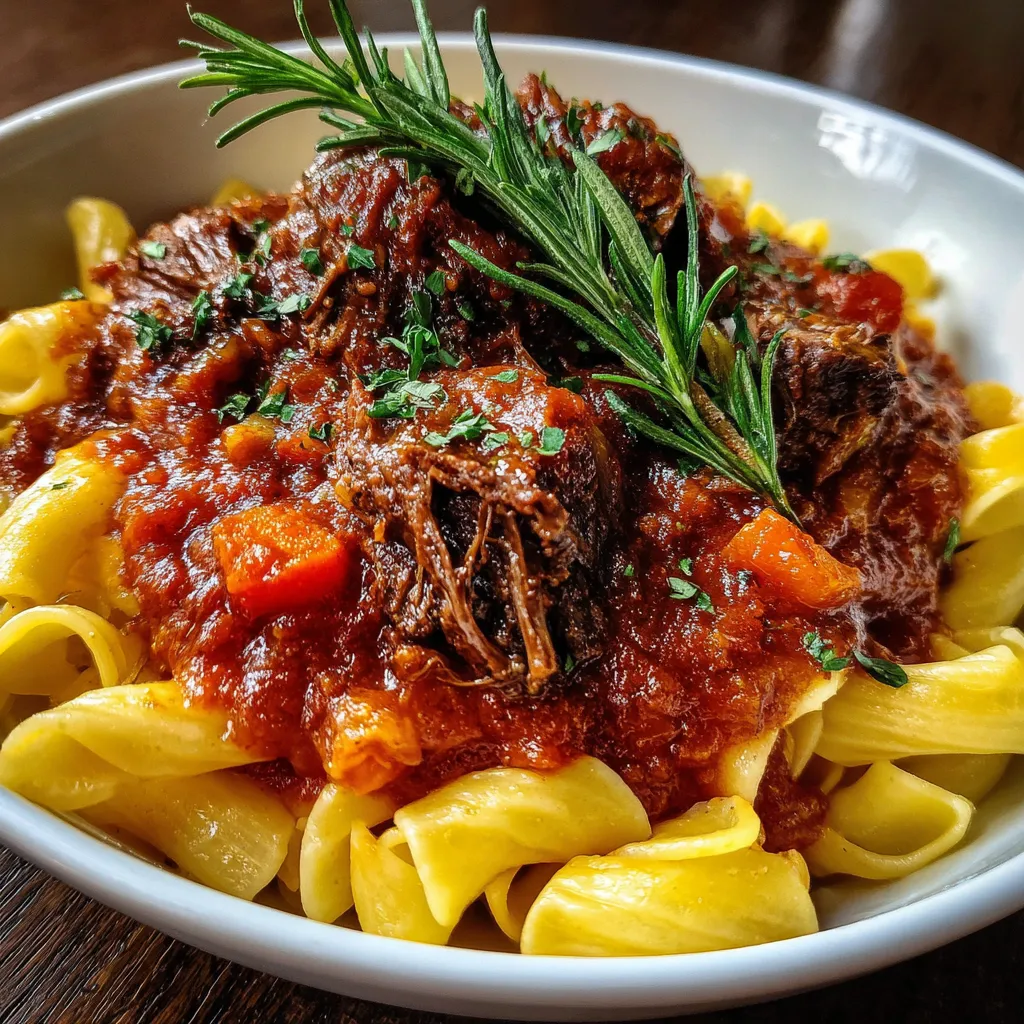

Braised Short Rib Ragu Pasta
Description
Slow-braised short ribs melt into a sun-warmed tomato sauce scented with rosemary and thyme. When twirled with pappardelle and a shower of Parmesan, every forkful bursts with savory depth and creamy tang.
Ingredients
Instructions
-
Prepare and season the short ribs:
-
- Pat the short ribs very dry with paper towels; this helps them brown well.
-
- Season all sides generously with the 2 tsp kosher salt and 1 tsp black pepper.
-
- Let the ribs sit at room temperature for about 20–30 minutes while you prepare the vegetables. This takes the chill off and promotes more even cooking.
-
Preheat the oven and prepare aromatics:
-
- Preheat your oven to 325°F (165°C).
-
- Finely dice the onion, carrots, and celery so they melt nicely into the sauce.
-
- Mince the garlic and set aside separately so it doesn’t burn during the initial sauté.
-
Sear the short ribs:
-
- Heat a large, heavy-bottomed Dutch oven or oven-safe pot over medium-high heat.
-
- Add 2 tbsp olive oil and heat until shimmering but not smoking.
-
- Working in batches if necessary, add the short ribs in a single layer, meaty side down. Do not overcrowd the pot.
-
- Sear for about 3–4 minutes per side until deeply browned on all sides; this should take 10–12 minutes total.
-
- Transfer the browned ribs to a plate and set aside. Leave the rendered fat in the pot; this is flavor.
-
Build the flavor base:
-
- Reduce heat to medium.
-
- If there is more than 3–4 tbsp of fat in the pot, spoon off the excess, leaving enough to sauté the vegetables.
-
- Add the diced onion, carrot, and celery with a small pinch of salt.
-
- Cook, stirring frequently, for 7–9 minutes until the vegetables are softened and starting to lightly caramelize.
-
- Add the minced garlic and cook for 30–60 seconds until fragrant but not browned.
-
Add tomato paste and deglaze:
-
- Add 2 tbsp tomato paste to the pot and cook, stirring constantly, for 2–3 minutes. It should darken slightly in color and smell sweet and rich.
-
- Pour in 1 cup red wine, scraping up any browned bits from the bottom of the pot with a wooden spoon.
-
- Let the wine simmer for 3–4 minutes to reduce slightly and cook off some of the alcohol.
-
Add tomatoes, stock, and herbs:
-
- Stir in the crushed tomatoes and 1 1/2 cups beef stock.
-
- Add bay leaves, rosemary, and thyme.
-
- Add the sugar and red pepper flakes, if using.
-
- Taste the liquid and adjust lightly with salt and pepper, remembering the flavors will concentrate as it braises.
-
Nestle ribs and braise:
-
- Return the seared short ribs and any accumulated juices to the pot, nestling them meaty side down into the sauce.
-
- The liquid should come most of the way up the sides of the ribs; if it seems low, add a bit more stock or water.
-
- Bring the pot just to a gentle simmer on the stovetop.
-
- Cover the pot with a lid and transfer it to the preheated oven.
-
- Braise for 2 1/2 to 3 hours, or until the short ribs are very tender and easily pull apart with a fork. Check once halfway to ensure a gentle simmer; adjust oven temperature slightly if needed.
-
Shred the meat:
-
- When the ribs are fork-tender, remove the pot from the oven.
-
- Carefully transfer the short ribs to a large bowl or cutting board. Discard the bones and any large pieces of fat or gristle.
-
- Shred the meat with two forks into bite-sized pieces.
-
- Skim excess fat from the surface of the sauce in the pot with a spoon. Removing some fat will prevent the sauce from feeling greasy.
-
Finish the ragu:
-
- Return the shredded meat to the pot with the sauce.
-
- Remove and discard the bay leaves and herb stems.
-
- Place the pot over low heat and let the ragu gently simmer, uncovered, for 15–20 minutes to thicken and concentrate the flavors.
-
- If you like a richer, silkier sauce, stir in 1–2 tbsp butter and 1–2 tbsp heavy cream at the end.
-
- Taste and adjust seasoning with salt and pepper as needed.
-
Cook the pasta:
-
- About 15 minutes before serving, bring a large pot of water to a rolling boil.
-
- Salt generously with 2–3 tbsp kosher salt; the water should taste pleasantly salty.
-
- Add the pasta and cook according to package directions until just al dente (usually 1 minute less than the package suggests for perfect texture when finished in the sauce).
-
- Before draining, reserve 1/2–3/4 cup of the starchy pasta cooking water.
-
- Drain the pasta well.
-
Marry the pasta and ragu:
-
- Add the drained pasta directly into the pot of gently simmering ragu over low heat.
-
- Toss well to coat every strand or piece of pasta with sauce.
-
- Add a splash of the reserved pasta water, a little at a time, tossing until the sauce clings silkily to the pasta. You may not need it all.
-
- Add a generous handful (about 1/2 cup) of grated Parmigiano-Reggiano and toss again. The cheese, starch, and pasta water will help the sauce emulsify and thicken.
-
Serve:
-
- Divide the braised short rib ragu pasta into warm bowls.
-
- Top with additional grated Parmigiano-Reggiano.
-
- Sprinkle with chopped fresh parsley.
-
- Finish with a light drizzle of good extra virgin olive oil and a few grinds of black pepper.
-
- Serve immediately while hot and glossy.
Note
- Short ribs can be braised a day in advance; chill overnight, remove the hardened fat from the top, then rewarm and finish with pasta for even deeper flavor.
- If you prefer, substitute boneless short ribs or beef chuck, adjusting braise time until the meat shreds easily.
- For a smoother, more uniform ragu, briefly pulse the sauce (without the meat) with an immersion blender before returning the shredded beef.
- Pair with a medium- to full-bodied red wine: Chianti, Barolo, or Cabernet complements the richness beautifully.
- Leftover ragu freezes well for up to 3 months and is excellent over polenta, gnocchi, or creamy mashed potatoes.

