

Brighten your meals with this colorful Vietnamese pickle medley packed with flavor and crunch! If you’ve been craving a tangy side dish that’s as beautiful on the plate as it is on the palate, this Vietnamese Vegetable Pickle Medley is exactly what you need. This recipe is a celebration of fresh produce—daikon radish, carrots, cucumber, green beans, and red bell pepper—all bathed in a sweet, salty, and slightly spicy brine that transforms ordinary veggies into something extraordinary. With a total preparation time of about 30 minutes, a quick 10-minute cooking phase, and a 24-hour rest time in the refrigerator, you’ll end up with a dish that bursts with tangy flavors and a satisfying crunch. Perfect for Lunch, this Beginner-friendly recipe yields about four servings and clocks in at just 150 calories per serving.
This Vietnamese Vegetable Pickle Medley is incredibly versatile. You can whip it up as a refreshing lunch side, a zesty topping for banh mi sandwiches, or even mix it into a hearty salad to give it that signature tang. While the recipe calls for simple pantry staples like distilled white vinegar, water, sugar, and salt, you can elevate the brine with minced garlic, red chili flakes, and a dash of fish sauce for an extra depth of flavor. Whether you’re meal prepping for the week or looking to impress dinner guests, this pickle medley adds a vibrant, crunchy element that will keep everyone coming back for more. Get ready to dive into this crunchy, colorful world of Vietnamese-inspired pickles—you’re about to brighten up your culinary repertoire!
KEY INGREDIENTS IN VIETNAMESE VEGETABLE PICKLE MEDLEY
To create a pickle medley that sings with color and crunch, each ingredient plays a pivotal role. From the crisp bite of fresh produce to the balanced tang of the brine, these components come together to make a delicious condiment you’ll want to serve again and again.
- Daikon Radish
This pale, crunchy root vegetable brings a mild peppery flavor and a satisfying snap to every bite. Julienned into thin matchsticks, daikon soaks up the brine beautifully, ensuring each piece is infused with tang and sweetness.
- Carrots
Sweet and vibrantly orange, carrots add a natural sweetness and bright pop of color. They lend a firm texture that stands up to the acidic brine, making the overall medley irresistibly crunchy.
- Cucumber
With seeds removed and sliced into matchsticks, cucumber offers a cooling, hydrating element. Its mild taste acts as a perfect counterbalance to the sharper flavors in the brine.
- Green Beans
Trimmed and cut into two-inch pieces, green beans introduce an earthy note and a hearty chew. Their firm integrity helps them remain crisp, even after soaking.
- Red Bell Pepper
Sweet, juicy, and brilliantly red, bell pepper adds vivid color and a delicate sweetness. It brightens up each jar with its bold hue.
- Distilled White Vinegar
The backbone of the pickling liquid, vinegar provides the essential acidic tang that preserves the veggies and gives that signature pickle bite.
- Water
Diluting the vinegar, water helps moderate the acidity for a balanced brine that’s not overpowering.
- Granulated Sugar
By sweetening the vinegar solution, sugar smooths out the sharpness and creates a harmonious sweet-and-sour profile.
- Salt
Essential for drawing moisture out of the vegetables and boosting flavors, salt also acts as a natural preservative.
- Garlic Cloves
Minced into tiny pieces, garlic infuses the brine with a bold, aromatic depth that lingers on the palate.
- Red Chili Flakes (optional)
For those who crave heat, chili flakes introduce a subtle spice that tingles the tongue without overpowering the other flavors.
- Fish Sauce (optional)
Just a splash of fish sauce adds a layer of umami richness, rounding out the brine with a savory complexity.
HOW TO MAKE VIETNAMESE VEGETABLE PICKLE MEDLEY
Let’s roll up our sleeves and transform those fresh veggies into a vibrant, crunchy pickle medley. We’ll walk through every step, from prepping the produce to sealing it away for that all-important 24-hour rest, so you end up with perfectly flavored pickles every time.
1. Prepare the vegetables: Begin by washing each daikon radish, carrot, and cucumber under cold water. Use a sharp vegetable peeler to remove the skin, then employ a steady hand or a mandoline to julienne them into thin, even matchstick strips. Trim the green beans, cutting them into two-inch segments, and julienne the red bell pepper into consistent strips. Place all the prepped vegetables in a large, dry mixing bowl.
2. Make the pickling liquid: In a medium saucepan set over medium heat, combine distilled white vinegar, water, granulated sugar, and salt. Stir continuously with a wooden spoon or heatproof spatula until the sugar and salt are completely dissolved. Once the mixture reaches a gentle boil, immediately remove the pan from the heat to prevent the brine from becoming too strong.
3. Add flavorings: To the warm brine, stir in the minced garlic cloves, red chili flakes (if using), and fish sauce (if using). Mix thoroughly so that the garlic disperses evenly and the optional ingredients begin to infuse their flavors. Set the pan aside to cool for about ten minutes, allowing the flavors to meld without cooking the garlic.
4. Pickle the vegetables: When the pickling liquid has cooled slightly but remains warm, pour it directly over the prepared vegetables in the bowl. Use a pair of clean tongs or a long spoon to gently toss and ensure every piece is fully submerged in the liquid. This step guarantees each vegetable strip soaks up the sweet, salty, tangy flavors evenly.
5. Store the pickle medley: Transfer the vegetable-and-brine mixture into a clean, airtight jar or container. Press down lightly on the veggies so no air pockets remain, then seal the lid tightly. Place the jar in the refrigerator and let it rest for at least 24 hours; this resting period allows the vegetables to soften just enough while absorbing maximum flavor.
6. Serve: Once fully pickled, these crunchy gems are ready to shine. Scoop a generous handful onto your plate as a refreshing side dish, tuck them into a banh mi sandwich for that classic bite, or sprinkle them over salads for added tang and texture.
SERVING SUGGESTIONS FOR VIETNAMESE VEGETABLE PICKLE MEDLEY
The beauty of this Vietnamese Vegetable Pickle Medley lies in its versatility and the way it instantly enlivens any dish. Whether you’re aiming for an authentic Vietnamese experience or simply want a palate-pleasing side, these serving ideas will guide you on how to incorporate your homemade pickles for maximum impact and enjoyment.
- Banh Mi Topping
Layer a crusty baguette with creamy mayonnaise, savory pork or tofu, and a generous mound of pickled veggies. The tangy crunch cuts through rich fillings, adding a bright contrast that elevates every mouthful.
- Vibrant Rice Noodle Salad
Toss cold rice noodles with fresh herbs, shredded lettuce, sliced proteins, and a handful of pickle medley. Drizzle with a light Nuoc Cham-style dressing to marry the flavors and textures into a refreshing, balanced salad.
- Grilled Meat Accompaniment
Serve alongside char-grilled chicken, beef skewers, or seafood. The acidity cleanses the palate between bites of smoky, savory meat, ensuring each taste feels as exciting as the first.
- Garnish for Rice Bowls and Tacos
Spoon a small portion of the pickle medley over rice bowls or fusion-style tacos. The crispness and tang lend an unexpected twist to both Asian-inspired and Tex-Mex creations, making your dishes uniquely memorable.
HOW TO STORE VIETNAMESE VEGETABLE PICKLE MEDLEY
Proper storage is key to keeping your Vietnamese Vegetable Pickle Medley tasting its absolute best. By following a few simple practices, you can preserve both the flavor and the crisp texture of your pickles for up to two weeks. Always start with a clean environment and maintain proper refrigeration to prevent any off-flavors or spoilage.
- Airtight Refrigeration
Use a sterilized, airtight jar or container to store your pickles. Ensure the lid seals tightly to keep air out, then place the jar in the back of the refrigerator where temperatures stay most consistent (around 35–40°F or 2–4°C).
- Brine Submersion
Double-check that all vegetables remain fully submerged in the pickling liquid. If any pieces float above the brine, gently press them down or add a sterilized weight to keep them covered, preventing oxidation and ensuring even flavor distribution.
- Clean Serving Utensils
Always use clean tongs or spoons when removing pickles from the jar. Introducing crumbs or foreign particles can accelerate spoilage, so avoid double-dipping or using dirty utensils.
- Date Labeling
Label your jar with the date you filled it. This simple step helps you track freshness and ensures you enjoy your pickles within the ideal two-week window, when they’re at their peak flavor and texture.
CONCLUSION
Thank you for exploring the vibrant world of Vietnamese Vegetable Pickle Medley with me! We’ve covered everything from the crisp daikon and sweet carrots to the balanced brine of vinegar, sugar, and salt, not to mention those enticing garlic and optional chili flakes and fish sauce. With just 30 minutes of active prep time, a quick 10-minute brine simmer, and a 24-hour rest in the fridge, you’ll have a colorful, crunchy condiment that’s perfect for Lunch. Whether you’re making this for a casual weeknight meal, brightening up a sandwich, or entertaining guests, these pickles bring a perfect sweet-and-sour crunch to every bite. Don’t forget—this is a Beginner-level recipe, so feel free to experiment and make it your own.
Feel free to print out this article and save it for future kitchen adventures. You can also find a FAQ below to answer any lingering questions about substitutions, troubleshooting, or advanced pickling techniques. If you give this recipe a try, I’d love to hear how it turned out! Drop a comment with your favorite way to serve these pickles, share any twists you’ve made, or ask any questions if you need help along the way. Your feedback and stories make cooking even more fun, so let’s keep the conversation going!
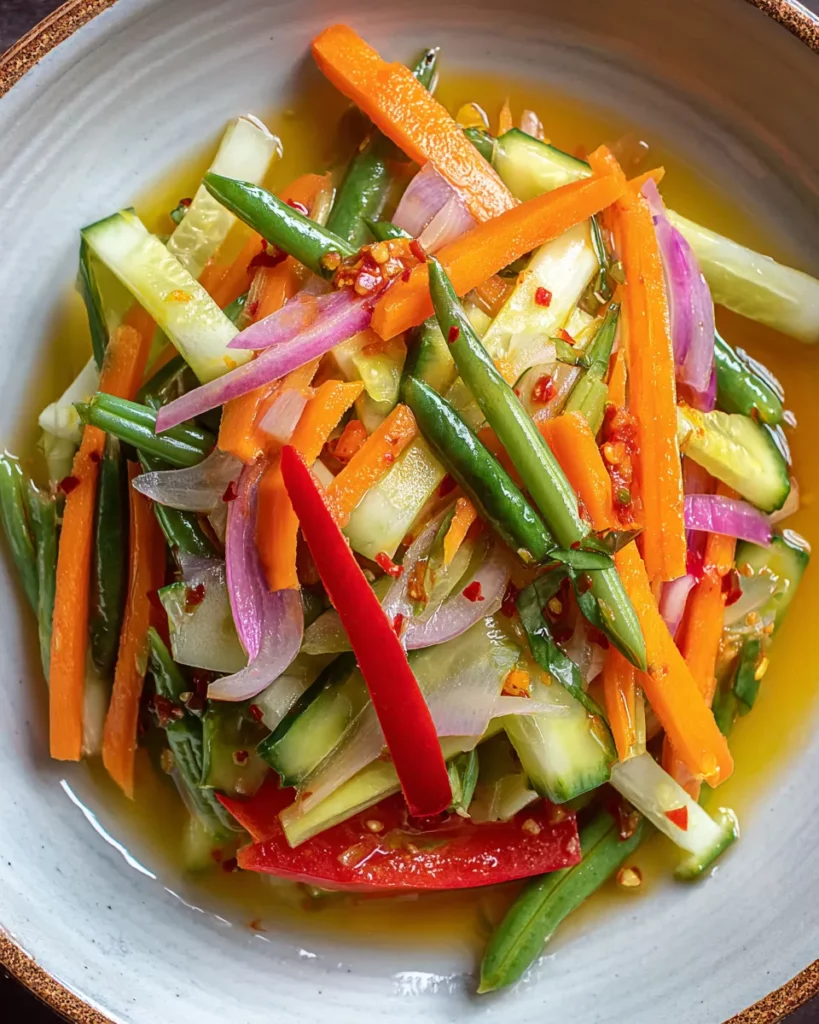

Vietnamese Vegetable Pickle Medley
Description
This Vietnamese Vegetable Pickle Medley bursts with tangy flavors and a satisfying crunch. Fresh veggies soak in a sweet, salty, and slightly spicy brine for an unforgettable taste experience.
Ingredients
Instructions
-
Prepare the vegetables: Begin by washing and peeling the daikon radish, carrots, and cucumber. Julienne them into thin matchstick strips. Trim and cut the green beans into 2-inch pieces. Julienne the red bell pepper and set all the vegetables aside in a large mixing bowl.
-
Make the pickling liquid: In a medium saucepan, combine the distilled white vinegar, water, sugar, and salt. Place the saucepan over medium heat and stir until the sugar and salt are completely dissolved. Remove from heat once it reaches a gentle boil.
-
Add flavorings: Stir in the minced garlic, red chili flakes (if using), and the fish sauce (if using) into the pickling liquid. Mix well and set it aside to cool for about 10 minutes.
-
Pickle the vegetables: Once the pickling liquid has cooled slightly, pour it over the prepared vegetables in the mixing bowl. Ensure that all the vegetables are fully submerged in the liquid. Give everything a good toss to evenly distribute the flavors.
-
Store the pickle medley: Transfer the vegetable mixture and pickling liquid into a clean, airtight jar or container. Seal it tightly and refrigerate. Allow it to sit for at least 24 hours for the flavors to develop, and it can be stored in the refrigerator for up to 2 weeks.
-
Serve: Enjoy the Vietnamese Vegetable Pickle Medley as a refreshing side dish, topping for banh mi sandwiches, or as part of a vibrant salad.
Note
- This pickle medley is incredibly versatile; feel free to experiment with other vegetables such as radishes, onions, or even cabbage.
- For a sweeter profile, adjust the sugar to your taste; you can also use honey as a natural sweetener.
- Letting the mixture pickle for a few days will enhance the flavor even further, making it a delicious and tangy accompaniment.
- This recipe can easily be doubled or halved to suit your needs, making it perfect for batch cooking or meal prepping.

