

There’s something irresistibly delightful about the gentle crackle of hot oil meeting pillowy dough, and when you toss in a whisper of vanilla, well, you’ve got magic on your hands. French beignets are like little pillows of joy—crispy on the outside, tender and steaming within, each one waiting to be dusted in a snowfall of powdered sugar. When you make these at home, you’re not just baking a dessert; you’re inviting a smile into your kitchen. Warm water, a touch of sugar, and a packet of yeast come together to form that first frothy moment that feels oddly like a small act of alchemy. Then you fold in eggs, evaporated milk, and vanilla, watching the batter transform into a velvet-soft dough that promises pure bliss in every bite.
I still remember the first time I rolled out this dough on my grandmother’s old wooden table. We laughed as it stuck to the surface, and she let me taste the dough right before it disappeared into bubbling oil. The scent of vanilla swirling through the kitchen was like a comforting hug, and the powdered sugar clouds seemed to hover in slow motion. Those beignets tasted of celebration and warmth, perfectly paired with a cup of café au lait. Even now, every time I whip up a batch, I can’t help but think back to that moment—kneading gently, waiting for the dough to rise, and feeling that shared joy in creating something so simple yet so extraordinary.
KEY INGREDIENTS IN VANILLA FRENCH BEIGNETS
Before diving into the step-by-step magic of making these heavenly treats, let’s talk about what goes into crafting their signature texture and flavor. Each ingredient plays a starring role, whether it’s the airy lift you get from yeast or the rich depth that vanilla extract brings. Understanding their individual contributions helps you grasp how you’ll end up with beignets that are crispy, soft, and delightfully aromatic.
- Warm Water
This provides the perfect cozy environment for activating the yeast. At around 110°F, it ensures the yeast bubbles to life, giving your dough the rise it needs to become gorgeously puffy.
- Granulated Sugar
More than just sweetness, this sugar feeds the yeast during its initial bloom. It helps create that bubbly froth you look for at the start and adds a delicate hint of sweetness throughout.
- Active Dry Yeast
The powerhouse behind the rise, active dry yeast turns that sugary water into a foamy prelude. It’s responsible for the light, airy crumb inside each beignet.
- Eggs
Eggs enrich the dough, lending it structure, color, and a subtle richness that creates a tender interior once fried.
- Evaporated Milk
This concentrated milk adds a creamy depth and slight caramel undertone, boosting the dough’s tenderness and contributing to a richer flavor profile.
- Vanilla Extract
The fragrant star of the show, vanilla injects warmth and complexity. It’s the note that transforms a simple fried dough into something truly indulgent.
- Salt
A small but crucial player, salt balances flavors, enhancing sweetness and deepening the overall taste of the beignets.
- All-Purpose Flour
The structural backbone, flour provides the gluten network that traps gas bubbles from the yeast, forming that perfect springy texture.
- Unsalted Butter
Melted and folded in, butter adds richness and helps tenderize the dough, making each bite lusciously soft.
- Vegetable Oil
Chosen for its neutral flavor and high smoke point, vegetable oil ensures a golden, crispy exterior without imparting unwanted tastes.
- Powdered Sugar
The final flourish, this ultra-fine sugar melts on contact with warm beignets, giving you that classic snowy dusting and an extra touch of sweetness.
HOW TO MAKE VANILLA FRENCH BEIGNETS
Ready to transform these ingredients into hot, pillowy beignets? Follow these detailed steps to achieve that perfect balance of crispiness and softness. From frothy yeast activation to the final dusting, every stage matters in creating those iconic, melt-in-your-mouth squares.
1. In a large mixing bowl, combine warm water, granulated sugar, and active dry yeast. Stir gently until the sugar dissolves, then let the mixture sit for about 10 minutes until it becomes frothy and bubbly, indicating the yeast is alive and active.
2. In a separate bowl, beat the eggs until smooth. Add evaporated milk, vanilla extract, and salt, then whisk together until fully well combined, creating a creamy, fragrant mixture.
3. Pour the egg mixture into the frothy yeast bowl and stir gently to incorporate both mixtures, forming a silky batter.
4. Gradually add 2 cups of all-purpose flour and beat with a mixer or sturdy spoon until completely smooth, ensuring there are no lumps.
5. Stir in the melted butter, folding it evenly throughout the dough. Then, gradually mix in the remaining 2 cups of flour until the dough pulls away from the sides and forms a soft, non-sticky ball.
6. Lightly dust a clean countertop or cutting board with flour and knead the dough for about 5–7 minutes. You want a smooth, elastic texture that springs back when poked.
7. Place the dough in a greased bowl, cover it with a damp towel, and let it rise in a warm spot for 1 to 2 hours, or until it has doubled in size and looks airy.
8. Once the dough has risen, punch it down gently to release the air pockets, then transfer it to a lightly floured surface and roll it out to about 1/4-inch thickness.
9. Use a sharp knife or pizza cutter to cut the dough into roughly 2-inch squares, aiming for neat, even pieces.
10. Preheat vegetable oil in a deep fryer or large, heavy saucepan to 360°F (182°C), using a thermometer to maintain the temperature.
11. Fry the beignet squares in batches, adding just a few at a time to avoid overcrowding. Cook each side for about 2–3 minutes, or until they’re puffed up and a rich golden brown.
12. Use a slotted spoon to remove the cooked beignets and transfer them to a paper-towel-lined plate to drain any excess oil.
13. While the beignets are still warm, place them on a wire rack or tray and generously dust them with powdered sugar, so each one gets a sweet, snowy coating.
14. Serve the beignets immediately, enjoying them fresh and warm for the ultimate taste and texture experience.
SERVING SUGGESTIONS FOR VANILLA FRENCH BEIGNETS
Once your beignets are perfectly golden and dusted in sugar, it’s time to think about how to present them in all their glory. This treat is wonderfully versatile, whether you’re hosting a weekend brunch or craving a midnight snack. Embrace creativity and ensure your guests or family truly appreciate every bite by pairing these warm delights with complementary flavors and textures.
- Classic Café au Lait Pairing
Serve your beignets with a steaming mug of café au lait, made with equal parts strong coffee and steamed milk. The gentle bitterness of coffee balances the sweetness of the beignets, transporting you straight to a cozy Parisian café.
- Fruit Compote Duo
Offer small ramekins of warm berry compote and tropical mango puree alongside your beignets. The bright, fruity acidity cuts through the richness, creating a delightful contrast in every bite.
- Chocolate Dipping Sauce
Whisk together dark chocolate, cream, and a pinch of cinnamon for a velvety chocolate dip. The spiced chocolate adds depth, and dunking a still-warm beignet creates an indulgent experience.
- Ice Cream Sandwich Twist
Allow your beignets to cool slightly, then slice them open and scoop in vanilla or coffee ice cream. Press gently and serve immediately for an over-the-top dessert that combines hot and cold sensations.
HOW TO STORE VANILLA FRENCH BEIGNETS
Keeping your beignets fresh and tasty after cooking is all about proper storage. Because they’re best eaten warm and fresh, the goal is to capture as much of that just-fried quality as possible. Follow these tips to maintain texture and flavor, even if you need to save some for later indulgence.
- Room Temperature on a Rack
Place leftover beignets on a wire cooling rack at room temperature for up to 4 hours. This lets air circulate and prevents them from becoming soggy, preserving their crisp exterior.
- Short-Term Airtight Storage
If you plan to enjoy beignets later in the day, let them cool completely, then store in an airtight container at room temperature for up to 24 hours. Separate layers with parchment paper to avoid sticking.
- Reheating in the Oven
For a quick refresh, preheat your oven to 350°F (175°C). Arrange beignets in a single layer on a baking sheet and heat for about 5–7 minutes. This restores crispiness without drying them out.
- Freezer Method for Longer Storage
Cool beignets completely, then wrap each one individually in plastic wrap and place them in a freezer bag. Freeze for up to 1 month. Reheat from frozen in a preheated oven at 350°F for 8–10 minutes, or until warmed through.
CONCLUSION
From the frothy first steps of yeast activation to the final dusting of powdered sugar, your journey through this Vanilla French Beignets recipe is a celebration of texture, aroma, and pure delight. We started by understanding each key ingredient, uncovering how water, sugar, eggs, and vanilla work in harmony to create a dough that puffs into golden perfection. You learned how to knead that dough to an elastic smoothness before letting it rise and transform into a cloudlike mass that, when fried at just the right temperature, yields crispy, tender squares brimming with warmth.
As you roll out and cut your dough, you’ll feel that familiar childhood thrill, recalling family kitchens and festive mornings. Each step builds on the last: beating eggs into creamy milk, folding in butter for richness, and mastering the art of frying. Serving suggestions—from a classic café au lait pairing to an indulgent ice cream sandwich twist—offer you endless ways to elevate your beignets into a feast for friends or a quiet treat for yourself. Proper storage methods ensure that the magic lasts beyond the first batch, whether you’re enjoying them later that day or pulling out frozen treasures on a special occasion.
Go ahead and print this article to keep it handy in your recipe collection or save it for those moments when you need a little comfort food magic. You’ll also find a helpful FAQ section below for any questions you might have as you experiment. If you try this recipe or have any comments, questions, or feedback, I’d love to hear from you—whether it’s a tweak you made or a challenge you faced. Happy frying, and here’s to many more delicious moments in your kitchen!
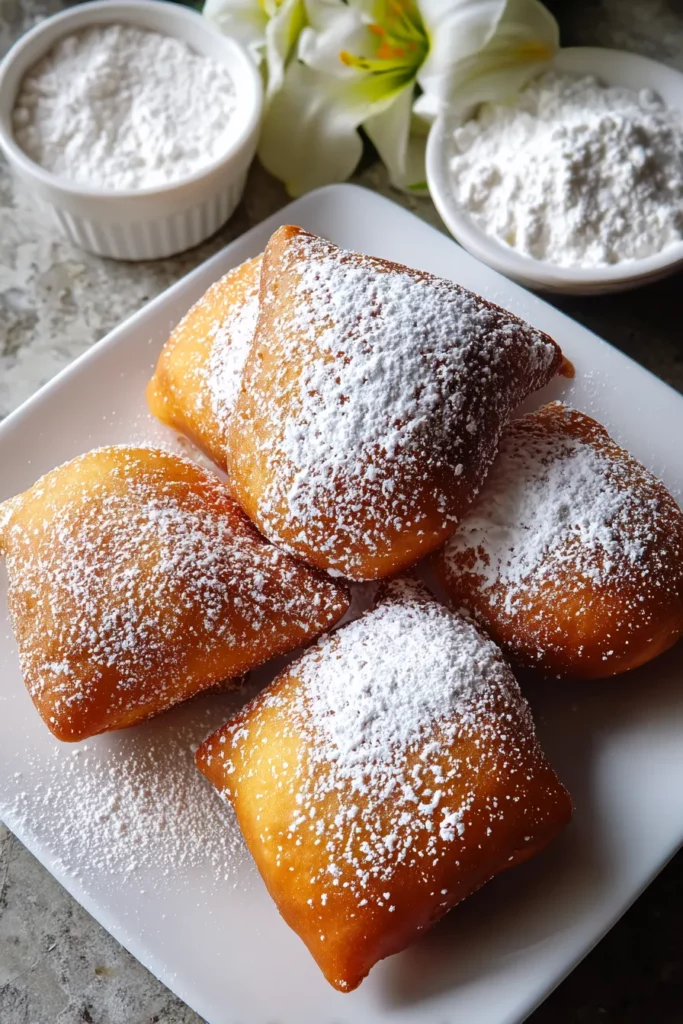

Vanilla French Beignets
Description
These fluffy beignets, kissed with the warmth of vanilla and a dusting of powdered sugar, create a blissful bite. Crispy on the outside, soft within—pure delight in every mouthful!
Ingredients
Instructions
-
In a large mixing bowl, combine warm water, granulated sugar, and yeast. Stir gently and let sit for about 10 minutes until it becomes frothy.
-
In a separate bowl, beat the eggs and then add evaporated milk, vanilla extract, and salt. Mix until well combined.
-
Add the egg mixture to the yeast mixture and stir.
-
Gradually add 2 cups of flour and beat with a mixer or by hand until smooth.
-
Stir in melted butter, then gradually mix in the remaining 2 cups of flour until a soft dough forms.
-
Lightly dust a clean surface with flour and knead the dough for about 5-7 minutes until it becomes smooth and elastic.
-
Place the dough in a greased bowl, cover with a damp towel, and let it rise in a warm place for about 1 to 2 hours, or until doubled in size.
-
Once risen, punch down the dough and roll it out on a lightly floured surface to about 1/4-inch thickness.
-
Cut the dough into 2-inch squares using a sharp knife or pizza cutter.
-
Preheat vegetable oil in a deep fryer or large heavy saucepan to 360°F (182°C).
-
Fry the beignet squares in the hot oil, a few at a time, for about 2-3 minutes per side, or until golden brown and puffed up.
-
Use a slotted spoon to remove the cooked beignets and place them on a plate lined with paper towels to drain excess oil.
-
While still warm, generously dust the beignets with powdered sugar.
-
Serve immediately and enjoy your delicious vanilla French beignets.
Note
- Beignets are best enjoyed fresh and warm, but you can reheat them for a quick treat.
- If you prefer, you can use a deep fryer to ensure optimal frying temperature.
- Add a touch of cinnamon to the powdered sugar for an additional flavor profile.
- Serve with a side of jam or chocolate sauce for dipping if desired.
- Beignets are a staple in New Orleans cuisine and are often enjoyed with a hot cup of café au lait.