

Nothing beats the satisfaction that comes from twirling a tangle of silky noodles coated in a rich, spicy-sweet gochujang sauce. This Spicy Korean Gochujang Beef Noodles recipe is the kind of comfort food that hugs you from the inside out: tender ground beef infused with layers of savory soy sauce and a hint of sweetness, all brought together by the deep, fiery heartbeat of gochujang. When I first tossed these noodles in my wok, my kitchen instantly became alive with that signature red hue and a whisper of heat that teased my senses. Every element – from the fresh crunch of julienned cucumber to the bright green pop of scallions – works in harmony, making every bite a mini celebration of texture and flavor. It’s in those moments, spoon in hand and chopsticks at the ready, that I remember why I fell in love with cooking: the simple joy of combining humble ingredients into something memorable and bold. It’s a mouthwatering combination where tender beef and slurpy noodles meet the soulful heat of gochujang, delivering a burst of spicy-sweet goodness in every satisfying tangle.
Weeknight dinners don’t have to be boring or bland, and this recipe proves it. In under forty minutes, you can have a steaming bowl that’s bold enough to wake up your taste buds and cozy enough to feel like home. I often find myself doubling the sauce ingredients so I can dip extra veggies or leftover tofu the next day. Friends always ask how I nail that perfect balance between sweet, salty, and spicy without messing up half the kitchen, and my secret is simple: respect each ingredient, from the tang of rice vinegar to the smooth finish of sesame oil. If you’ve ever felt intimidated by Korean cooking, this is your gateway drug. Swap in ramen noodles, use plant-based meat, or dial down the red pepper flakes if you need a gentler hug of heat. However you choose to personalize it, these Gochujang Beef Noodles are your canvas for flavor exploration—and trust me, you’ll want to show off your masterpiece at the dinner table.
KEY INGREDIENTS IN SPICY KOREAN GOCHUJANG BEEF NOODLES
Every great recipe starts with top-notch ingredients. In this section, we’ll break down each component of your Spicy Korean Gochujang Beef Noodles and explain how they contribute to the final flavor, texture, and overall experience of this mouthwatering dish.
- Rice noodles or ramen noodles: The foundation of the bowl, these noodles soak up the sauce beautifully and provide that soft, slurpy bite that makes every forkful so satisfying.
- Ground beef: Adds a hearty, meaty richness and substantial protein to the dish; its natural fat helps carry the flavors of gochujang and aromatics.
- Vegetable oil: Serves as the neutral cooking fat that prevents sticking and ensures even sautéing of onion and beef without altering the intended flavors.
- Onion: When finely chopped and softened, it builds a sweet and savory base that balances the spice of the gochujang.
- Garlic: Infuses punchy, aromatic depth to the sauce; its bold flavor melds seamlessly with ginger for classic Korean seasoning.
- Gochujang: The star ingredient—a fermented chili paste that brings heat, umami, and a subtle sweetness; it’s the soul of this spicy sauce.
- Soy sauce: Contributes salty, savory umami notes and dark color, rounding out the gochujang’s intensity.
- Rice vinegar: Adds a bright, tangy lift that cuts through the richness and balances the overall flavor profile.
- Honey or sugar: Injects a touch of sweet contrast that mellows the spiciness and accentuates the depth of the chili paste.
- Sesame oil: A finishing oil that lends a toasty, nutty aroma and smoothing mouthfeel when drizzled into the sauce.
- Ginger: Freshly grated, it brings a warm, zesty undertone and enhances the aromatic layers alongside garlic.
- Beef broth or water: Provides moisture for simmering, creating a luscious sauce that clings to noodles while concentrating flavors.
- Red pepper flakes (optional): For extra kick and visual flecks of chili heat; adjust according to your personal spice tolerance.
- Green onions: Chopped and scattered on top, they provide a crisp, oniony pop of freshness and vibrant color.
- Sesame seeds: Toasted or raw, they add subtle crunch and a nutty accent that complements the sesame oil.
- Julienned cucumber: Offers a cool, crisp counterpoint to the spice, lightening each bite and giving the dish textural contrast.
- Fresh cilantro leaves: Add bright, citrusy freshness and a hint of herbal complexity to finish the bowl.
HOW TO MAKE SPICY KOREAN GOCHUJANG BEEF NOODLES
Ready to bring this noodle bowl to life? The heart of this recipe lies in simple steps that transform everyday ingredients into a harmonious dance of flavors and textures. From perfectly cooked rice or ramen noodles to a savory beef mixture infused with garlic, ginger, and gochujang, each instruction is designed for clarity and ease. Whether you’re a beginner or an experienced home cook, you’ll appreciate how fast this comes together and how each technique—from sautéing to simmering—layers complexity into every bite. Gather your skillet, sharpen your spoon, and let’s dive into making your new favorite weeknight dinner.
1. Cook the noodles according to the package instructions. Bring a pot of gently salted water to a full boil, add your rice or ramen noodles, and cook until al dente, usually about 3–5 minutes. Drain them in a colander, then rinse rice noodles under cold water to halt cooking and prevent sticking. Set aside.
2. Heat the vegetable oil in a large skillet or wok over medium-high heat. Add the finely chopped onion and sauté for 3–4 minutes, stirring occasionally, until the onion becomes soft and translucent with lightly golden edges.
3. Add the minced garlic and grated ginger to the skillet and cook for another minute, stirring constantly, until you get that unmistakable fragrant aroma wafting from the pan.
4. Add the ground beef to the skillet and break it up with a sturdy spoon. Cook for about 5–6 minutes, stirring frequently, until the beef is browned and no longer pink. Drain any excess fat to keep the sauce from becoming greasy.
5. Stir in the gochujang, soy sauce, rice vinegar, honey (or sugar), sesame oil, and red pepper flakes (if you like extra heat). Cook for 2–3 minutes, stirring constantly, until the beef is fully coated and the chili paste has bloomed, turning it a deep, glossy red.
6. Pour in the beef broth or water and bring the mixture to a gentle simmer. Let it cook for 4–5 minutes, allowing the sauce to thicken slightly and flavors to intensify.
7. Add the cooked noodles directly into the skillet and use tongs or two spoons to toss everything together, ensuring each strand is well covered in that spicy beef sauce. Continue cooking for 2–3 minutes to heat the noodles through.
8. Once the noodles are evenly coated and piping hot, remove the skillet from heat. Divide the noodle and beef mixture among serving bowls.
9. Garnish each bowl with chopped green onions, a sprinkle of sesame seeds, julienned cucumber, and a few fresh cilantro leaves before digging in.
SERVING SUGGESTIONS FOR SPICY KOREAN GOCHUJANG BEEF NOODLES
Once your Spicy Korean Gochujang Beef Noodles are sizzling hot and glossy with sauce, it’s time to think about how you present this soul-warming bowl to your family or guests. This dish has so much personality that with the right touch, you can turn a casual weeknight supper into a festive gathering. Whether you’re hosting small dinner parties or simply enjoying a solo meal, the way you plate and accompany these noodles can elevate every mouthful. Bright crunches of cucumber ribbons, crunchy sesame seeds, and fresh cilantro leaves add bursts of color and texture, and a scattering of green onions offers that satisfying pop of freshness at the very end. Feel free to experiment with side accompaniments like quick-pickled vegetables or a chilled cucumber salad to balance the heat. Don’t forget about beverage pairings, too: a cold glass of soju or sparkling iced tea can cut through the richness while keeping the energy fun and lively. I love using colorful ceramic bowls and contrasting napkins to make this dish feel special, even on a busy Tuesday. A quick squeeze of lime just before serving adds a zesty finish that brightens every bite and encourages even the youngest eaters to dig in with an excited grin. Here are a few standout tips for serving up your gochujang masterpiece in style:
- Family-style serving: Present the skillet at the center of the table and let everyone help themselves. It fosters a warm, communal vibe and shows off the vibrant colors of your garnishes.
- Flavorful dipping sauces: Offer small ramekins of extra gochujang mixed with a dash of rice vinegar or honey on the side, so guests can tailor the spice level to their liking.
- Refreshing side dishes: Pair with a crisp kimchi slaw or a simple pickled daikon salad to introduce a cool, tangy element that balances the rich, spicy noodles.
- Chilled beverages: Serve with an ice-cold Korean beer, crisp white wine, or sparkling water with a splash of citrus to cleanse the palate between each fiery mouthful.
HOW TO STORE SPICY KOREAN GOCHUJANG BEEF NOODLES
Leftovers of these Spicy Korean Gochujang Beef Noodles are almost as good as the initial feast, provided you store them properly. Because the noodles can absorb sauce and lose their springy texture, a little foresight goes a long way in preserving flavor and mouthfeel. I always separate any raw garnishes—cucumber ribbons, cilantro, and scallions—from the saucy noodles before popping the main portion into an airtight container. This technique prevents sogginess and keeps those fresh toppings crisp until you’re ready to serve again. When the time comes to reheat, you might notice the sauce has thickened beyond its original consistency; a splash of water or beef broth revives that ideal glossy coating without diluting the complex spice profile. To lock in maximum freshness, label your container with the date and store it in the refrigerator for up to two days. If you want longer-lasting meal prep, freeze the saucy beef mixture separately from the noodles and garnish so you can thaw and combine only what you need. Reusable glass containers with tight-fitting lids work best, as they won’t absorb odors or stains. Always let leftovers cool to room temperature before sealing to avoid condensation and soggy noodles. Following these simple steps ensures that each reheated bowl stays vibrant, rich, and as thrillingly spicy as the day you made it.
- Refrigerate in airtight containers: Seal cooled noodles and beef mixture in glass or BPA-free plastic containers. Use within two days for best texture.
- Freeze components separately: Store sauce and beef in one container and noodles in another. Thaw in the fridge overnight and reheat with a splash of broth.
- Cool before sealing: Let the dish reach room temperature before closing the lid to prevent condensation, which can make noodles soggy.
- Store garnishes on the side: Keep cucumber, green onions, and cilantro in a separate, small container or zip-top bag to maintain crispness until serving.
CONCLUSION
As you’ve seen, this Spicy Korean Gochujang Beef Noodles recipe brings together simple ingredients to deliver an unforgettable meal that’s at once spicy, sweet, and utterly comforting. Starting with rice or ramen noodles, ground beef, and that magical gochujang paste, you layered in garlic, ginger, soy sauce, rice vinegar, honey, and sesame oil to create a sauce that clings to every strand. A quick flick of the wrist in the skillet and a gentle simmer brought those flavors into focus, while fresh garnishes—crisp cucumber ribbons, bright green onions, toasty sesame seeds, and fragrant cilantro—added pops of color and texture. With less than forty minutes from prep to plate, this beginner-friendly dish is perfect for busy weeknights, casual lunch gatherings, or anytime you crave a fiery kick of Korean flavor. Feel free to print this article and save it for later use; you can also find a handy FAQ section below that addresses common questions and substitutions to make this recipe your own.
Did you try this recipe and fall in love with that silky, chili-infused sauce? I’d absolutely love to hear about your experience! Did you adjust the heat level or swap in plant-based beef? Any tips or tricks you discovered along the way could help fellow home cooks tweak the dish to their taste. Please leave a comment below with your questions, personal tweaks, or photos of your final creation—I read every single one and love connecting with you in the kitchen. Whether you’re a seasoned gochujang enthusiast or a newcomer to Korean flavors, your feedback helps us all learn and grow. If anything tripped you up during preparation, let me know so I can clarify and make this guide even more user-friendly. Your joy in the kitchen fuels these recipes, and sharing your successes (or questions) means the world to me. Don’t hesitate to let friends and family know how easy it was to master a classic Korean flavor in your own home—tag me when you post, and let’s build a community that celebrates bold tastes and simple steps.
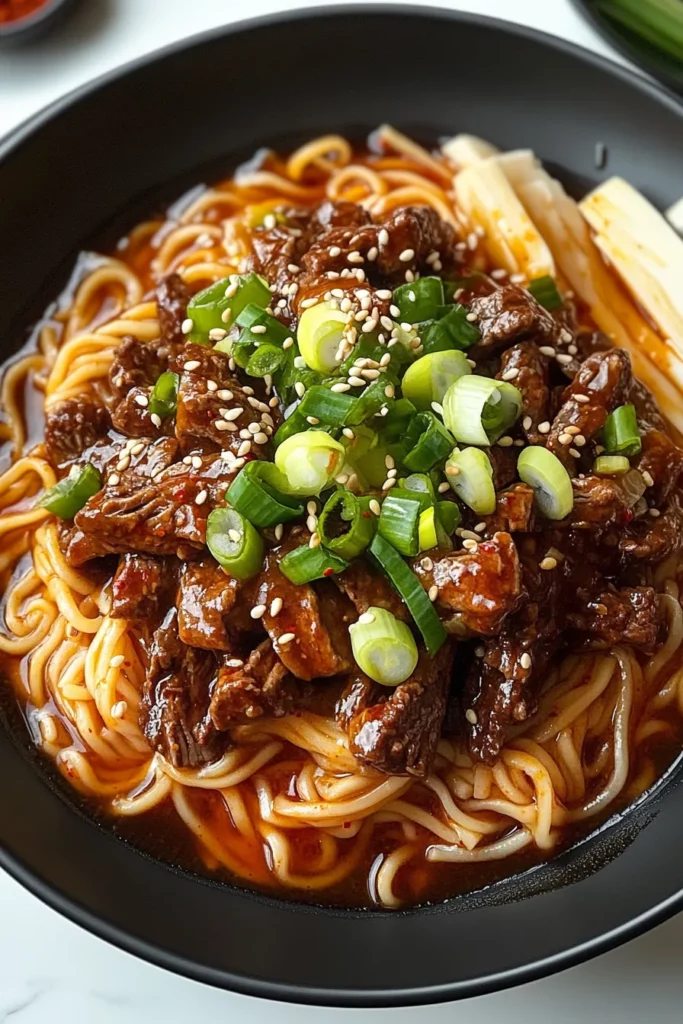

Spicy Korean Gochujang Beef Noodles
Description
Experience a burst of spicy-sweet goodness with every bite of tender beef and slurpy noodles, all enveloped in a rich gochujang sauce that's simply irresistible.
Ingredients
Instructions
-
Cook the noodles according to the package instructions. Drain and set aside. If using rice noodles, rinse them under cold water to prevent sticking.
-
Heat the vegetable oil in a large skillet or wok over medium-high heat. Add the chopped onion and cook for about 3-4 minutes until softened.
-
Add the minced garlic and grated ginger to the skillet and cook for another minute until fragrant.
-
Add the ground beef to the skillet. Cook the beef, breaking it up with a spoon, until it is browned and cooked through (about 5-6 minutes). Drain any excess fat from the beef.
-
Stir in the gochujang, soy sauce, rice vinegar, honey, sesame oil, and red pepper flakes (if using). Cook for another 2-3 minutes, stirring constantly to coat the beef with the sauce.
-
Pour in the beef broth or water and bring the mixture to a simmer. Let it cook for about 4-5 minutes, allowing the sauce to thicken slightly.
-
Add the cooked noodles to the skillet and toss to coat them in the spicy beef sauce. Cook for an additional 2-3 minutes to heat through and absorb the flavors.
-
Once the noodles are well coated, remove from heat and divide them between serving bowls.
-
Garnish with chopped green onions, sesame seeds, julienned cucumber, and fresh cilantro leaves.
Note
- For a more authentic flavor, consider adding a touch of Korean chili flakes (gochugaru) to enhance the spice and smokiness.
- If you want to make this dish vegetarian, substitute the beef with tofu or a plant-based meat alternative.
- You can adjust the heat level by varying the amount of gochujang and red pepper flakes according to your taste preference.
- Leftovers can be stored in the fridge for up to 2 days, but the noodles may absorb the sauce, so you might need to add a little bit of water or broth to reheat.