

Spicy Coconut Curry Ramen is a vibrant, soul-warming bowl that brings together creamy coconut milk, bold red curry paste, and tender ramen noodles in one unforgettable meal. With crisp bell peppers, earthy mushrooms, fragrant ginger, garlic, and a bright squeeze of lime, this dish delivers layers of flavor that will have you slurping every drop. Dive into this recipe and discover why it’s the perfect weeknight dinner to spice up your routine!
Key Ingredients
Before diving into the kitchen, let’s take a look at the stars of this recipe—each one playing a crucial role in building that rich, spicy coconut curry broth.
- 2 cups coconut milk: Creamy base that gives the broth its rich, coconut flavor and smooth texture.
- 1 cup vegetable broth: Adds savory depth and balances the coconut’s richness.
- 2 packages ramen noodles: Silky strands that soak up the spicy coconut curry broth perfectly.
- 2 tablespoons red curry paste: Provides the vibrant color and bold, spicy flavor at the heart of the curry.
- 1 tablespoon vegetable oil: For sautéing aromatics and ensuring even cooking without sticking.
- 1 teaspoon chili flakes: Kicks up the heat and adds a touch of fiery intensity.
- 1 medium onion diced: Delivers sweetness and a savory foundation when softened.
- 2 cloves garlic minced: Imparts pungent aroma and layers of savory flavor.
- 1 tablespoon fresh ginger grated: Brightens the broth with zesty, warming notes.
- 1 tablespoon soy sauce: Contributes umami depth and seasoning complexity.
- 1 teaspoon fish sauce: Enhances savory richness with its salty, fermented taste.
- 1 tablespoon brown sugar: Balances heat and acidity with a hint of sweetness.
- 1 lime juiced: Infuses a fresh, tangy brightness that cuts through the richness.
- 1 cup mushrooms sliced: Adds earthy flavor and tender bite to the soup.
- 1 cup bell pepper sliced: Provides crisp texture and sweet, colorful contrast.
- 2 scallions chopped: Offers fresh, oniony garnish that lightens each spoonful.
- Handful fresh cilantro leaves: Final aromatic flourish for a bright, herbal finish.
How To Make Spicy Coconut Curry Ramen
Creating this Spicy Coconut Curry Ramen is all about layering flavors and textures. You’ll start by building a fragrant foundation with onions, garlic, and ginger, then swirl in curry paste and chili flakes before simmering everything in creamy coconut milk and vegetable broth. Once the veggies are tender, the ramen goes straight into the pot, finishing with a hit of lime juice. Follow these steps for maximum flavor and a silky-smooth broth:
1. Heat vegetable oil in a large pot over medium heat and sauté the diced onion until it turns translucent and slightly golden, about 3–4 minutes.
2. Add the minced garlic, grated ginger, red curry paste, and chili flakes, stirring continuously for 1–2 minutes until the aromatics become fragrant and the paste darkens slightly.
3. Pour in the coconut milk and vegetable broth, stirring to combine, then bring the mixture to a gentle simmer—you’ll see tiny bubbles around the edges.
4. Stir in the soy sauce, fish sauce, and brown sugar until fully dissolved, then add the sliced mushrooms and bell pepper. Let everything simmer for 5 minutes so the vegetables soften and the flavors meld.
5. Add the ramen noodles to the pot and cook according to package instructions (about 3–4 minutes), stirring occasionally to prevent sticking and ensure even cooking.
6. Once the noodles are tender but still have a slight bite, turn off the heat and stir in the fresh lime juice to brighten the broth.
7. Divide the ramen and curry broth between bowls, then garnish generously with chopped scallions and fresh cilantro leaves before serving.
Serving Suggestions
This Spicy Coconut Curry Ramen shines on its own, but a few thoughtful touches can elevate the experience even further:
- Serve with steamed edamame sprinkled with sea salt for a simple, protein-rich side.
- Offer a small bowl of chili oil or sriracha on the table so guests can amp up the heat to their taste.
- Pair with crispy spring rolls or vegetable gyoza for a fun, shareable appetizer.
- Add a refreshing cucumber salad dressed in rice vinegar and sesame oil to balance the curry’s richness.
Tips For Perfect Spicy Coconut Curry Ramen
Nailing this recipe is all about balancing heat, sweetness, and tang. Here are a few friendly pointers to make it even better:
- Adjust the amount of red curry paste and chili flakes to control the heat level.
- Fresh lime juice brightens the flavor and balances the richness of the coconut milk.
- For a protein boost, add cooked chicken, shrimp, or tofu during the simmering step.
- Leftover curry broth can be stored in the fridge for up to two days.
How To Store It
To keep your Spicy Coconut Curry Ramen at its best when you’re not devouring it right away, follow these guidelines for a stress-free meal prep:
- Refrigerate in an airtight container once cooled, storing broth and solids together for up to 2 days.
- If possible, keep noodles separate from the broth to prevent them from becoming overly soft.
- For longer storage, freeze the curry broth (without noodles) in a freezer-safe bag for up to 2 months—thaw overnight in the fridge before reheating.
- Gently reheat on the stovetop over low heat, stirring occasionally, and add fresh or leftover noodles just before serving to maintain texture.
Frequently Asked Questions
A few quick answers to common questions:
- How long does it take to prepare this recipe?
From start to finish, plan on about 25–30 minutes. This includes 5 minutes to dice the onion, mince garlic, grate ginger and slice vegetables, 2 minutes to sauté the aromatics and curry paste, 5 minutes simmering the broth with vegetables, 3–4 minutes cooking the ramen, and a few minutes for final garnishes and serving.
- How can I adjust the spice level to suit milder tastes?
To reduce heat, halve the red curry paste and omit or decrease the chili flakes. You can also stir in additional coconut milk or a splash of dairy-free milk toward the end of cooking to mellow the heat. Conversely, for extra kick, increase the curry paste by a teaspoon or add more chili flakes.
- What’s the best way to store and reheat leftovers?
Cool the curry broth completely, transfer it to an airtight container, and refrigerate for up to two days. When you’re ready to eat, gently reheat the broth in a saucepan over low heat until simmering, then add fresh or leftover noodles to soften. Garnish with scallions and cilantro just before serving.
- Which proteins work best in this curry, and when should I add them?
Cooked chicken, shrimp, tofu or tempeh all pair well. Add bite-sized or thinly sliced cooked proteins during step 4, after the soy sauce and fish sauce but before simmering the mushrooms and peppers, so they warm through without overcooking.
- Can I make this recipe vegan or gluten-free?
For a vegan version, replace fish sauce with extra soy sauce or tamari, and ensure your curry paste contains no shrimp paste. Use gluten-free ramen or rice noodles to make it gluten-free, and swap soy sauce for tamari if needed.
- What noodle types can I use if I don’t have standard instant ramen?
You can use fresh wheat ramen, udon, soba (check for buckwheat ratio), rice vermicelli or rice-stick noodles. Adjust cooking time according to package instructions, adding them at the same point in step 5 and stirring gently to prevent sticking.
- How do I achieve a thicker, creamier broth?
Simmer the broth uncovered for a few extra minutes to reduce liquid, stirring occasionally. You can also whisk in a teaspoon of cornstarch slurry (cornstarch mixed with cold water) during the final simmer or add an extra splash of coconut milk for richness.
- Is there a substitute for fresh lime juice, and how important is it?
Fresh lime juice adds brightness and balances the richness of the coconut milk. If you’re out of limes, use a dash of rice vinegar or white vinegar and a pinch of sugar, though the flavor won’t be as vibrant. Bottled lime juice can work in a pinch but may taste less fresh.
What Makes This Special
This Spicy Coconut Curry Ramen hits all the right notes: creamy yet bright, spicy but balanced, and loaded with textures from silky noodles to crisp veggies. It works because each ingredient plays its part—ginger and garlic build aroma, coconut milk brings lush creaminess, and lime juice cuts through with zing. Feel free to print and save this article for those busy weeknights when you need a flavor-packed, comforting bowl. If you whip it up, drop a comment or question below—your feedback always makes my day!
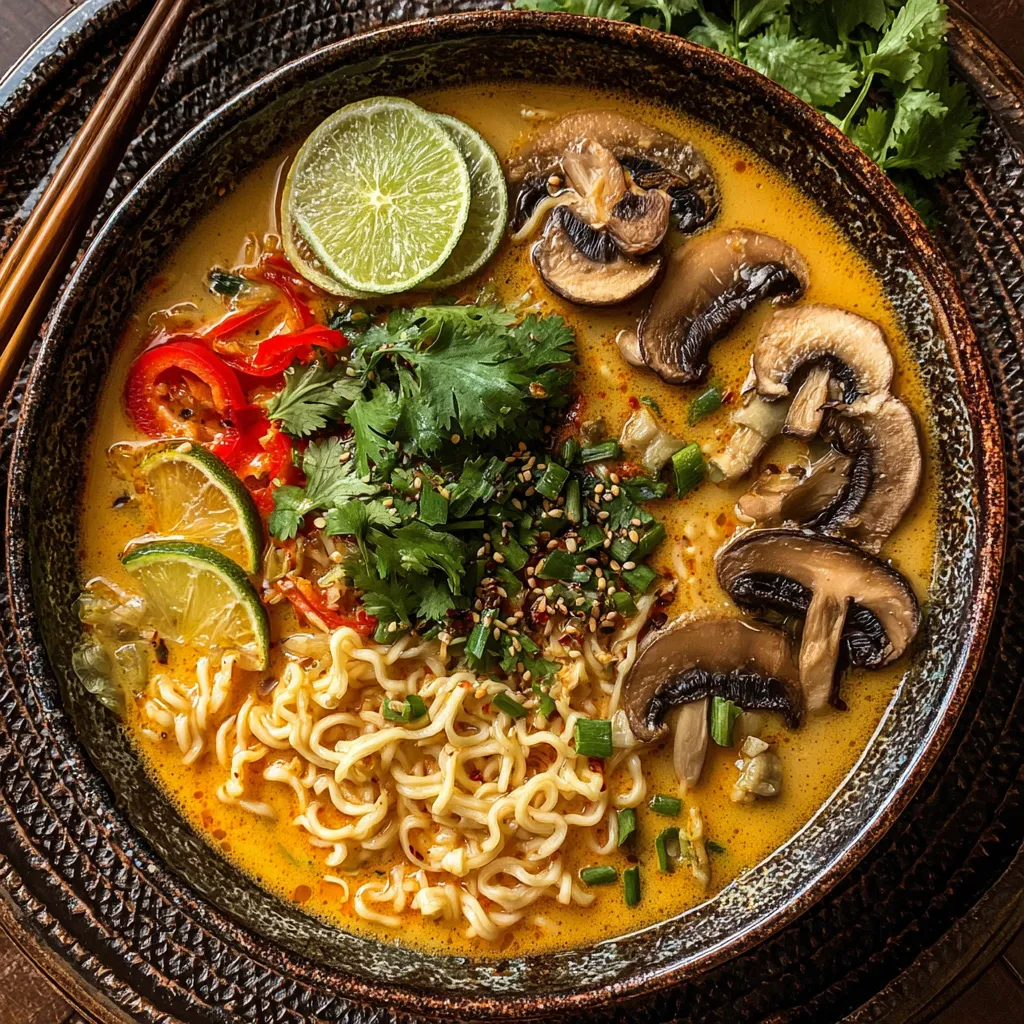

Spicy Coconut Curry Ramen
Description
This rich coconut curry broth awakens your senses with fragrant ginger and garlic, tender ramen noodles, crisp bell peppers, and a punch of lime. Garnished with scallions and cilantro for a fresh finish.
Ingredients
Instructions
-
Heat vegetable oil in a large pot over medium heat and sauté diced onion until translucent.
-
Add minced garlic, grated ginger, red curry paste, and chili flakes, cooking for 1–2 minutes until fragrant.
-
Pour in coconut milk and vegetable broth, stirring to combine and bring the mixture to a gentle simmer.
-
Stir in soy sauce, fish sauce, and brown sugar, then add sliced mushrooms and bell pepper, simmering for 5 minutes.
-
Add ramen noodles to the pot and cook according to package instructions, about 3–4 minutes, stirring occasionally.
-
Once noodles are tender, turn off the heat and stir in lime juice.
-
Divide ramen and broth between bowls and garnish with chopped scallions and fresh cilantro leaves.
Note
- Adjust the amount of red curry paste and chili flakes to control the heat level.
- Fresh lime juice brightens the flavor and balances the richness of the coconut milk.
- For a protein boost, add cooked chicken, shrimp, or tofu during the simmering step.
- Leftover curry broth can be stored in the fridge for up to two days.

