

Get ready to dive into Smothered Chicken Thighs with Creamy Gravy, where bone-in chicken thighs crisp to golden perfection before being bathed in a silky garlic-onion gravy that clings to every bite. This one-pan dinner transforms humble ingredients into a velvety, herb-kissed feast—ideal for cozy weeknight dinners or impressive weekend gatherings. Serve it over fluffy rice, creamy mashed potatoes, or buttered egg noodles for a truly comforting meal that’s sure to become a family favorite.
Key Ingredients
These simple yet flavorful ingredients come together to create the perfect balance of crispy chicken and creamy, herb-infused gravy. Be sure to have each one measured and ready for a smooth cooking experience.
- 8 bone-in, skin-on chicken thighs (about 3 to 3.5 lb total): Adds rich, juicy dark meat that stays tender and imparts flavor to the gravy.
- 2 teaspoons kosher salt (plus more to taste): Enhances overall seasoning and helps the chicken retain moisture during cooking.
- 1 teaspoon freshly ground black pepper: Provides a subtle heat and depth to the seasoning blend.
- 1 teaspoon garlic powder: Infuses savory, aromatic flavor into each bite.
- 1 teaspoon onion powder: Contributes a sweet-savory base note to the chicken seasoning.
- 1 teaspoon smoked paprika (or regular paprika): Adds a hint of smokiness and vibrant color.
- 1/2 teaspoon dried thyme: Introduces earthy, herbal undertones.
- 1/2 teaspoon dried oregano: Brings a touch of Mediterranean herbal aroma.
- 1/2 teaspoon poultry seasoning (optional but recommended): Offers a well-rounded blend of classic poultry herbs.
- 1/2 cup all-purpose flour (for dredging): Creates a light crust and helps thicken the gravy later.
- 3 tablespoons neutral oil (canola, vegetable, or light olive oil): Provides the high-heat fat needed for a crisp sear.
- 3 tablespoons unsalted butter, divided: Adds rich flavor to the chicken and gravy base.
- 1 large yellow onion, thinly sliced: Caramelizes into sweet, tender ribbons for the gravy.
- 3 cloves garlic, minced: Delivers fresh, pungent aroma and taste.
- 2 tablespoons all-purpose flour (for gravy): Forms the roux that thickens and enriches the sauce.
- 2 1/2 cups low-sodium chicken broth, warmed: Serves as the flavorful liquid foundation for the gravy.
- 1 cup heavy cream (or half-and-half for a lighter version): Gives the gravy its creamy, luxurious texture.
- 1 tablespoon Worcestershire sauce: Adds savory umami depth.
- 1 teaspoon Dijon mustard (optional, for depth): Introduces a gentle tang and complexity.
- 1/4 teaspoon cayenne pepper (optional, for a mild kick): Provides subtle warmth and balance.
- 2 tablespoons chopped fresh parsley (for garnish): Brightens the dish with fresh color and flavor.
- Cooked white rice, mashed potatoes, or buttered egg noodles (for serving): Perfect vehicles to soak up the creamy gravy.
How To Make Smothered Chicken Thighs with Creamy Gravy
Ready to bring it all together? This section walks you through each step to achieve perfectly smothered chicken thighs bathed in a luscious, creamy gravy. From drying and seasoning the chicken for that irresistible crisp, to forming the roux for a silky sauce, we'll guide you through searing, simmering, and finishing touches. Grab your skillet and let’s get cooking—soon you’ll have tender chicken nestled in a gravy so flavorful, it’ll have everyone asking for seconds!
1. Prep and season the chicken:
Begin by patting the chicken thighs very dry with paper towels to remove excess moisture and ensure a crisp sear. In a small bowl, mix 2 teaspoons kosher salt, 1 teaspoon black pepper, 1 teaspoon garlic powder, 1 teaspoon onion powder, 1 teaspoon smoked paprika, 1/2 teaspoon dried thyme, 1/2 teaspoon dried oregano, and 1/2 teaspoon poultry seasoning. Sprinkle this seasoning mixture evenly over both sides of each thigh, pressing gently into the skin and meat. Let the seasoned chicken rest at room temperature for about 15 minutes while you prep the other ingredients.
2. Dredge the chicken:
Place 1/2 cup all-purpose flour on a plate or shallow dish. Lightly dredge each chicken thigh in the flour, shaking off any excess to leave a thin, even coating. This step not only helps the chicken develop a golden crust but also reserves extra flour for thickening the gravy later if needed.
3. Brown the chicken:
Heat a large, heavy skillet or braiser over medium-high heat and add the oil plus 1 tablespoon of butter. When the fat is hot and shimmering, place the thighs skin-side down in a single layer, working in batches to avoid overcrowding. Sear for 6 to 8 minutes without moving for a deep golden crust, then flip and cook the second side for 4 to 5 minutes. Transfer the browned chicken to a plate, pour off most of the fat (leaving 2–3 tablespoons plus the flavorful fond), and set aside.
4. Cook the onions and garlic:
Reduce heat to medium and add the remaining 2 tablespoons butter. When melted, add the sliced onions with a pinch of salt. Cook for 8 to 10 minutes, stirring occasionally, until the onions are soft, lightly caramelized, and golden. Add the minced garlic and cook for 30 to 60 seconds, stirring constantly, just until fragrant—avoid browning the garlic.
5. Build the roux for the gravy:
Sprinkle 2 tablespoons flour over the onions and garlic. Stir well to coat and cook for 1 to 2 minutes, stirring constantly to eliminate the raw flour taste. The mixture will become thick and pasty—a perfect roux base.
6. Add liquids and season the gravy:
Slowly whisk in the warm chicken broth, about 1/2 cup at a time, scraping up the browned bits from the pan. Once smooth, whisk in the heavy cream, Worcestershire sauce, and Dijon mustard if using. Add cayenne pepper for a mild kick. Bring to a gentle simmer, stirring frequently, and taste for seasoning—add salt and pepper as needed.
7. Smother the chicken and simmer:
Nestle the browned thighs skin-side up into the gravy, along with any juices collected on the plate. Spoon onions and gravy over each piece, leaving some skin exposed to preserve texture. Reduce heat to low or medium-low, cover, and simmer for 25 to 30 minutes, until the chicken is cooked through and tender (175°F–185°F near the bone).
8. Adjust the gravy consistency:
After cooking, check the gravy—it should coat a spoon but still pour easily. If too thin, remove the chicken and simmer the sauce uncovered to reduce, or whisk in a slurry of 1 teaspoon flour and 2 teaspoons cool water, cooking for 2–3 minutes. If too thick, stir in a splash of warm broth or cream until desired consistency is reached. Taste and adjust seasonings.
9. Finish and garnish:
Return the chicken to the pan if removed, spoon hot gravy and onions over the top, and turn off the heat. Let the dish rest for 5 minutes to meld flavors. Sprinkle with chopped parsley for a burst of color and freshness.
10. Serve:
Arrange the chicken over your choice of fluffy white rice, creamy mashed potatoes, or buttered egg noodles. Spoon generous amounts of creamy onion gravy over everything, and add a simple side—like green beans, sautéed spinach, or a crisp salad—to balance the richness.
Serving Suggestions
When it comes to plating your Smothered Chicken Thighs with Creamy Gravy, a few simple touches can turn this homestyle classic into a memorable feast. Whether you prefer to cozy up with mashed potatoes or lighten things up with fresh greens, these suggestions will help you serve each plate looking as good as it tastes. From stacking slices of chicken to adding colorful garnishes, we’ll cover ways to elevate your presentation and ensure every forkful delivers maximum comfort and flavor.
- Classic Mashed Potatoes: Spoon a fluffy mound of buttery mashed potatoes onto each plate and nestle the chicken thighs on top, then ladle ample creamy gravy over everything for that ultimate comfort-food combo.
- Buttered Egg Noodles: Toss egg noodles in a pat of butter and a sprinkle of parsley, then arrange the chicken over the noodles, letting the glossy gravy coat every strand for a satisfying one-dish meal.
- Fluffy White Rice: Mound steamed rice on each plate and top with the smothered chicken, allowing the rice to soak up the savory gravy for an irresistibly tender bite in every mouthful.
- Garden-Fresh Greens: Balance the richness by adding sautéed spinach, a crisp salad, or steamed green beans drizzled with a splash of lemon for a bright, vibrant contrast.
Tips For Perfect Smothered Chicken Thighs with Creamy Gravy
Bringing out the best in Smothered Chicken Thighs with Creamy Gravy is all about patience and attention to detail—and a few clever tweaks can elevate this dish from great to unforgettable. Whether you’re craving extra depth of flavor, need a lighter spin, or want to prep ahead for a busy weeknight, these straightforward tips will help you tailor the recipe to your kitchen and taste. From brining for juiciness to subbing in lighter dairy, each note below offers a practical way to ensure your chicken stays tender, the gravy stays rich, and every serving leaves you smiling.
- For extra flavor, brine the chicken thighs in lightly salted water (3 tablespoons salt per quart) for 1 to 2 hours, then rinse, pat dry, and season as directed.
- Bone-in, skin-on thighs are ideal because they stay juicy and help flavor the gravy; you can substitute drumsticks or leg quarters with similar results.
- If you prefer using boneless, skinless thighs, reduce the covered simmering time to about 15 to 20 minutes and watch closely to avoid overcooking.
- For a lighter version, use half-and-half instead of heavy cream and skim some fat after simmering; the gravy will be slightly thinner but still rich.
- Add sliced mushrooms with the onions or a handful of frozen peas at the end for extra vegetables and texture.
- Leftovers reheat very well; cool completely, refrigerate up to 3 days, and gently rewarm over low heat, thinning the gravy with a splash of broth or cream if needed.
- This dish is excellent for entertaining because you can keep it warm, covered, over very low heat or in a low oven (about 200°F) until ready to serve.
How To Store It
When it comes to preserving all that tender chicken and velvety gravy, proper storage ensures you’ll enjoy the same rich flavors days later. Whether you’re packing leftovers for a quick lunch or prepping this dish in advance for a gathering, these storage methods will keep everything tasting freshly made and safe to enjoy. Follow these tips to handle the gravy gently, avoid separation, and reheat your smothered chicken to perfection.
- Refrigerate in Airtight Containers: Transfer cooled chicken and gravy into sealed containers and store in the fridge for up to 3 days, keeping flavors locked in and preventing dehydration.
- Freeze for Longer Storage: Place portions in freezer-safe bags or containers, remove excess air, and freeze for up to 3 months. Thaw overnight in the refrigerator before reheating.
- Reheat Gently on the Stovetop: Warm leftovers over low heat, stirring occasionally and adding a splash of chicken broth or cream to maintain a smooth, creamy gravy without separating.
- Keep Warm for Serving: When entertaining, keep the skillet covered on very low heat or in a 200°F oven to maintain temperature and consistency until guests are ready to eat.
Frequently Asked Questions
Got questions? Here are answers to common queries that will help you nail this recipe every time.
- How can I prepare the chicken ahead of time and is brining recommended?
You can brine the chicken thighs in a lightly salted solution (3 tablespoons kosher salt per quart of water) for 1 to 2 hours, then rinse and pat dry before seasoning. Brining helps the meat stay extra juicy and evenly seasoned. After brining, follow the recipe’s seasoning and dredging steps just before cooking.
- What’s the best way to achieve a crisp, golden-brown skin on the chicken thighs?
Pat each thigh completely dry with paper towels to remove surface moisture, then season and dredge lightly in flour. Heat the oil and 1 tablespoon of butter until shimmering before adding the thighs skin-side down. Do not move them for 6 to 8 minutes; this undisturbed sear creates a deeply browned, crispy skin.
- How can I tell when the chicken thighs are fully cooked and tender?
After simmering in the gravy for 25 to 30 minutes, check the internal temperature with an instant-read thermometer. The thickest part near the bone should register between 175°F and 185°F for juicy, fall-off-the-bone texture. You can also pierce the meat near the bone; it should feel very tender and the juices should run clear.
- What should I do if my gravy is too thin or too thick?
If the gravy is too thin, remove the chicken and simmer the sauce uncovered until it reduces to your desired consistency, or whisk in a slurry of 1 teaspoon flour mixed with 2 teaspoons cool water and cook for 2 to 3 minutes. If it’s too thick, stir in a splash of warm chicken broth or more cream until it loosens up and coats a spoon smoothly.
- Can I use boneless, skinless chicken thighs or other cuts instead of bone-in, skin-on thighs?
Yes, you can substitute boneless, skinless thighs or even drumsticks. Reduce the covered simmering time to about 15 to 20 minutes for boneless thighs to prevent overcooking. Keep an eye on the internal temperature, aiming for around 165°F for boneless meat.
- How can I lighten the dish without sacrificing flavor?
Swap heavy cream for half-and-half and skim excess fat from the pan after browning the chicken. You’ll get a slightly thinner gravy but still rich flavor. You can also stir in a handful of sliced mushrooms with the onions for extra bulk and nutrition.
- What’s the best way to reheat leftovers so the chicken stays moist and the gravy doesn’t separate?
Cool leftovers completely, then reheat gently over low heat on the stovetop. Add a splash of chicken broth or cream to refresh the gravy, stirring frequently until warmed through. Avoid high heat, which can make the gravy grainy or break.
What Makes This Special
What makes Smothered Chicken Thighs with Creamy Gravy truly special is that harmonious dance between crisp, golden chicken skin and that irresistibly silky, herb-laced gravy. The secret lies in the simple technique of dredging and browning, which locks in juices, while caramelized onions and garlic build layers of flavor in every spoonful. It’s the kind of dish that feels both cozy and impressive—perfect for Sunday suppers or memorable family dinners. Go ahead, print this article, tuck it into your recipe binder, and let me know in the comments how your kitchen smelled, how the gravy turned out, or any tweaks you tried!
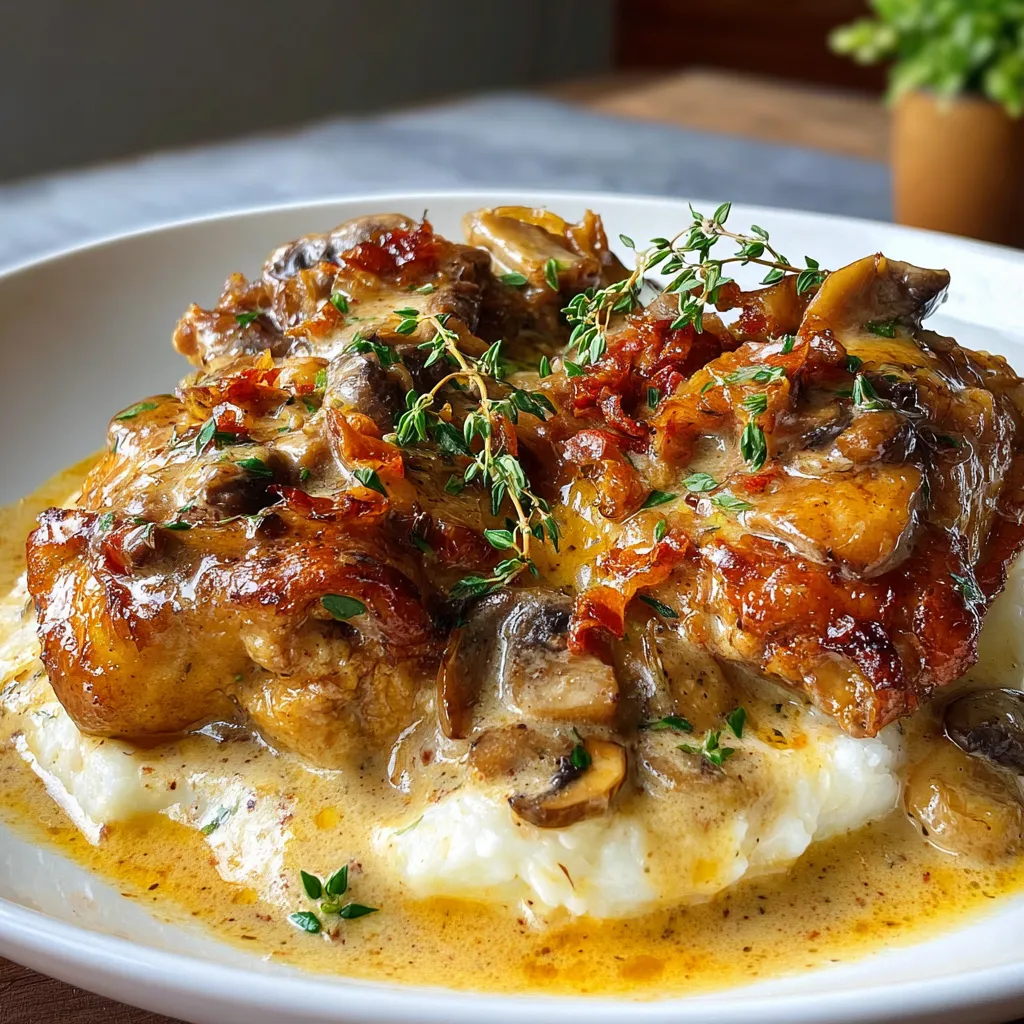

Smothered Chicken Thighs with Creamy Gravy
Description
Bone-in chicken thighs crisped to golden perfection then smothered in a velvety gravy rich with caramelized onions, garlic, and a hint of herbs. Serve over rice or mashed potatoes for a hearty meal.
Ingredients
Instructions
-
Prep and season the chicken:
-
- Pat the chicken thighs very dry with paper towels to help them brown well.
-
- In a small bowl, mix 2 teaspoons kosher salt, 1 teaspoon black pepper, garlic powder, onion powder, smoked paprika, dried thyme, dried oregano, and poultry seasoning.
-
- Sprinkle this seasoning mixture all over the chicken thighs, on both sides, gently pressing it into the skin and meat.
-
- Let the seasoned chicken rest at room temperature for about 15 minutes while you prep other ingredients.
-
Dredge the chicken:
-
- Place 1/2 cup all-purpose flour on a plate or shallow dish.
-
- Lightly dredge each chicken thigh in the flour, shaking off any excess. You want a thin, even coating that will help form a crust and later thicken the gravy.
-
- Reserve any remaining seasoned flour to possibly use later in the gravy if needed.
-
Brown the chicken:
-
- In a large, heavy skillet or braiser (12-inch cast iron or similar) over medium-high heat, add the oil and 1 tablespoon of butter.
-
- When the fat is shimmering and hot, place the chicken thighs skin-side down in a single layer (do not overcrowd; cook in batches if necessary).
-
- Sear for 6 to 8 minutes on the first side, without moving, until the skin is deep golden brown and crisp.
-
- Flip and cook the second side for 4 to 5 minutes until golden.
-
- Transfer the browned chicken to a plate; it will finish cooking later in the gravy. Pour off most of the excess fat from the pan, leaving about 2 to 3 tablespoons along with the browned bits (fond).
-
Cook the onions and garlic:
-
- Reduce the heat to medium.
-
- Add the remaining 2 tablespoons butter to the pan. When melted, add the sliced onions with a pinch of salt.
-
- Cook, stirring occasionally, for 8 to 10 minutes until the onions become soft, lightly caramelized, and golden around the edges.
-
- Add the minced garlic and cook for 30 to 60 seconds, stirring constantly, just until fragrant. Do not let the garlic brown.
-
Build the roux for the gravy:
-
- Sprinkle 2 tablespoons flour over the onions and garlic.
-
- Stir well to coat the onions; cook for 1 to 2 minutes, stirring constantly, to cook off the raw flour taste. The mixture will be thick and pasty.
-
Add liquids and season the gravy:
-
- Slowly whisk in the warm chicken broth, about 1/2 cup at a time, scraping up any browned bits from the bottom of the pan.
-
- Once smooth, whisk in the heavy cream, Worcestershire sauce, and Dijon mustard (if using).
-
- Add cayenne pepper if you like a mild heat.
-
- Bring the mixture to a gentle simmer, stirring frequently. Taste and add salt and pepper as needed, keeping in mind the chicken is already seasoned.
-
Smother the chicken and simmer:
-
- Nestle the browned chicken thighs into the gravy, skin-side up, along with any juices that accumulated on the plate.
-
- Spoon some of the onions and gravy over the top of each piece, but leave some of the crispy skin exposed if you want it to stay a bit textured.
-
- Reduce the heat to low or medium-low so the gravy is at a gentle simmer, not a rapid boil.
-
- Cover with a lid and cook for 25 to 30 minutes, or until the chicken is cooked through and very tender. The internal temperature should reach at least 175°F to 185°F in the thickest part near the bone for juicy, tender dark meat.
-
Adjust the gravy consistency:
-
- After the chicken is cooked, check the gravy. It should be creamy, thick enough to coat a spoon, but still pourable.
-
- If it is too thin, remove the chicken to a plate and simmer the gravy uncovered for a few minutes to reduce, stirring frequently. If you want it even thicker, whisk 1 teaspoon of the leftover dredging flour with 2 teaspoons of cool water to make a slurry, then whisk that into the simmering gravy and cook for 2 to 3 minutes.
-
- If the gravy is too thick, stir in a splash of warm chicken broth or a little more cream until it reaches your desired consistency.
-
- Taste and adjust salt, pepper, or Worcestershire sauce as needed.
-
Finish and garnish:
-
- Return the chicken (if you removed it) to the pan and spoon some of the hot gravy and onions over the top to “smother” it.
-
- Turn off the heat and let the dish sit for 5 minutes to allow the flavors to meld.
-
- Sprinkle with chopped fresh parsley for a bright, fresh finish.
-
Serve:
-
- Serve the smothered chicken thighs over fluffy white rice, creamy mashed potatoes, or buttered egg noodles.
-
- Spoon plenty of the creamy onion gravy over the chicken and the starch.
-
- Add a simple side like green beans, sautéed spinach, collard greens, or a crisp salad to balance the richness.
Note
- For extra flavor, brine the chicken thighs in lightly salted water (3 tablespoons salt per quart) for 1 to 2 hours, then rinse, pat dry, and season as directed.
- Bone-in, skin-on thighs are ideal because they stay juicy and help flavor the gravy; you can substitute drumsticks or leg quarters with similar results.
- If you prefer using boneless, skinless thighs, reduce the covered simmering time to about 15 to 20 minutes and watch closely to avoid overcooking.
- For a lighter version, use half-and-half instead of heavy cream and skim some fat after simmering; the gravy will be slightly thinner but still rich.
- Add sliced mushrooms with the onions or a handful of frozen peas at the end for extra vegetables and texture.
- Leftovers reheat very well; cool completely, refrigerate up to 3 days, and gently rewarm over low heat, thinning the gravy with a splash of broth or cream if needed.
- This dish is excellent for entertaining because you can keep it warm, covered, over very low heat or in a low oven (about 200°F) until ready to serve.

