

Slow Cooker Korean Beef is the ultimate crowd-pleaser for those nights when you want big, bold flavors without hovering over the stove. This rich, savory-sweet beef simmers away for hours in your slow cooker, absorbing a blend of garlic, ginger, soy sauce, and a hint of gochujang to deliver a taste that’s both comforting and exciting. As someone who loves fuss-free meals, I’m all about that “set it & forget it!” life—just toss your chuck roast and sauce into the Crock-Pot in the morning, and by dinnertime, you have tender, shred-ready beef that practically melts in your mouth. Whether you’re feeding a hungry crowd or meal-prepping for the week, this recipe slots perfectly into your rotation. Trust me, once you’ve had tender strands of Korean beef over fluffy rice, you’ll find yourself craving it again and again!
From the moment you start browning the edges of the roast—or in this recipe’s case, trimming the fat and placing it straight into the slow cooker—there’s something magical about how simple ingredients transform into a deeply flavored feast. I love how easy this is for beginner cooks: no fancy techniques required, just basic whisking and a slow simmer. In under half an hour of prep time and a handful of pantry staples, you’ll create a dish worthy of a special occasion. And at only about 460 calories per serving, it’s a guilt-free indulgence for both lunch and dinner. Plus, the hands-off cooking approach means you can focus on setting the table, preparing side dishes, or just unwinding while the magic happens. Dive in, and let your slow cooker do the heavy lifting for a meal that’s nothing short of sensational.
KEY INGREDIENTS IN SLOW COOKER KOREAN BEEF
Before we dive into the cooking steps, let’s chat about the star players in this recipe. Each ingredient packs a specific punch, coming together to build layers of savory, sweet, tangy, and umami goodness. Here’s a closer look at what you’ll be using:
- Beef Chuck Roast
A well-marbled cut that becomes melt-in-your-mouth tender after slow cooking. Its rich fat content renders down to keep the meat juicy and flavorful.
- Beef Broth
Adds depth and body to the sauce, helping create a luscious cooking liquid that the beef soaks up. It also balances the sweetness of the brown sugar.
- Soy Sauce
Provides that signature umami backbone and savory saltiness. It’s the glue that ties the sweet and spicy elements together.
- Brown Sugar
Contributes a gentle sweetness and a touch of caramel note, mellowing out the heat from the chili paste and giving the sauce a glossy finish.
- Sesame Oil
Brings a toasty, nutty aroma that intensifies as it cooks. A little goes a long way in infusing the beef with authentic Asian flair.
- Garlic
Delivers punchy, aromatic notes that enhance the overall savoriness. Minced and layered into the sauce, it softens and sweetens as it simmers.
- Onion
Adds natural sweetness and texture. As it slow cooks, it breaks down, adding complexity to the sauce and tender ribbons alongside the beef.
- Ginger
Lends a bright, zingy warmth that cuts through the richness. Freshly minced, it brings a lively, peppery kick.
- Chili Paste (Gochujang)
A spicy, fermented red pepper paste that adds depth, heat, and a hint of tang. Adjust to your preferred spice level for a mild or fiery finish.
- Rice Vinegar
Provides a light, acidic lift to balance the richness of the beef and the sweetness of the sugar. It brightens the overall flavor profile.
- Cornstarch
Used to thicken the sauce into a silky glaze that clings to every shred of meat. It ensures you end up with a restaurant-style finish.
- Water
Mixed with cornstarch to create a slurry, preventing lumps and guaranteeing a smooth sauce consistency.
- Cooked Rice
The perfect, neutral canvas for soaking up all the saucy goodness. Steamed white or brown rice works beautifully.
- Chopped Green Onions
Offer a pop of fresh color and mild onion flavor to contrast the richness of the beef.
- Sesame Seeds
Add a subtle crunch and decorative touch, enhancing the dish’s visual appeal and toasty notes.
HOW TO MAKE SLOW COOKER KOREAN BEEF
Ready to get cooking? This section walks you through each step so you can enjoy fork-tender beef bathed in a rich, savory-sweet sauce. Follow along and let your slow cooker take center stage.
1. Trim the excess fat from the beef chuck roast and place the roast directly into the slow cooker insert. Removing extra fat ensures your final dish isn’t greasy, while the remaining marbling melts into the meat.
2. In a medium bowl, combine the beef broth, soy sauce, brown sugar, sesame oil, minced garlic, sliced onion, minced ginger, chili paste, and rice vinegar. Whisk vigorously until the brown sugar is completely dissolved, creating a cohesive sauce.
3. Pour the sauce mixture over the roast, making sure it’s fully submerged in the liquid. This ensures every part of the beef gets infused with that delicious flavor.
4. Cover the slow cooker and cook on low for 8 hours or on high for 4 hours. The goal is for the beef to become so tender that it shreds easily when poked with a fork.
5. Once the cooking time is up, carefully remove the roast from the slow cooker using tongs or a slotted spoon. Place it on a cutting board and use two forks to shred the meat into bite-sized pieces.
6. To thicken the sauce, whisk together the cornstarch and water in a small bowl until no lumps remain. This mixture is your slurry.
7. Stir the slurry back into the hot sauce in the slow cooker. Let it cook, uncovered, for about 10 minutes, stirring occasionally until the sauce becomes thickened and glossy.
8. Return the shredded beef to the slow cooker, tossing it gently so each strand is coated in that irresistible sauce. Serve immediately over cooked rice and garnish with chopped green onions and sesame seeds for a beautiful finish.
SERVING SUGGESTIONS FOR SLOW COOKER KOREAN BEEF
After all that slow-cooking magic, you’ll want to present your Korean beef in ways that highlight its incredible flavors and textures. These suggestions will take your meal from simple to spectacular, ensuring every bite is a delight. Feel free to mix and match or get creative with your favorite sides and serving styles!
- Over a Bed of Fluffy Rice
Spoon the tender Korean beef over steaming white or brown rice. The rice acts as a neutral base that soaks up the savory-sweet sauce. For extra flair, stir a knob of butter into the rice for a richer mouthfeel.
- Taco-Style Wraps
Swap out tortillas for soft flour or corn shells and fill them with shredded beef, shredded cabbage, and a drizzle of spicy mayo. Top with pickled veggies for a playful fusion twist that’s perfect for casual gatherings.
- Asian-Inspired Salad Topper
Layer mixed greens, shredded carrots, cucumbers, and edamame in a bowl. Pile on the Korean beef as a protein-packed salad topping. Drizzle with a simple sesame-ginger dressing for a bright, refreshing contrast.
- Bowls with Steamed Veggies
Create a balanced bowl featuring steamed broccoli, snow peas, or bok choy alongside your Korean beef and rice. Finish with a sprinkle of sesame seeds and a wedge of lime for a meal that’s as nutritious as it is flavorful.
HOW TO STORE SLOW COOKER KOREAN BEEF
This Korean beef is just as delightful the next day—maybe even better once the flavors have had time to meld! Proper storage is key to preserving its texture and taste. Follow these tips to keep your leftovers fresh, juicy, and ready for a speedy reheat.
- Refrigerator Storage
Allow the beef to cool slightly, then transfer to an airtight container. Store in the fridge for up to 4 days. Reheat gently in a saucepan over low heat or in the microwave, adding a splash of beef broth to revive the sauce’s silky consistency.
- Freezer Meal Prep
Portion cooled, shredded beef and sauce into freezer bags or containers, leaving a little headspace for expansion. Freeze flat for easy stacking. It will keep well for up to 3 months. Thaw overnight in the fridge before reheating.
- Vacuum Sealing
If you have a vacuum sealer, seal individual servings to lock in freshness and prevent freezer burn. This method is ideal for long-term storage and quick lunches at work—just reheat the sealed pouch in hot water or a microwave-safe dish.
- Sauce Separation Tip
For the best texture, store shredded beef and sauce in separate containers. Heat the sauce first, then stir in the beef at the end to prevent overcooking. This helps maintain the meat’s tenderness and prevents it from becoming mushy.
CONCLUSION
Congratulations—you’ve just mastered a beginner-friendly recipe that delivers big on flavor with minimal hands-on time. We’ve covered everything from the essential ingredients to expert storage tips, all wrapped in a conversational, friendly tone that feels like chatting with a friend. This Slow Cooker Korean Beef is perfect for busy weeknights, lazy Sundays, or any occasion where you want a stress-free, crowd-pleasing meal. With prep time of just 25 minutes and a few simple steps, you’ll be rewarded with fork-tender beef in a rich, savory-sweet sauce that’s absolutely irresistible. Whether you serve it over rice, in tacos, or atop a fresh salad, this dish shines every time.
Feel free to print this article and save it for later reference—your future self will thank you when you’re juggling a busy schedule but still crave something homemade and delicious. Below, you’ll find a handy FAQ section to troubleshoot any questions you might have, from ingredient swaps to reheating tips. If you give this recipe a try, drop a comment and let me know how it turned out. Have questions, feedback, or personalized twists you’ve discovered? I’d love to hear your stories and help you tweak the recipe to perfection. Happy cooking, and here’s to many more tasty adventures together!
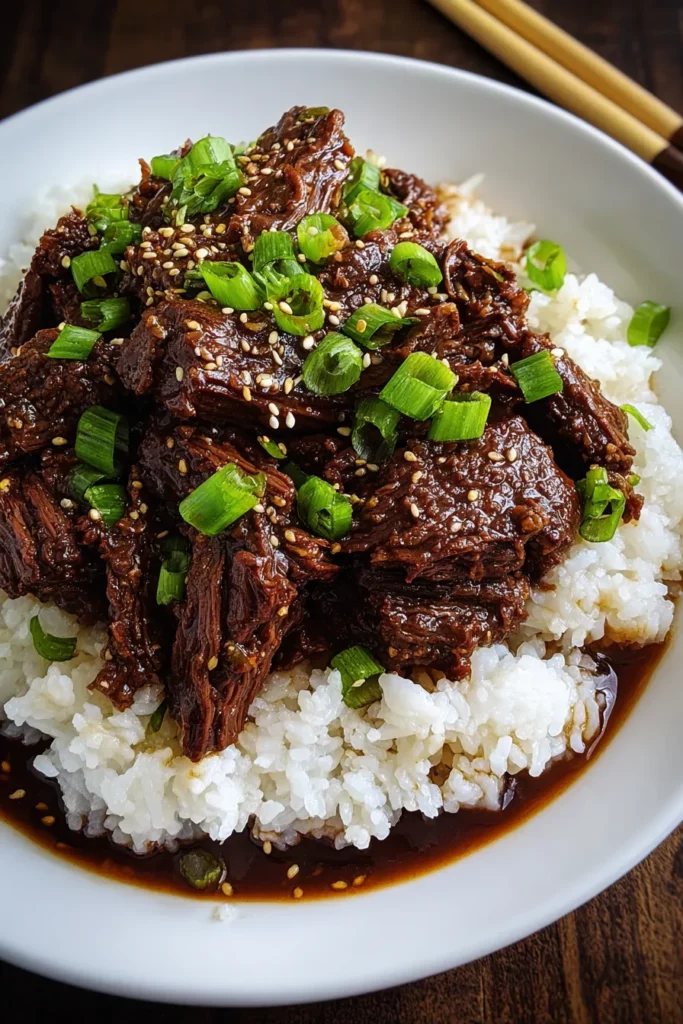

Slow Cooker Korean Beef
Description
Beef chuck roast simmers to fork-tender perfection in a rich, savory-sweet sauce with garlic, ginger, and a touch of gochujang. Absolutely irresistible over rice!
Ingredients
Instructions
-
Start by trimming the excess fat from the beef chuck roast. Place the roast in the slow cooker.
-
In a medium bowl, combine beef broth, soy sauce, brown sugar, sesame oil, minced garlic, sliced onion, minced ginger, chili paste, and rice vinegar. Whisk together until the brown sugar is fully dissolved.
-
Pour the mixture over the beef in the slow cooker, ensuring the roast is submerged in the liquid.
-
Cover the slow cooker and cook on low for 8 hours or on high for 4 hours, or until the beef is tender and easily shreds with a fork.
-
Once cooked, remove the beef from the slow cooker and shred it using two forks.
-
To thicken the sauce, mix cornstarch with water in a small bowl to create a slurry. Stir this slurry back into the sauce in the slow cooker.
-
Let the sauce thicken for about 10 minutes. Return the shredded beef into the sauce and stir to coat evenly.
-
Serve the Korean beef over cooked rice and garnish with chopped green onions and sesame seeds.
Note
- For a healthier option, you can substitute brown sugar with honey.
- Adding more chili paste can increase the spice level to your liking.
- This dish pairs well with steamed vegetables such as broccoli or snow peas.
- You can prepare this recipe a day in advance and refrigerate; the flavors will deepen over time.
- Leftovers can be used as a filling for tacos or as a topping for Asian-inspired salads.

