

Savory Shrimp and Sausage Gumbo is the kind of dish that wraps you up in its warm, comforting embrace and refuses to let go. The marriage of tender, succulent shrimp with slices of smoky sausage creates a harmony of tastes that dance across your palate. Each spoonful carries a whisper of Southern tradition, a hint of Cajun mischief, and the hearty satisfaction of a meal crafted with love. This gumbo’s rich roux—the very soul of the dish—takes time and patience, but the payoff is well worth every minute of whisking. Vegetables like onion, bell pepper, and celery bring fresh crunch and sweetness, while diced tomatoes and okra lend a subtle tartness and velvety texture that make this gumbo shine. A blend of aromatic spices—Cajun seasoning, thyme, smoked paprika, and just the right amount of cayenne—gives each mouthful a warm, lingering kick, perfectly balanced so you can savor every nuance.
I still remember the first time I ventured into making gumbo for a cozy weekend gathering. My kitchen was filled with laughter, the gentle hiss of the roux browning in its pot, and the clinking of wine glasses as friends gathered around the stove like curious onlookers. That afternoon stretched into evening, and as the gumbo simmered away for a solid 45 minutes, the flavors melded together into something almost magical. By the time I ladled it over steaming white rice, it felt like sharing a piece of my heart. Cooking this recipe is an intermediate adventure—expect about 15 minutes of prep, 1 hour and 15 minutes of cooking, plus a quick 10-minute rest before serving. At roughly 550 calories per hearty serving, it’s perfect for dinner or lunch when you need a soul-warming meal that doubles as a conversation starter. So grab your apron, ready your whisk, and let’s bring a taste of Southern hospitality right into your home.
KEY INGREDIENTS IN SAVORY SHRIMP AND SAUSAGE GUMBO
Before diving into the pot, it’s important to gather and understand each component that makes this gumbo so unforgettable. From the base of your roux to the final sprinkle of fresh herbs, every ingredient plays a starring role in building depth, texture, and that unmistakable Southern flair.
- Medium Shrimp
Succulent, peeled, and deveined, shrimp adds tender seafood sweetness and a pop of protein that pairs beautifully with the hearty sausage.
- Smoked Sausage
Sliced rounds of smoky, savory sausage infuse the gumbo with intense flavor and a satisfying richness that balances the shrimp.
- Vegetable Oil
The cooking medium for your roux, vegetable oil ensures an even heat distribution to develop that deep, nutty flavor.
- All-Purpose Flour
Combined with oil to form the roux, flour thickens the gumbo and provides its characteristic silky texture.
- Onion
Chopped onion contributes sweet and aromatic notes, forming the foundational layer of the flavor profile.
- Bell Pepper
Bright and crisp, bell pepper adds a gentle sweetness and vibrant color to the mix.
- Celery
With its subtle bitterness and crunchy bite, celery rounds out the classic “holy trinity” of Cajun cooking.
- Garlic
Minced garlic lends pungent warmth and depth, enhancing every savory note in the pot.
- Chicken Broth
A flavorful liquid base that melds the roux and ingredients together, ensuring a rich, cohesive gumbo.
- Diced Tomatoes
Undrained to keep their juices, tomatoes add acidity and a touch of brightness that balances the richness.
- Okra
Sliced okra naturally thickens the gumbo while contributing a unique, slightly grassy flavor.
- Cajun Seasoning
A spice blend of paprika, garlic powder, and cayenne that brings the distinctive kick of Cajun cuisine.
- Dried Thyme
Earthy and aromatic, thyme highlights the gumbo’s savory undertones.
- Smoked Paprika
Adds smoky depth and a warm, reddish hue to the broth.
- Cayenne Pepper
Adjust to taste for the level of heat you prefer, from a gentle warmth to a fiery blaze.
- Salt and Black Pepper
Essential for balancing and enhancing all the other flavors in the dish.
- Bay Leaves
Subtle and herbal, bay leaves infuse the simmering gumbo with complexity.
- Green Onions
Chopped and added at the end, green onions bring a fresh, zesty finish.
- Fresh Parsley
A final sprinkle of parsley adds bright, herbaceous flair.
- Cooked White Rice
The ideal bed for your gumbo, white rice soaks up the flavorful broth and completes each spoonful.
HOW TO MAKE SAVORY SHRIMP AND SAUSAGE GUMBO
With your ingredients at the ready and your enthusiasm high, crafting this gumbo becomes a rewarding process of layering flavors. These detailed steps will guide you through creating a perfect roux, building aromatic depth, and achieving that hearty, soul-satisfying broth.
1. In a large, heavy-bottomed pot, heat the vegetable oil over medium heat. Gradually stir in the flour, continuously whisking to form a smooth roux. Maintain a steady stir for 20–30 minutes until the roux turns a deep brown, being careful not to let it burn.
2. Once the roux reaches that rich chocolate hue, add the chopped onion, bell pepper, and celery. Sauté until the vegetables become tender and translucent, about 5 minutes. Stir in the minced garlic and cook for an extra 1 minute until fragrant.
3. Stir in the sausage slices, coating them thoroughly with the roux and vegetables. Let them cook for about 5 minutes, allowing the sausage to release its smoky, savory juices.
4. Slowly pour in the chicken broth, stirring constantly to combine it smoothly with the roux mixture and prevent lumps.
5. Add the undrained diced tomatoes, sliced okra, Cajun seasoning, dried thyme, smoked paprika, cayenne pepper, salt, black pepper, and bay leaves. Stir well to ensure each element is evenly distributed.
6. Bring the gumbo to a gentle boil, then reduce the heat and let it simmer uncovered for about 45 minutes, stirring occasionally to prevent sticking and allow the flavors to meld into a voluptuous broth.
7. After the gumbo has thickened beautifully, add the shrimp and stir thoroughly. Let it simmer for an additional 10 minutes, just until the shrimp turn pink and tender.
8. Remove the bay leaves and discard them. Stir in the chopped green onions and fresh parsley for a bright, herby finish.
9. Serve the gumbo piping hot over a bed of cooked white rice, allowing the rice to soak up every drop of that luscious broth.
SERVING SUGGESTIONS FOR SAVORY SHRIMP AND SAUSAGE GUMBO
Gumbo is more than just a stew—it’s a celebration on your table. When it’s time to serve, consider how presentation and accompaniments can elevate the entire experience. Whether you’re hosting a laid-back family dinner or a festive gathering of friends, these suggestions will help you present your gumbo in the most inviting way. Think about the balance of colors, textures, and flavors on the plate, and don’t be shy about letting guests customize their bowls with their favorite toppings. A well-set table, warm bowls, and garnishes at the ready will make your gumbo feel like the star of the show. Let your personality shine through, whether you opt for a rustic, no-fuss layout with ladles and bowls or a vibrant, buffet-style spread complete with all the sides you love. Remember, food that looks good tastes even better, and with gumbo, you have an opportunity to showcase plenty of bright herbs, colorful veggies, and those rich, dark-brown drippings from the pot.
- Serve Over Fluffy White Rice
Spoon the gumbo generously over a mound of steaming rice. The rice soaks up the broth, creating a perfect bite of sauce and ingredients in every forkful.
- Garnish with Extra Green Onions and Parsley
A sprinkle of freshly chopped green onions and parsley adds a burst of color and a crisp, herbal note that brightens each spoonful.
- Pair with Cornbread or Crusty Bread
Offer slices of warm cornbread or a thick-cut, crusty baguette on the side. The buttery sweetness or chewy texture provides a delightful contrast to the spiced gumbo.
- Offer a Selection of Hot Sauces and Pickled Veggies
Let guests customize the heat level with a variety of hot sauces or add a tangy crunch with pickled okra for a playful twist.
HOW TO STORE SAVORY SHRIMP AND SAUSAGE GUMBO
Keeping your gumbo tasting fresh and delicious for later enjoyment is simpler than you might think. Whether you’re planning for leftovers or making a large batch to enjoy over several days, proper storage ensures that the flavors remain intact and the texture stays just right. Pay attention to cooling times, container choices, and reheating methods to preserve the gumbo’s richness and prevent any separation. Remember, gumbo often tastes even better the next day as the spices have more time to marry. If you’re looking to freeze portions, consider doing so before adding rice or garnish—this way, you can reheat smoothly and top with fresh herbs and rice at serving time. For fridge storage, keep the gumbo in airtight containers and consume within a few days to enjoy its peak flavor.
- Refrigeration in Airtight Containers
Transfer cooled gumbo into sealed, airtight containers, leaving a small gap at the top for expansion. Store in the refrigerator for up to 3–4 days, ensuring it remains flavorful and safe to eat.
- Freezing for Long-Term Storage
Allow the gumbo to cool completely, then portion it into freezer-safe bags or containers, removing as much air as possible. Label with the date and store for up to 3 months. Thaw overnight in the fridge before reheating.
- Separate Rice and Gumbo
To avoid soggy rice, store cooked rice separately from the gumbo. Reheat them individually, then combine at serving time for the best texture.
- Gentle Reheating
Reheat gumbo on the stovetop over low heat, stirring occasionally to maintain a smooth consistency. Add a splash of broth or water if it’s too thick, and finish with fresh green onions and parsley.
CONCLUSION
This Savory Shrimp and Sausage Gumbo recipe brings the heart of Southern cooking right into your kitchen, weaving together layers of flavor that are rich, bold, and utterly satisfying. From crafting the perfect deep brown roux to layering in tender shrimp, smoky sausage, and vibrant vegetables, every step is an invitation to slow down, enjoy the process, and savor the rewards. With about 15 minutes of prep, 1 hour and 15 minutes of cooking, plus 10 minutes of resting, you’ll soon have a steaming pot that’s perfect for a family dinner, a friendly gathering, or a meal-prep feast that keeps giving. The dish’s intermediate level of difficulty makes it a fun challenge for home cooks looking to expand their repertoire, and at around 550 calories per serving, it strikes a lovely balance between indulgence and nourishment. Don’t forget: you can print this article and save it for later, so the next time you’re craving a bowl of gumbo, all the details are right at your fingertips. And if you scroll down a bit, you’ll find a helpful FAQ section addressing common questions and troubleshooting tips.
I’d love to hear how your gumbo adventure turns out! If you’ve tried this recipe or have your own twists to share, leave a comment below. Do you have questions about adjusting the spice level, or perhaps tips for making it vegetarian? Drop your thoughts, feedback, or even a fun anecdote about your first gumbo experience. Cooking is best when it brings people together, so let’s keep the conversation going—I’m here to help, cheer you on, and swap stories about that irresistible, soul-warming bowl of Savory Shrimp and Sausage Gumbo.
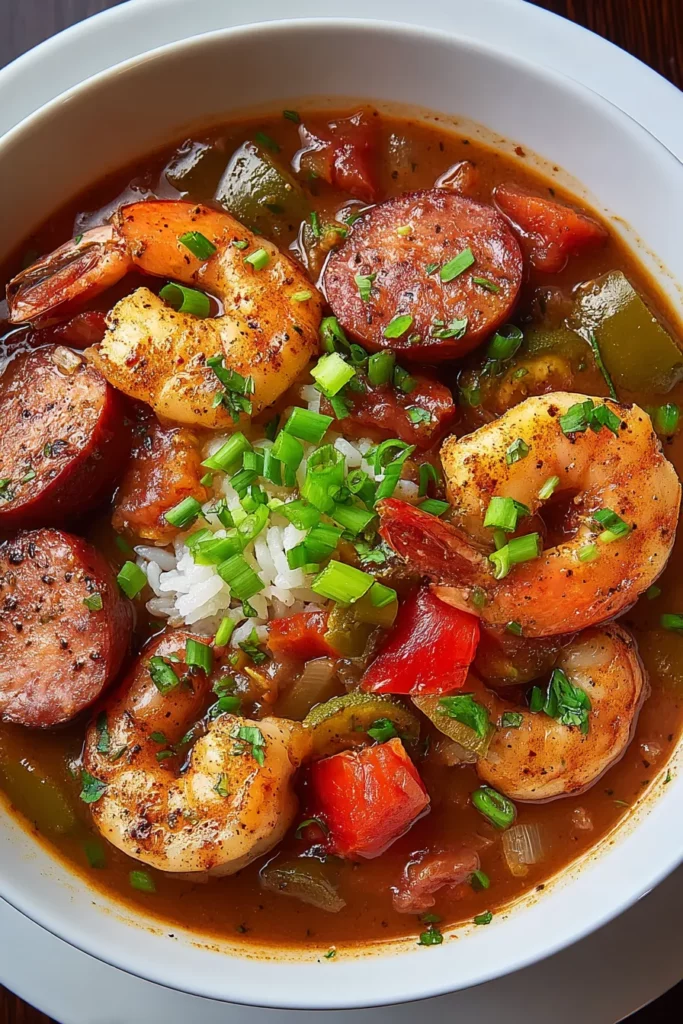

Savory Shrimp and Sausage Gumbo
Description
Experience a delicious blend of shrimp and smoked sausage simmered in a rich roux, complemented by vibrant vegetables and spices. Perfect for a cozy gathering or family meal!
Ingredients
Instructions
-
In a large, heavy-bottomed pot, heat the vegetable oil over medium heat. Gradually stir in the flour, continuously whisking to make a roux. Keep stirring until the roux turns a deep brown color, without burning, about 20-30 minutes.
-
Once the roux reaches the desired color, add the chopped onion, bell pepper, and celery. Sauté until tender, about 5 minutes. Add the minced garlic and sauté for an additional minute.
-
Stir in the sausage slices, ensuring they are well coated with the roux and vegetables. Cook for about 5 minutes, allowing the sausage to release its flavors.
-
Slowly add the chicken broth to the pot, stirring constantly to combine well with the roux mixture.
-
Add the diced tomatoes, okra, Cajun seasoning, thyme, smoked paprika, cayenne pepper, salt, black pepper, and bay leaves. Stir to combine all the ingredients thoroughly.
-
Bring the gumbo to a gentle boil, then reduce the heat and let it simmer uncovered for about 45 minutes, stirring occasionally to prevent sticking and to allow flavors to meld.
-
After the gumbo has thickened, add the shrimp, stirring well. Let it simmer for another 10 minutes, until the shrimp are cooked through and tender.
-
Remove the bay leaves and discard them. Stir in the chopped green onions and parsley for a fresh touch.
-
Serve the gumbo hot over a bed of cooked white rice.
Note
- Gumbo is a versatile dish; feel free to add other seafood or meats as desired.
- The roux is crucial for flavor and thickening; pay attention to its color and do not rush the process.
- Okra helps thicken the gumbo and adds a unique texture; you can adjust its amount based on your preference.
- This dish can be prepared in advance and often tastes even better the next day.
- Adjust the seasoning to your taste preference, especially the cayenne pepper, as some like it spicier than others.

