

Dive into the world of homemade ramen with Savory Japanese Ramen, a comforting bowl brimming with tender pork belly, silky soft-yolk eggs, earthy shiitake mushrooms, and an umami-packed miso broth. This intermediate-level dinner recipe brings restaurant-worthy flavors straight to your kitchen, combining soy, mirin, and sesame oil for depth and warmth. Whether you’re craving a cozy night in or looking to impress, this easy ramen is your new go-to comfort food—slurp away and savor every bite!
Key Ingredients
Here’s what you’ll need to build that rich, balanced bowl of ramen at home:
- 500 ml chicken broth: Provides a savory, light base that carries all the miso and soy flavors.
- 2 tsp soy sauce: Adds depth and saltiness, enhancing the umami profile.
- 1 tbsp miso paste: The heart of the broth’s savory punch, giving it richness and body.
- 1 tbsp mirin: Balances the miso with a touch of sweet acidity.
- 1 tsp sesame oil: Imparts a toasty aroma and smooth finish.
- 1 clove garlic, minced: Brings a sharp warmth and aromatic foundation.
- 1 tsp fresh ginger, grated: Adds bright, zesty notes to cut through the richness.
- 2 servings ramen noodles: The chewy base for soaking up all that flavorful broth.
- 100 g pork belly, sliced: Luxurious protein that becomes tender and juicy as it simmers.
- 2 eggs: Yield perfectly soft, custardy yolks for extra creaminess.
- 2 stalks green onions, sliced: Offer a fresh, crunchy contrast on top.
- 50 g shiitake mushrooms, sliced: Earthy bites that soak up the miso broth beautifully.
How To Make Savory Japanese Ramen
Let’s break down the steps to achieving that soul-warming bowl. From simmering the miso-infused broth to cooking the noodles and eggs just right, you’ll orchestrate each component for peak flavor and texture. Follow these detailed instructions, and you’ll be slurping like a pro in no time.
1. In a pot over medium heat, bring the chicken broth to a gentle simmer, ensuring it hasn’t reached a full boil to keep it clear and flavorful.
2. Stir in minced garlic, grated ginger, soy sauce, miso paste, mirin, and sesame oil until the miso is fully dissolved, creating a fragrant, umami-rich base.
3. Add sliced shiitake mushrooms and pork belly to the simmering broth, then continue to simmer for 5 minutes so the pork becomes tender and the mushrooms soak up the miso flavors.
4. Meanwhile, in a separate pot of rapidly boiling water, cook the ramen noodles for exactly 3 minutes, then drain them thoroughly in a colander.
5. In the same noodle pot, gently simmer the eggs for 7 minutes to achieve a perfectly soft yolk, then transfer them to an ice bath, peel off the shells, and halve them.
6. Divide the drained noodles among serving bowls and ladle the hot miso broth, mushrooms, and pork belly over the top.
7. Finally, top each bowl with the soft-boiled egg halves and sprinkle sliced green onions for a fresh, crunchy finish.
Serving Suggestions
Once everything’s cooked, it’s all about presentation and little flavor boosts. A well-garnished bowl makes the meal even more inviting:
- Extra Chili Oil: Drizzle a thin ribbon over the surface for a spicy kick and bright color contrast.
- Crispy Nori Strips: Tear sheets of toasted seaweed into strips and tuck them into the bowl for briny crunch.
- Toasted Sesame Seeds: Sprinkle lightly to add nuttiness and a subtle textural pop.
- Pickled Ginger: Serve on the side to cleanse the palate between rich, savory bites.
Tips For Perfect Savory Japanese Ramen
Crafting the ultimate bowl of ramen is all about balancing flavors and prepping smart. With these friendly pointers, you’ll hit all the right notes:
- Adjust the amount of soy sauce and miso to control saltiness and umami depth.
- For a richer broth, substitute chicken broth with pork or tonkotsu stock.
- Add chili oil, sriracha, or shichimi togarashi for extra heat.
- Prepare broth and eggs ahead of time to speed up assembly on busy nights.
How To Store It
Leftovers can be just as dreamy when stored properly. Keep each component separate and fresh:
- Store the broth in an airtight container in the fridge for up to 3 days, then gently reheat on the stove.
- Keep noodles in their own sealed bag or container; dunk them briefly in boiling water to revive before serving.
- Place eggs in a bowl of cold, lightly salted water and refrigerate; peel just before plating to retain moisture.
- Keep sliced pork belly and mushrooms together in a covered dish; rewarm them in the broth or microwave for best texture.
Frequently Asked Questions
Here are quick answers to the top questions from home cooks just like you:
- How can I adjust the saltiness and umami depth of this ramen?
To control saltiness, start with the recommended 2 tsp soy sauce and 1 tbsp miso paste and taste the broth after it simmers. If you prefer a milder flavor, reduce soy sauce by ½ tsp or swap to a low-sodium soy sauce. For more umami, you can increase miso by ½ tsp or stir in a small piece of kombu (dried kelp) during the simmer stage and remove it before serving.
- How do I achieve perfectly soft-boiled eggs with a custardy yolk?
Gently simmer eggs for exactly 7 minutes in your noodle-cooking pot, maintaining a gentle bubble. Immediately transfer them to an ice bath to halt cooking—this helps the white set firmly while the yolk stays jammy. Peel under running water to remove the shell cleanly, then halve and serve right away.
- Can I prepare components ahead of time to speed up assembly on busy nights?
Yes. You can make the broth, marinate the pork belly, and soft-boil the eggs up to 2 days in advance. Store broth and pork in airtight containers in the fridge. Keep peeled, halved eggs submerged in a light saltwater solution. When ready to serve, reheat broth, cook fresh noodles, and assemble bowls for restaurant-style speed.
- What are some recommended broth substitutes to enhance richness?
For a richer base, substitute chicken broth with pork or tonkotsu stock in equal volume. Tonkotsu brings a creamy mouthfeel, while pork broth deepens flavor. You can also add a splash of heavy cream or a teaspoon of pork fat (back fat or lard) to the simmering broth for extra silkiness.
- How should I reheat leftover ramen without the noodles becoming soggy?
Store noodles and broth separately. When reheating, warm the broth in a pot until steaming. Briefly dunk noodles in boiling water for 10–15 seconds to refresh their texture, then drain thoroughly. Place noodles in the bowl, pour in hot broth, and top with reheated pork and an egg warmed in the broth for a minute.
- How can I add extra heat or spice to the ramen?
For spice, stir in chili oil, sriracha, or sprinkle shichimi togarashi just before serving. If you like a smoky kick, add a few drops of smoky chili crisp. To infuse heat into the broth itself, drop in a halved dried chili pepper during simmering (remove before serving) or stir in up to ½ tsp gochujang paste.
- Can I substitute the pork belly with another protein for dietary preferences?
Absolutely. For a leaner option, use thinly sliced chicken thigh or breast and simmer for 3–4 minutes until just cooked. For a vegetarian twist, replace pork with firm tofu cubes or tempeh, sautéed until golden. Swap chicken broth for vegetable stock and omit the pork fat to keep it vegetarian while maintaining depth with miso.
What Makes This Special
Savory Japanese Ramen shines because it balances simplicity with incredible depth—from the mellow chicken broth uplifted by miso and mirin to the tender pork belly and perfectly jammy eggs. It works whether you’re craving a cozy solo meal or feeding friends at a casual dinner party. Don’t be surprised if you end up printing this article and saving it for all your ramen nights ahead. Give it a go, tweak it, and let me know how your bowl turns out—I’m here for questions, comments, or just to celebrate your delicious success!
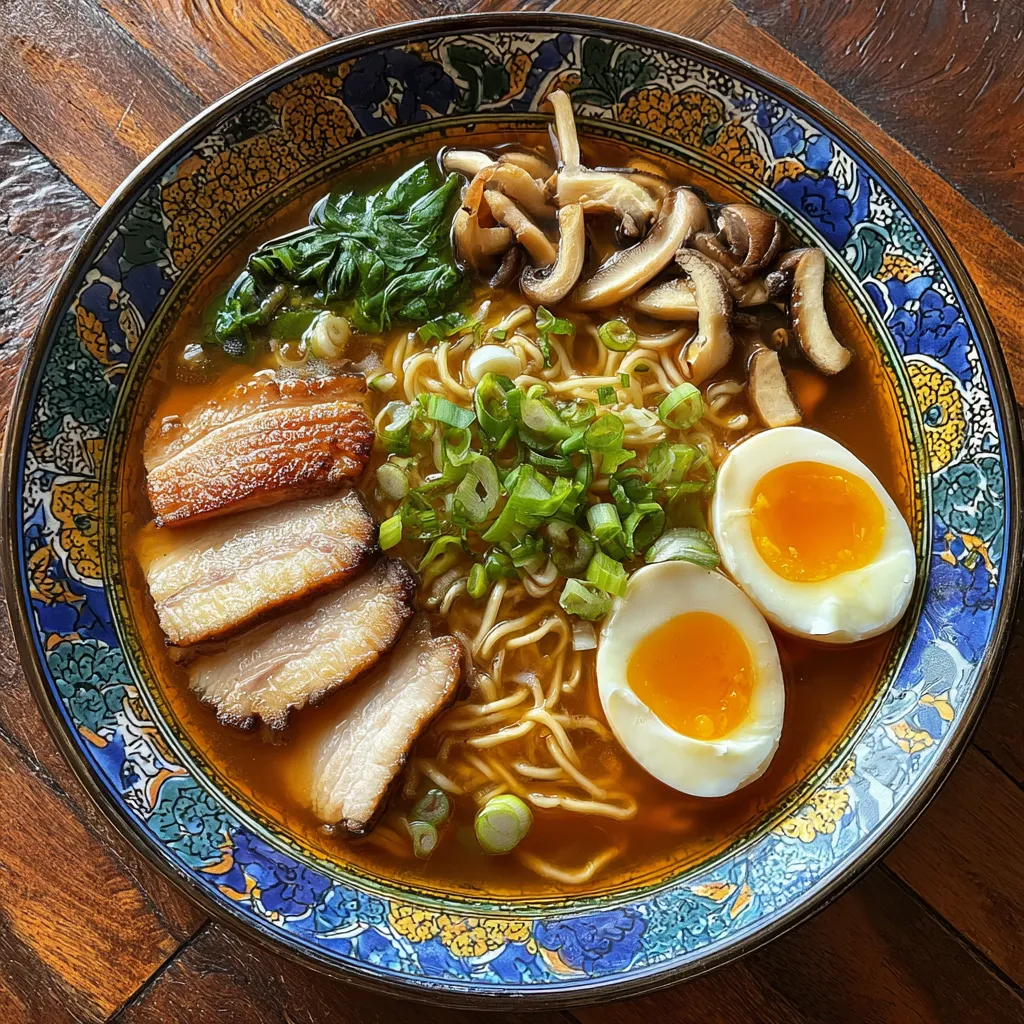

Savory Japanese Ramen
Description
This ramen features an umami-packed miso broth enriched with soy and mirin, loaded with juicy pork belly, earthy shiitakes, and perfectly soft-boiled eggs. Every slurp is pure comfort.
Ingredients
Instructions
-
In a pot over medium heat, bring chicken broth to a gentle simmer.
-
Stir in garlic, ginger, soy sauce, miso paste, mirin, and sesame oil until miso is fully dissolved.
-
Add shiitake mushrooms and pork belly slices and simmer for 5 minutes.
-
Meanwhile, cook ramen noodles in a separate pot of boiling water for 3 minutes, then drain.
-
In the noodle pot, gently simmer eggs for 7 minutes to achieve a soft yolk, then transfer to cold water, peel, and halve.
-
Divide cooked noodles into bowls and ladle the hot broth with mushrooms and pork belly over them.
-
Top each bowl with egg halves and sprinkle sliced green onions before serving.
Note
- Adjust the amount of soy sauce and miso to control saltiness and umami depth.
- For a richer broth, substitute chicken broth with pork or tonkotsu stock.
- Add chili oil, sriracha, or shichimi togarashi for extra heat.
- Prepare broth and eggs ahead of time to speed up assembly on busy nights.

