

Flaky salmon and vibrant spinach meet creamy pasta in a dish that’s as comforting as it is elegant. This Salmon Spinach Pasta combines tender bites of fish with a luscious white wine cream sauce, all tossed through your favorite fettuccine or penne. Designed with weeknight ease in mind, it’s a beginner-level recipe that delivers restaurant-quality flavor without hours in the kitchen. With a total preparation time of 20 minutes, 30 minutes of cooking, and a brief 10-minute rest, you’ll have a warm, satisfying meal on the table in under an hour. Each serving clocks in at around 745 calories—perfect for dinner or a hearty lunch—and the simple ingredient list is pantry-friendly yet impressive enough for guests.
What makes this recipe shine is its balance of bright and rich elements. Fresh spinach leaves wilt gently into the creamy sauce, while lemon zest and juice add a burst of citrus brightness that cuts through the richness of the heavy cream. Grated Parmesan cheese melts into silky ribbons, and a splash of white wine deepens the flavor profile with subtle acidity. The salmon fillets cook to flaky perfection, seasoned simply with salt and freshly ground black pepper. Whether you’re cooking for family, friends, or enjoying a solo dinner, this dish feels polished but remains delightfully straightforward. It’s a fun way to bring more seafood into your weeknight rotation and elevate your pasta game with minimal fuss.
KEY INGREDIENTS IN SALMON SPINACH PASTA
Every great dish starts with the right components. Here’s a rundown of the main ingredients that come together to create the creamy, flavorful magic of Salmon Spinach Pasta:
- Pasta
Serves as the hearty foundation for this dish, with shapes like fettuccine or penne capturing the creamy sauce and spinach leaves in every forkful.
- Olive oil
Provides a silky base for cooking the salmon and sautéing aromatics, adding a subtle fruity note that enhances all the flavors.
- Salmon fillets
The star protein, offering rich, flaky texture and omega-3 goodness. Skinless and boneless fillets ensure fuss-free cooking and easy flaking.
- Salt and freshly ground black pepper
Simple seasonings that bring out the natural flavors in the salmon, pasta, and sauce components without overpowering them.
- Onion
Finely chopped and sautéed until translucent, it adds a sweet depth and gentle crunch when cooked with garlic.
- Garlic
Minced cloves release a fragrant, savory punch that infuses the sauce with warm, aromatic complexity.
- White wine
A splash helps deglaze the skillet and lift browned bits off the bottom, contributing acidity and a delicate fruitiness.
- Heavy cream
Forms the luxurious base of the sauce, providing a rich mouthfeel that contrasts beautifully with spinach and salmon.
- Fresh spinach leaves
Twilight-green leaves wilt down to add color, nutrients, and a mild vegetal taste, lightening the overall richness.
- Parmesan cheese
Grated to melt seamlessly into the sauce, it introduces a nutty umami quality and helps thicken the cream.
- Lemon zest and juice
Brightens and balances the dish with citrusy zing, cutting through creaminess and elevating all the flavors.
- Fresh basil leaves
Optional garnish that adds a fresh, peppery note and beautiful color contrast when sprinkled on top.
HOW TO MAKE SALMON SPINACH PASTA
Let’s walk through this recipe step by step. From boiling the pasta to finishing touches on the sauce, each part comes together in one skillet for minimal cleanup and maximum flavor.
1. Bring a large pot of salted water to a rolling boil. Add your pasta and cook according to package instructions until al dente, then drain and set aside. Be sure to reserve ½ cup of the pasta cooking water before draining—this starchy liquid will help adjust the sauce consistency later on.
2. Heat olive oil in a large skillet over medium heat. Season both sides of the salmon fillets generously with salt and pepper. Add the fillets to the pan and cook for 4–5 minutes per side, or until the fish is opaque and flakes easily with a fork. Remove the salmon to a plate and set aside.
3. In the same skillet, add the chopped onion. Sauté for 3–4 minutes until the onion is translucent and softened. Add the minced garlic and cook for an additional minute, stirring constantly to avoid burning.
4. Pour in the white wine, using a spatula to scrape up any flavorful browned bits from the bottom of the skillet. Allow the wine to simmer and reduce by half, concentrating its flavor.
5. Stir in the heavy cream and bring the mixture to a gentle simmer. Add the fresh spinach leaves and cook just until they have wilted, folding them into the sauce.
6. Flake the previously cooked salmon into bite-sized pieces and return them to the skillet, gently folding them into the sauce so they stay intact.
7. Add the drained pasta, grated Parmesan cheese, lemon zest, and lemon juice. Toss everything together, adding reserved pasta water as needed to achieve the desired sauce consistency.
8. Taste and adjust with additional salt and pepper if necessary. Garnish with fresh basil leaves for a final pop of color and herbaceous aroma before serving.
SERVING SUGGESTIONS FOR SALMON SPINACH PASTA
Presenting this creamy Salmon Spinach Pasta is half the fun, and the right accompaniments can elevate your meal from simple to supper-club worthy. Consider arranging your plate with thoughtful touches that complement the flavors and textures of the dish. Offer contrasting elements—like something crisp or acidic—to balance the richness of the cream sauce and buttery salmon. Fresh herbs, crunchy sides, and the right beverage pairing will turn this into an experience, not just a meal. Below are some easy ideas to inspire you every time you bring this pasta to the table.
- Crisp Green Salad
A refreshing side of mixed greens, dressed lightly with lemon vinaigrette, provides a vibrant crunch that contrasts beautifully with the creamy pasta.
- Garlic Bread
Warm, crusty slices of baguette rubbed with garlic and drizzled with olive oil are perfect for sopping up any remaining sauce.
- Chilled Sauvignon Blanc
The wine’s bright acidity and herbaceous notes mirror the lemon and basil accents in the pasta, creating a harmonious flavor marriage.
- Extra Basil & Olive Oil Drizzle
A few fresh basil leaves and a light swirl of high-quality olive oil just before serving not only adds visual appeal but also enriches the aroma and taste.
HOW TO STORE SALMON SPINACH PASTA
Leftovers of this creamy pasta can be just as delightful when stored and reheated properly. Because cream-based sauces and pasta can thicken over time, it’s important to keep them in the best conditions to maintain texture and flavor. Refrigeration in airtight containers will preserve the dish for a couple of days, while careful reheating helps bring back that freshly made taste. If you plan to enjoy your Salmon Spinach Pasta later in the week, following these tips will ensure each bite stays as delicious as day one.
- Refrigerate Promptly
Allow the dish to cool slightly, then transfer to an airtight container. Store in the refrigerator for up to 2 days to maintain freshness.
- Separate Components
If possible, store the pasta and sauce in separate containers. This prevents the noodles from soaking up too much liquid and becoming mushy.
- Freeze for Longer Storage
For up to 1 month, place cooled portions in a freezer-safe container, leaving some headspace for expansion. Thaw overnight in the fridge before reheating.
- Gentle Reheating
Warm the pasta slowly over low heat in a skillet or microwave, adding a splash of water, broth, or cream to restore the original sauciness.
CONCLUSION
We’ve journeyed from a handful of simple ingredients to a plate of rich, satisfying Salmon Spinach Pasta that’s both approachable for beginners and impressive enough for guests. With only 20 minutes of prep and 30 minutes of cooking, you can transform everyday staples into a dish bursting with bright lemon notes, tender fish, and vibrant greens. Whether you’re cooking for a cozy family dinner or hosting friends, this recipe fits seamlessly into lunch or dinner menus, delivering restaurant-quality results with minimal effort. Don’t forget, the subtle swirl of white wine in the cream sauce and the fresh basil garnish make all the difference, turning a quick weeknight dinner into something special.
Feel free to print this article and save it for later use, so next time you’re craving a creamy, protein-packed pasta, you have everything at your fingertips. Below you’ll find a FAQ section that answers common questions about variations, substitutions, and troubleshooting—everything you need to become a Salmon Spinach Pasta pro. If you try this recipe or have any questions along the way, I’d love to hear your thoughts. Leave a comment, share your tweaks, or ask for help in the comments section. Happy cooking!
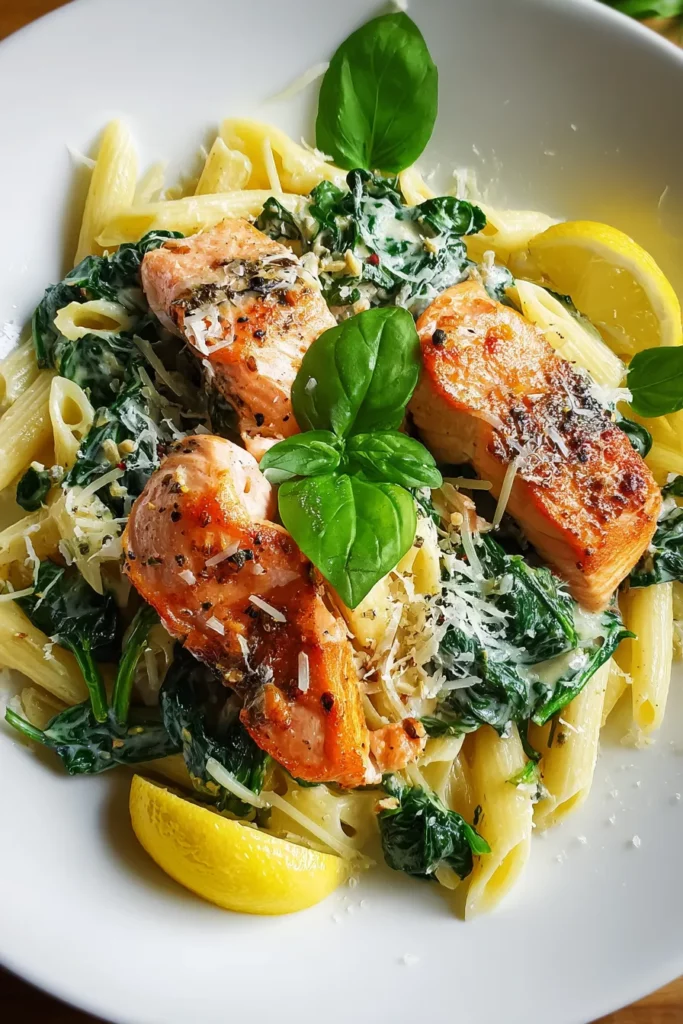

Salmon Spinach Pasta
Description
Tender salmon and fresh spinach mingle in a luscious white wine cream sauce, tossed with pasta. A hint of lemon brightens this simple yet impressive meal.
Ingredients
Instructions
-
Bring a large pot of salted water to a boil. Add pasta and cook according to package instructions until al dente. Drain and set aside, reserving 1/2 cup of the pasta cooking water.
-
In a large skillet, heat olive oil over medium heat. Season the salmon fillets with salt and pepper, and place them in the skillet. Cook for 4-5 minutes on each side, or until the salmon is cooked through and flakes easily with a fork. Remove the salmon from the skillet and set aside.
-
In the same skillet, add the chopped onion and sauté for 3-4 minutes until translucent. Add the minced garlic and cook for an additional 1 minute.
-
Pour in the white wine, scraping up any browned bits from the bottom of the skillet. Allow the wine to simmer and reduce by half.
-
Stir in the heavy cream and bring to a gentle simmer. Add the fresh spinach leaves and cook until just wilted.
-
Flake the cooked salmon into bite-sized pieces and return it to the skillet.
-
Toss in the cooked pasta, parmesan cheese, lemon zest, and lemon juice. Mix well to combine, adding reserved pasta water if necessary to reach desired sauce consistency.
-
Season with additional salt and pepper to taste. Garnish with fresh basil leaves if desired.
Note
- This recipe can be made with any type of pasta you prefer.
- For a lighter version, substitute heavy cream with half-and-half.
- Leftover salmon can be used for this recipe.
- Add a pinch of red pepper flakes for a bit of heat.
- This dish pairs beautifully with a crisp white wine like Sauvignon Blanc.

