

Tender orecchiette pasta shells meet spicy Italian sausage and bright green broccoli, all wrapped in a garlicky, pepper-flecked olive oil sauce—finished with Pecorino Romano and a hint of lemon zest. This comforting one-pan wonder comes together in under 30 minutes, making it the perfect weeknight dinner that feels like a gourmet treat. Trust me, once you try it, you’ll be hooked.
Key Ingredients
Before we dive into cooking, let’s gather everything you need for this flavor-packed pasta:
- 12 ounces orecchiette pasta: Small ear-shaped shells that hold sauce and broccoli florets beautifully.
- 1 pound Italian sausage, casings removed: Adds savory, spiced meatiness to the dish.
- 4 cups broccoli florets (about 1 large head of broccoli): Provides fresh color, crunch, and nutrition.
- 3 cloves garlic, minced: Delivers aromatic depth and a warm garlicky kick.
- 1 teaspoon red pepper flakes (adjust to taste): Brings a bright, spicy edge to balance richness.
- 1/4 cup extra-virgin olive oil: Forms the silky sauce base and enhances flavor.
- 1/2 cup grated Pecorino Romano cheese, plus more for serving: Creates a salty, creamy finish that clings to pasta.
- Salt, to taste: Enhances all flavors and balances the dish.
- Freshly ground black pepper, to taste: Adds a fragrant, mild heat.
- Zest of 1 lemon (optional, for garnish): Lifts the dish with a bright, citrusy aroma.
- Lemon wedges (for serving): Offers a fresh squeeze of acidity at the table.
How To Make Orecchiette with Sausage and Broccoli
This recipe is straightforward but delivers layers of flavor—from the spiced sausage to the crisp-tender broccoli and the luscious cheese sauce. Get your pot boiling and skillet hot, and you’ll have dinner on the table before you know it!
1. Bring a large pot of salted water to a boil. Once boiling, add the orecchiette pasta and cook according to package instructions until al dente. Reserve 1 cup of pasta water, then drain the pasta and set aside.
2. In a large skillet over medium heat, add the extra-virgin olive oil. Once hot, add the Italian sausage, breaking it up with a wooden spoon. Cook until browned and cooked through, about 5–7 minutes.
3. Once the sausage is cooked, add the minced garlic and red pepper flakes to the skillet. Sauté for about 1–2 minutes, or until fragrant, being careful not to burn the garlic.
4. While the sausage is cooking, add the broccoli florets to the boiling water used to cook the pasta. Blanch for about 2–3 minutes until bright green and tender but still crisp. Drain and set aside with the pasta.
5. Add the drained pasta and broccoli to the skillet with the sausage. Toss everything together to combine, allowing the flavors to meld.
6. Gradually add some of the reserved pasta water, a little at a time, until the desired sauce consistency is reached. You may not need to use all of the reserved water.
7. Stir in the grated Pecorino Romano cheese, and season with salt and freshly ground black pepper to taste. Mix well to ensure everything is evenly coated.
8. Serve hot, garnished with additional Pecorino Romano, lemon zest if using, and lemon wedges on the side.
Serving Suggestions
Once your orecchiette with sausage and broccoli is on the table, elevate the experience with these fun serving ideas. Whether you’re hosting friends or enjoying a quiet night in, these tips will make every bite feel extra special.
- Family-style platter: Transfer the pasta to a large shallow bowl or platter, sprinkle with extra Pecorino Romano, and let everyone dig in for a communal vibe.
- Lemon squeeze: Place lemon wedges on the side so diners can add a fresh burst of acidity—brightens the garlicky sauce and cuts through the richness.
- Crunchy topper: Offer toasted breadcrumbs or pine nuts in a small dish for extra texture and a nutty flavor contrast.
- Side salad: Pair with a crisp green salad tossed in a light vinaigrette to balance the hearty sausage and cheese.
Tips For Perfect Orecchiette with Sausage and Broccoli
To take this dish from great to unforgettable, focus on timing and quality ingredients. Taste as you go, keep the heat under control, and don’t skip the pasta water—it’s the secret to a creamy, clingy sauce that wraps every shell. Feel free to adjust spice levels and mix-ins to suit your crowd. Now, let’s get those extra pointers out there:
- Orecchiette is traditional for this dish but feel free to substitute with other pasta shapes like penne or farfalle.
- For an added twist, you can include a splash of white wine after adding the garlic to deglaze the pan.
- This dish can be easily made vegetarian by omitting the sausage and using mushrooms or additional vegetables instead.
- Leftovers can be stored in the refrigerator for up to 3 days; simply reheat in a skillet with a splash of water or olive oil.
How To Store It
Nothing beats having this delicious pasta ready for tomorrow or even next week. Proper storage keeps flavors bright and textures spot-on. Here’s how to preserve your orecchiette with sausage and broccoli for maximum enjoyment:
- Airtight containers: Transfer cooled pasta into airtight containers to prevent drying out; store in the fridge for up to 3 days.
- Layering trick: If stacking multiple meals, place a sheet of parchment paper between layers to keep the broccoli from getting mushy.
- Freeze for later: For longer storage, freeze in sealed, freezer-safe bags for up to 2 months. Thaw overnight in the fridge before reheating.
- Reheat gently: Warm leftovers in a skillet over medium heat with a drizzle of olive oil or a splash of pasta water to revive the sauce’s creamy texture.
Frequently Asked Questions
Got some questions? I’ve got answers:
- How do I know when the orecchiette is perfectly al dente?
A: Follow the package instructions for cooking time, but start tasting the pasta about two minutes before the lowest time listed. Al dente orecchiette should be tender on the outside yet still have a slight bite in the center. Once it reaches that texture, quickly drain it and reserve a cup of the pasta water for the sauce.
- What is the best way to blanch broccoli so it stays crisp-tender and bright green?
A: While the pasta water is boiling, add the broccoli florets for 2 to 3 minutes. They should turn vivid green and yield slightly when pierced with a fork but still retain a bit of crunch. Drain them immediately—no need to shock in ice water unless you want to stall cooking—then set them aside with the pasta until you’re ready to toss everything together.
- Can I adjust the spiciness, and how do I prevent the garlic from burning?
A: To tweak heat levels, start with 1 teaspoon of red pepper flakes and add more to taste after the dish is assembled. To keep garlic from burning, add it to the skillet only after the sausage has fully browned. Sauté over medium heat for just 1 to 2 minutes, stirring constantly until you can smell the aroma. If the pan seems too hot, lower the heat slightly.
- What type of Italian sausage should I use, and how do I handle the casings?
A: Any sweet or spicy pork Italian sausage works well. Remove the casings by slicing lengthwise and peeling them away before crumbling the meat into the pan. If you prefer a leaner version, try chicken or turkey Italian sausage following the same method.
- How much of the reserved pasta water should I add, and why is it important?
A: Gradually stir in the reserved pasta water in small increments, starting with about 1/4 cup. The starchy liquid helps bind the cheese and oil, creating a silky sauce that clings to the pasta and broccoli. Continue adding until the sauce lightly coats each piece, which usually means using between 1/4 and 1 cup of water, depending on your desired consistency.
- Are there good substitutions or variations for this recipe?
A: If you don’t have orecchiette, similar shapes like penne, farfalle, or rigatoni work fine. To make it vegetarian, omit the sausage and sauté mushrooms, bell peppers, or artichoke hearts instead. You can also deglaze the pan with a splash of white wine after adding the garlic for a bright, acidic note.
- How should I store and reheat leftovers to preserve flavor and texture?
A: Transfer cooled leftovers to an airtight container and refrigerate for up to three days. When reheating, warm the pasta in a skillet over medium heat with a drizzle of olive oil or a splash of water to restore moisture. Stir gently until heated through, then finish with a sprinkle of Pecorino Romano and a twist of fresh black pepper.
What Makes This Special
This recipe is like a little flavor party in your mouth: savory sausage mingles with bright broccoli, all wrapped up in orecchiette that’s perfectly al dente. The magic lies in that silky sauce made from olive oil, starchy pasta water, and sharp Pecorino Romano—plus a cheeky hint of lemon zest to keep things zesty. Go ahead and print this out, tuck it into your favorite recipe binder, and don’t be shy about dropping a comment below if you give it a whirl or have questions. Your kitchen adventures await!
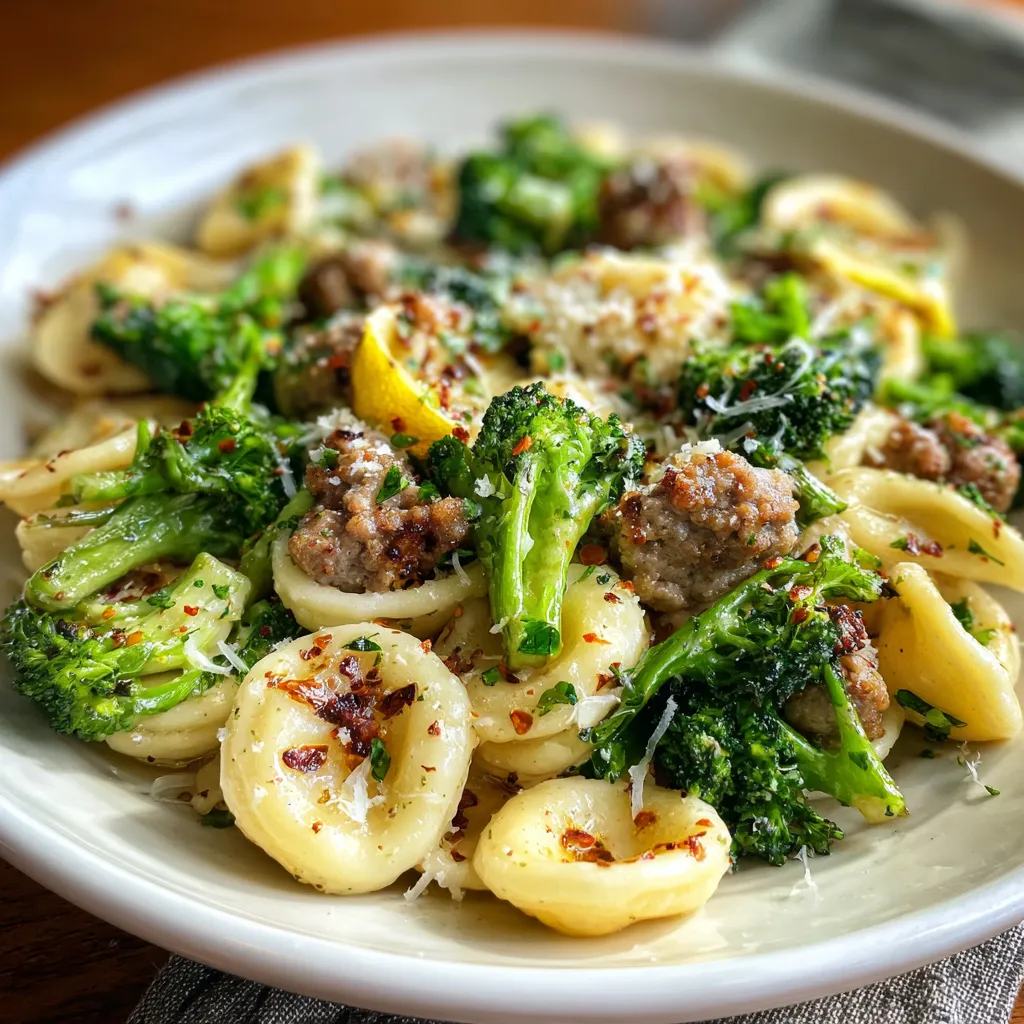

Orecchiette with Sausage and Broccoli
Description
Tender orecchiette meets spicy sausage, blanched broccoli, and aromatic garlic, all coated in a silky olive oil sauce and finished with Pecorino and a hint of lemon zest.
Ingredients
Instructions
-
Start by bringing a large pot of salted water to a boil. Once boiling, add the orecchiette pasta and cook according to package instructions until al dente. Reserve 1 cup of pasta water, then drain the pasta and set aside.
-
In a large skillet over medium heat, add the extra-virgin olive oil. Once hot, add the Italian sausage, breaking it up with a wooden spoon. Cook until browned and cooked through, about 5-7 minutes.
-
Once the sausage is cooked, add the minced garlic and red pepper flakes to the skillet. Sauté for about 1-2 minutes, or until fragrant, being careful not to burn the garlic.
-
While the sausage is cooking, add the broccoli florets to the boiling water used to cook the pasta. Blanch the broccoli for about 2-3 minutes until bright green and tender but still crisp. Drain and set aside with the pasta.
-
Add the drained pasta and broccoli to the skillet with the sausage. Toss everything together to combine, allowing the flavors to meld.
-
Gradually add some of the reserved pasta water, a little at a time, until the desired sauce consistency is reached. You may not need to use all of the reserved water.
-
Stir in the grated Pecorino Romano cheese, and season with salt and freshly ground black pepper to taste. Mix well to ensure everything is evenly coated.
-
Serve hot, garnished with additional Pecorino Romano, lemon zest if using, and lemon wedges on the side.
Note
- Orecchiette is traditional for this dish but feel free to substitute with other pasta shapes like penne or farfalle.
- For an added twist, you can include a splash of white wine after adding the garlic to deglaze the pan.
- This dish can be easily made vegetarian by omitting the sausage and using mushrooms or additional vegetables instead.
- Leftovers can be stored in the refrigerator for up to 3 days; simply reheat in a skillet with a splash of water or olive oil.

