

These Lemon, Thyme, and Rosemary Cupcakes are the kind of treat that brightens your day and makes your kitchen smell like a sunny garden in full bloom. They’re a refreshing twist on classic dessert recipes, blending zesty lemon with aromatic thyme and rosemary for a flavor profile that’s both surprising and utterly delightful. Whether you’re gearing up for a spring brunch, a summer picnic, or an afternoon tea on the patio, these cupcakes are bound to steal the show with their light texture and vibrant taste. With just a 20-minute prep, 20-minute bake time, and a brief 10-minute rest, you’ll have a dozen beautifully golden cupcakes ready to impress even the most seasoned bakers. At just 150 calories each, they’re a guilt-free indulgence that feels fancy without the fuss—and perfect for beginner bakers looking to stretch their culinary wings.
I still remember the first time I riffled through a handful of fresh thyme and rosemary from my windowsill herb garden, thinking, “Why not add a savory note to my sweet treats?” The result was pure magic: a cupcake that balances floral, citrusy, and herbal notes in every single bite. These are dessert recipes you’ll turn to again and again—especially when you’re hosting friends and family and want something eye-catching without spending hours in the kitchen. With common pantry staples like all-purpose flour, granulated sugar, and baking soda, plus a few sprigs of fresh herbs and lemons, you can whip these up in no time. So grab your mixing bowls and muffin tin, and let’s dive into this beginner-friendly recipe that brings a fresh twist to homemade cupcakes!
KEY INGREDIENTS IN LEMON, THYME, AND ROSEMARY CUPCAKES
Before we dive into the step-by-step magic, let’s talk about what makes these cupcakes shine. Each ingredient plays an essential role in creating a tender crumb, a burst of citrus, and a delicate herbal aroma that lingers long after the first bite.
- All-purpose flour
Provides the structure and body for the cupcakes, supporting the rise from baking powder and baking soda while keeping the crumb tender and soft.
- Granulated sugar
Sweetens the batter and helps create a light, fluffy texture when creamed with butter, also encouraging gentle browning on top.
- Unsalted butter
Adds richness, moisture, and flavor; creaming it with sugar incorporates air for a lighter cupcake. Using unsalted ensures you control the salt level precisely.
- Eggs
Act as a binder, adding moisture and stability. Beaten into the batter one at a time, they help emulsify fats and liquids for a uniform texture.
- Whole milk
Provides moisture and a tender crumb, while the fat content adds a subtle richness that balances the bright lemon flavor.
- Fresh lemon juice
Delivers a zesty, tangy burst of citrus that cuts through the sweetness, brightening every bite and enhancing the fragrance.
- Lemon zest
Intensifies the lemon flavor with fragrant oils from the peel, infusing the batter with fresh, natural aroma and color flecks.
- Vanilla extract
Rounds out the flavor profile by adding warm, sweet notes that complement the citrus and herbs without overpowering them.
- Baking powder & baking soda
Work together to leaven the cupcakes. Baking powder offers consistent rise, while baking soda reacts with acidic lemon juice for extra lift and tenderness.
- Salt
Enhances all the flavors, balancing the sweetness and making the citrus and herb notes pop.
- Fresh thyme leaves
Provide a subtle earthy, floral note. Finely chopped, they distribute evenly, giving each cupcake a hint of savory complexity.
- Fresh rosemary leaves
Contribute a fragrant, piney accent that pairs beautifully with lemon. Chopping them finely prevents any textural surprises.
- Powdered sugar (for frosting)
Sweetens and thickens the frosting, allowing it to hold its shape when piped or spread.
- Freshly squeezed lemon juice & lemon zest (for frosting)
Mirror the zesty tang in the batter, keeping the frosting bright and balanced. The zest adds flecks of color and fragrant oils.
- Vanilla extract (for frosting)
Smooths out the tartness, adding warmth and depth to the creamy topping.
- Fresh thyme and rosemary sprigs (for garnish)
Offer an elegant, aromatic finish and visual appeal, hinting at the herbal notes inside.
HOW TO MAKE LEMON, THYME, AND ROSEMARY CUPCAKES
Let’s jump into the fun part—baking these bright, herb-infused cupcakes! The process is straightforward and perfect for beginner bakers, but don’t be fooled by its simplicity. With each step, you’ll unlock pockets of citrusy, herbal goodness that come together in the most delightful way.
1. Preheat your oven to 350°F (175°C) and line a 12-cup muffin tin with cupcake liners. This ensures even baking and effortless removal once they’re done.
2. In a large mixing bowl, cream the softened butter and granulated sugar together until the mixture is light and fluffy, about 3–4 minutes. This incorporates air for a tender crumb.
3. Add the eggs one at a time, mixing well after each addition. This helps the batter emulsify and prevents curdling, ensuring a smooth, homogeneous mixture.
4. Stir in the fresh lemon juice, lemon zest, and vanilla extract until well combined. These wet flavorings infuse the batter with bright citrus notes.
5. In a separate bowl, whisk together the all-purpose flour, baking powder, baking soda, and salt. This ensures even distribution of the leavening agents.
6. Gradually add the dry ingredients to the wet ingredients, alternating with the whole milk. Begin and end with the dry ingredients, mixing until just combined and smooth to avoid overworking the gluten.
7. Gently fold in the chopped thyme and rosemary using a spatula, making sure they are evenly distributed throughout the batter without deflating it.
8. Divide the batter evenly among the cupcake liners, filling each about 2/3 full to leave room for rise.
9. Bake in the preheated oven for 18–20 minutes, or until a toothpick inserted into the center comes out clean and the tops are golden.
10. Allow the cupcakes to cool in the tin for about 5 minutes before transferring them to a wire rack to cool completely. This prevents sogginess and helps them set.
11. For the frosting, beat the softened butter until creamy, then gradually add the powdered sugar, lemon juice, lemon zest, and vanilla extract. Continue beating until the frosting is light and fluffy.
12. Once the cupcakes have cooled, pipe or spread the lemon frosting onto each cupcake, creating swirls or smooth tops based on your preference.
13. Garnish with fresh thyme and rosemary sprigs for an elegant, aromatic touch that complements the flavor inside.
SERVING SUGGESTIONS FOR LEMON, THYME, AND ROSEMARY CUPCAKES
Serving these cupcakes is almost as fun as baking them. The vibrant colors and fragrant herbs make for a memorable presentation that elevates any gathering. Whether you’re hosting an outdoor tea party, a casual weekend brunch, or an intimate evening dessert, these cupcakes will be the centerpiece of conversation. Their light, refreshing flavor pairs beautifully with chilled beverages, while the herbal accents create a delightful contrast that keeps your guests reaching back for more. Presentation is key: arrange them on a pretty platter, add extra sprigs of thyme and rosemary, and consider scattering a few lemon slices around the base to echo the zesty notes within. Below are some creative ideas to serve and style these charming treats.
- Serve on a decorative tiered stand layered with fresh lemon slices and herb sprigs for an inviting spring brunch display. The height adds drama, and guests can help themselves easily.
- Pair with a chilled herbal tea—like chamomile or mint—for a soothing afternoon tea pairing. The gentle floral notes in the tea will complement the thyme and rosemary without overwhelming the palate.
- Add a burst of color by garnishing each cupcake with a tiny candied lemon slice on top of the frosting. The sweet-tart decoration mirrors the cupcake’s flavors and looks incredibly elegant.
- Create a picnic-perfect setup by packing cupcakes in a well-ventilated box lined with parchment paper and adding a small bunch of fresh herbs. They stay secure and fresh, ready to enjoy in the sunshine.
HOW TO STORE LEMON, THYME, AND ROSEMARY CUPCAKES
Proper storage is essential to keep your cupcakes tasting as fresh as the day they came out of the oven. The interplay of zesty citrus and delicate herbs can fade if left exposed, so let’s dive into the best ways to maintain their flavor, texture, and visual appeal over time. Whether you’re saving leftovers for later in the week or preparing cupcakes ahead of a special event, these tips will ensure every bite remains moist, fragrant, and perfectly balanced.
- Room Temperature Storage
Place cupcakes in an airtight container with a loose-fitting lid to protect the herbs and prevent condensation on the frosting. Store at room temperature for up to 1–2 days, away from direct sunlight and heat sources.
- Refrigerator Storage
For up to 4 days, keep cupcakes in a sealed container or cake carrier. The cool environment preserves the frosting’s texture but may slightly dull the herb aroma—allow cupcakes to come to room temperature before serving for optimal flavor.
- Freezer Storage
Freeze unfrosted cupcakes in a single layer on a baking sheet for 1 hour, then transfer to a freezer-safe bag or container. Freeze for up to 2 months. Thaw overnight in the fridge, frost when ready, and garnish with fresh herbs before serving.
- Transport & Display Tips
If you’re taking cupcakes to a gathering, pack them in a ventilated cupcake carrier with liner dividers. Keep a small ice pack underneath to maintain coolness, especially in warm weather, ensuring the frosting doesn’t soften too much in transit.
CONCLUSION
What a delightful journey we’ve had exploring these Lemon, Thyme, and Rosemary Cupcakes from start to finish! We began by celebrating the bright citrus notes and subtle herbal undertones that make this recipe a standout dessert for spring and summer gatherings. You learned about each key ingredient’s role—from the structure-giving flour to the fragrance-packed fresh herbs and zesty lemon components—before diving into a step-by-step guide that walks you through creaming, folding, whisking, and baking. Serving suggestions helped you envision everything from elegant tea parties to picnics in the park, while storage tips ensure you can enjoy these cupcakes at their best, even days after baking. With a total preparation time of just 20 minutes, a 20-minute bake, and a quick 10-minute rest, these cupcakes are as practical as they are delicious, proving that gourmet flair doesn’t have to be complicated.
Feel free to print this article and save it for later use—tuck it in your recipe binder or pin it on your kitchen board so it’s always within arm’s reach when you want to whip up a batch of these bright, herb-infused cupcakes. Below, you’ll also find a handy FAQ section to answer any lingering questions about ingredients, substitutions, or techniques. If you give this recipe a try or need any help along the way, please leave a comment, share your experiences, or ask for feedback. I can’t wait to hear how your cupcakes turned out and to swap stories about citrusy, herby baking adventures. Happy baking, and may your kitchen always smell of lemon and fresh herbs!
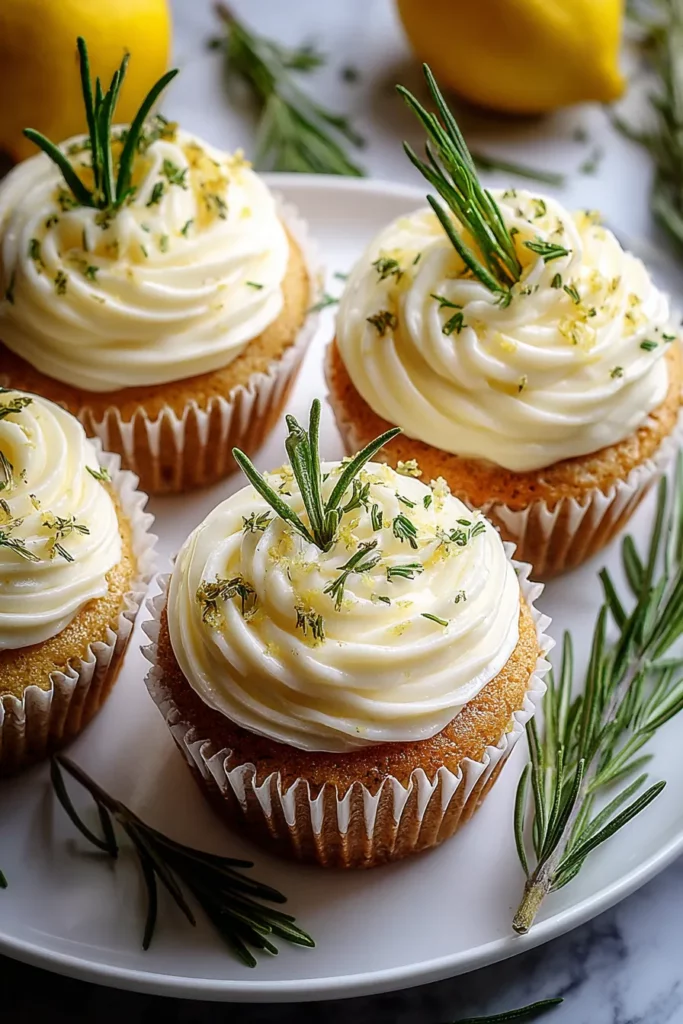

Lemon, Thyme, and Rosemary Cupcakes
Description
The zesty lemon flavor paired with aromatic thyme and rosemary creates a unique cupcake experience that's both refreshing and delightful. Perfect for warm weather gatherings!
Ingredients
Instructions
-
Preheat your oven to 350°F (175°C) and line a 12-cup muffin tin with cupcake liners.
-
In a large mixing bowl, cream the softened butter and granulated sugar together until light and fluffy.
-
Add the eggs one at a time, mixing well after each addition.
-
Stir in the lemon juice, zest, and vanilla extract until well combined.
-
In a separate bowl, whisk together the flour, baking powder, baking soda, and salt.
-
Gradually add the dry ingredients to the wet ingredients, alternating with the whole milk. Mix until just combined and smooth.
-
Gently fold in the chopped thyme and rosemary until evenly distributed in the batter.
-
Divide the batter evenly among the cupcake liners, filling each about 2/3 full.
-
Bake in the preheated oven for 18-20 minutes, or until a toothpick inserted into the center of a cupcake comes out clean.
-
Allow the cupcakes to cool in the tin for about 5 minutes before transferring them to a wire rack to cool completely.
-
For the frosting, beat the softened butter until creamy. Gradually add the powdered sugar, lemon juice, lemon zest, and vanilla extract, and continue to beat until the frosting is light and fluffy.
-
Once the cupcakes have cooled, pipe or spread the lemon frosting onto each cupcake.
-
Garnish with fresh thyme and rosemary sprigs, as desired, for an aromatic touch.
Note
- The combination of lemon, thyme, and rosemary creates a refreshing and fragrant cupcake.
- These cupcakes are perfect for a spring or summer gathering.
- The frosting can be adjusted in sweetness by adding more or less powdered sugar.
- Make sure the herbs are finely chopped to avoid overpowering the cupcake's texture.
- For a more intense lemon flavor, additional lemon zest can be added to the batter.

