

There’s something deeply satisfying about a bowl of Japanese Glass Noodle Soup on a chilly afternoon—silky glass noodles bathed in a savory miso broth, studded with tender tofu, crisp carrots, and vibrant greens. Every spoonful brings together fragrant ginger, garlicky warmth, and earthy mushrooms, creating a cozy hug in a bowl that’s perfect for a quick lunch or a light dinner. Trust me, once you try this simple yet flavorful recipe, it’ll become your go-to comfort soup all year round.
Key Ingredients
Gather these simple components to build layers of flavor and texture in your Japanese Glass Noodle Soup:
- 100g glass noodles: Tender, chewy noodles that soak up the rich miso broth and add a silky mouthfeel.
- 1 tablespoon vegetable oil: Provides a neutral base for sautéing aromatics and prevents sticking.
- 1 small onion, thinly sliced: Adds natural sweetness and depth when sautéed until translucent.
- 2 cloves garlic, minced: Infuses the broth with pungent, savory notes.
- 1-inch piece of ginger, grated: Delivers a bright, peppery warmth and digestive benefits.
- 2 cups vegetable or chicken broth: Forms the savory backbone of the soup—use veggie broth for a vegan version.
- 1 cup water: Balances the broth concentration and ensures the right soup consistency.
- 1 tablespoon soy sauce: Adds umami depth and a touch of saltiness.
- 1 tablespoon miso paste: Contributes savory, fermented complexity—choose white, yellow, or red for variation.
- 150g firm tofu, cubed: Provides plant-based protein and soaks up surrounding flavors.
- 1 carrot, julienned: Offers sweet crunch and vibrant color.
- 1 cup mushrooms, sliced (shiitake or button): Introduces earthy richness and meaty texture.
- 1 cup spinach or bok choy, chopped: Brings fresh, leafy brightness and nutrients.
- 2 green onions, chopped: Supplies sharp, fresh garnish and flavor contrast.
- Sesame seeds for garnish (optional): Sprinkle for nutty crunch and visual appeal.
- Fresh cilantro for garnish (optional): Adds citrusy herbaceousness to each bite.
- Chili flakes for a spicy kick (optional): Stir in to taste for a warming heat boost.
How To Make Japanese Glass Noodle Soup
This recipe is broken into clear stages: soften the noodles, build a fragrant broth, cook the veggies and tofu, then finish with greens and garnishes. Follow these steps for a perfectly balanced and comforting soup every time.
1. Soak the glass noodles in warm water for 15–20 minutes, or until they soften fully. Drain and set aside.
2. In a large pot, heat the vegetable oil over medium heat. Add the sliced onion and sauté until translucent, about 3–4 minutes.
3. Add the minced garlic and grated ginger, stirring frequently until fragrant, approximately 1–2 minutes.
4. Pour in the vegetable or chicken broth and water, then bring the mixture to a gentle boil.
5. Stir in the soy sauce and miso paste, mixing well until the miso fully dissolves into the broth.
6. Add the cubed tofu and julienned carrot, allowing them to cook for 5 minutes and absorb the savory liquid.
7. Incorporate the sliced mushrooms and cook for another 3–4 minutes, until they’re tender.
8. Gently fold in the cooked glass noodles and chopped spinach or bok choy, cooking until the greens are wilted, about 2–3 minutes.
9. Taste and adjust seasoning—add more soy sauce or chili flakes if you prefer extra heat.
10. Serve hot, garnished with chopped green onions, sesame seeds, and fresh cilantro if desired.
Serving Suggestions
Once your soup is ready, think about how to present and pair it for maximum enjoyment. Here are a few ideas to make every bowl feel like a special treat:
- Serve alongside a small side of steamed rice to turn this light soup into a more filling meal—perfect for hungry appetites.
- Present with a simple cucumber salad dressed in rice vinegar and sesame oil for a refreshing crunch contrast.
- Offer a trio of condiments—chili oil, extra soy sauce, and toasted sesame seeds—so everyone can customize each spoonful.
- Dish into individual bowls and top with extra cilantro and green onions to make every serving look beautifully inviting.
Tips For Perfect Japanese Glass Noodle Soup
Whether you’re new to Asian cooking or a seasoned noodle slurper, these quick tips will help you nail the texture, flavor, and presentation every time. From choosing the right miso to handling delicate tofu, a few small tricks can make a big difference in your cozy bowl of goodness.
- Glass noodles are made from mung bean starch, making them gluten-free and naturally slippery once softened.
- You can customize the vegetables based on what’s in season or your personal preferences—feel free to swap or add.
- This soup can be fully vegan by using vegetable broth and double-checking your miso paste for hidden animal ingredients.
- Miso adds a wonderful umami flavor and can be varied with different types (white, red, or yellow) for sweeter or deeper notes.
- Leftovers can be stored in the refrigerator and reheated, although the noodles may absorb more broth—add a splash of water when warming.
How To Store It
Got extra soup? Here’s how to keep it tasting fresh and vibrant, whether you plan to enjoy it the next day or later in the week.
- Store in an airtight container in the refrigerator for up to 2–3 days to preserve flavor and prevent odors.
- Keep the noodles separate from the broth if possible; this stops them from becoming overly soft as they soak up liquid.
- Freeze the broth base (without noodles or greens) in a freezer-safe container for up to 2 months, then thaw and add fresh noodles when ready to eat.
- When reheating, always add a splash of hot water or extra broth to restore the ideal soup consistency.
Frequently Asked Questions
Here are answers to some common questions when making Japanese Glass Noodle Soup:
- Q: How long should I soak the glass noodles, and what’s the best way to prevent them from sticking together?
You should soak the glass noodles in warm water for 15–20 minutes or until they’re flexible. After draining, gently toss them with a small drizzle of oil or rinse under cold water to separate the strands. This helps prevent clumping when you fold them into the hot broth.
- Q: Can I make this soup fully vegan, and what should I watch out for?
Yes, this soup can be fully vegan by using a vegetable-based broth instead of chicken and ensuring your miso paste doesn’t contain fish or other animal products. Most miso pastes are vegan, but always check the label. Also skip any optional garnishes that contain animal ingredients, like fish flakes.
- Q: What is the difference between white, yellow, and red miso paste, and which should I choose?
White miso (shiro) is the mildest and slightly sweet, yellow miso (shinshu) is medium-bodied with a balanced taste, and red miso (aka) is fermented longer for a deeper, saltier flavor. For a subtle umami base, use white miso; for richer depth, try red or a blend of red and white.
- Q: How can I ensure my tofu stays intact and doesn’t turn to mush in the soup?
Use firm or extra-firm tofu and press it briefly between paper towels to remove excess moisture before cubing. Gently add the tofu in step 6 and stir carefully—avoid vigorous boiling once the tofu is in, so the cubes hold their shape.
- Q: Can I swap out or add other vegetables if I don’t have carrots or mushrooms?
Absolutely. This recipe is flexible—try bell pepper strips, baby corn, snap peas, broccoli florets, or thinly sliced zucchini. Add heartier vegetables earlier in step 6 and more delicate ones, like leafy greens, in the final 2–3 minutes.
- Q: What’s the best way to store and reheat leftovers?
Store the soup in an airtight container in the refrigerator for up to 2–3 days. Because the glass noodles absorb broth over time, add a splash of hot water or extra broth when reheating on the stovetop or in the microwave to restore the desired consistency.
- Q: How do I adjust the spiciness without overpowering the miso flavor?
Begin with a pinch of chili flakes or a drizzle of chili oil when seasoning in step 9. Taste after stirring and let it simmer for a minute before adding more. This gradual approach ensures the heat complements, rather than masks, the miso’s umami.
- Q: Can I add protein other than tofu, such as chicken or shrimp?
Yes. If using thinly sliced chicken breast or thighs, add them to the broth in step 6 and cook for 4–5 minutes until done. For shrimp, add peeled, deveined pieces in step 7 and cook just until they turn pink, about 2–3 minutes, so they remain tender.
What Makes This Special
This Japanese Glass Noodle Soup combines the best of a light, gluten-free noodle with the deep umami punch of miso, all in a speedy one-pot meal. It works because each element—ginger’s zing, garlic’s warmth, tofu’s creaminess, and greens’ freshness—plays off the others in perfect harmony. It’s flexible, forgiving, and downright fun to customize, so you’ll want to print this recipe, stash it in your kitchen folder, and come back to it again and again. If you try it out or have any questions (or even noodle stories), drop a comment below—I’d love to hear how yours turns out!
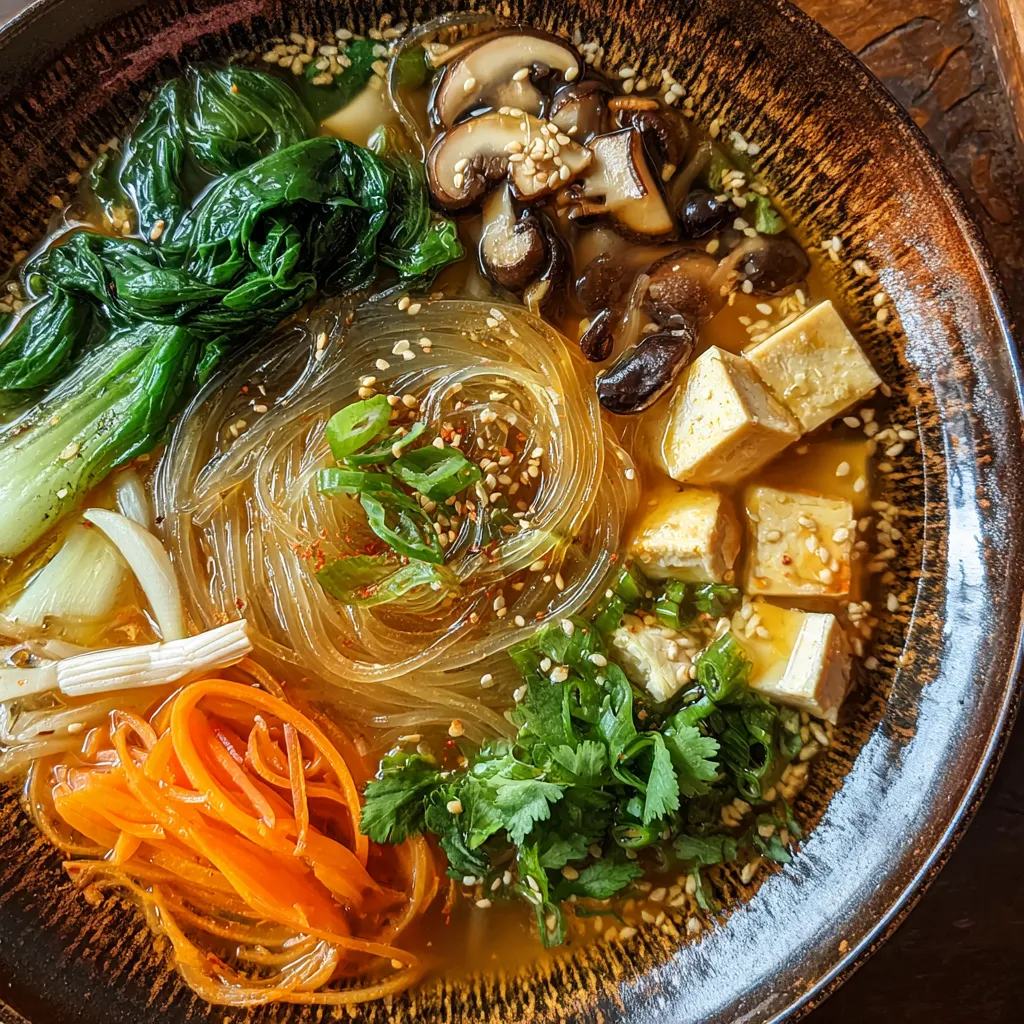

Japanese Glass Noodle Soup
Description
Fragrant ginger and garlic meld in a savory miso broth, where silky glass noodles, tender tofu cubes, earthy mushrooms, and vibrant greens come together in every comforting sip.
Ingredients
Instructions
-
Begin by soaking the glass noodles in warm water for about 15-20 minutes, or until they soften. Once softened, drain and set aside.
-
In a large pot, heat the vegetable oil over medium heat. Add the sliced onion and sauté until translucent, about 3-4 minutes.
-
Add the minced garlic and grated ginger to the pot, stirring frequently until fragrant, approximately 1-2 minutes.
-
Pour in the vegetable or chicken broth and water, then bring the mixture to a gentle boil.
-
Stir in the soy sauce and miso paste, mixing well until the miso fully dissolves.
-
Add the cubed tofu and the julienned carrot to the broth, allowing them to cook for 5 minutes.
-
Incorporate the sliced mushrooms and cook for another 3-4 minutes, until they are tender.
-
Gently fold in the cooked glass noodles and chopped spinach or bok choy, continuing to cook until the greens are wilted, about 2-3 minutes.
-
Taste the soup and adjust seasoning if necessary - you can add more soy sauce or chili flakes if you like it spicier.
-
Serve hot, garnished with chopped green onions, sesame seeds, and fresh cilantro if desired.
Note
- Glass noodles are made from mung bean starch, making them gluten-free.
- You can customize the vegetables based on what is in season or your preferences.
- This soup can be made vegan by ensuring the broth is vegetable-based.
- Miso adds a wonderful umami flavor and can be varied with different types (white, red, or yellow).
- Leftovers can be stored in the refrigerator and reheated, although the noodles may absorb more broth.

