

Dive into Homemade Chow Mein, where tender chow mein noodles twirl around succulent chicken and crisp veggies, all bathed in a glossy sauce kissed with garlic, ginger, and sesame. Quick to pull together on a weeknight, this beginner-friendly dinner blends crunchy textures and umami flavors in every bite. Whether you’re craving something familiar or looking to spice up your stir-fry game, this recipe promises a satisfying wok-to-bowl feast you’ll want to make again and again.
Key Ingredients
Gather these simple ingredients to build layers of flavor and crunch in your Homemade Chow Mein:
- 200 grams chow mein noodles: Springy strands that soak up the savory sauce and give you that signature noodle chew.
- 200 grams chicken breast, sliced thin: Lean protein that cooks quickly and absorbs the umami flavors in every bite.
- 2 tablespoons soy sauce: Adds salty depth and bridges all the savory elements together.
- 1 tablespoon oyster sauce: Provides rich umami and a glossy sheen to coat the noodles.
- 1 teaspoon sesame oil: Infuses a nutty aroma and authentic Asian flair to the stir-fry.
- 2 cloves garlic, minced: Brings sharp, aromatic punch that layers into every mouthful.
- 1 teaspoon ginger, minced: Offers warm, zesty heat that complements the garlic and sesame.
- 1 cup shredded cabbage: Adds crisp texture and a hint of sweetness to balance the sauce.
- 1 carrot, julienned: Brings color, subtle sweetness, and a satisfying crunch.
- 1/2 onion, sliced: Contributes mild sweetness and depth to the stir-fry base.
- 1 bell pepper, sliced: Delivers bright color and crisp, juicy freshness.
- 2 green onions, chopped: Adds a mild oniony finish and fresh pop of green.
- 1 tablespoon cornstarch: Thickens the sauce so it clings perfectly to noodles and veggies.
- 2 tablespoons vegetable oil: Provides high-heat cooking power without overpowering flavors.
- 1/4 cup water: Thins out the sauce and activates the cornstarch for a silky coating.
- 1 teaspoon sugar: Balances the saltiness and rounds out the flavor profile.
How To Make Homemade Chow Mein
Stir-frying is all about quick heat, constant movement, and the right prep, and this Homemade Chow Mein ticks all the boxes. In under half an hour, you’ll boil the noodles just right, whip up a glossy sauce, and toss everything in a hot wok for that irresistible sear. With a sequence designed to keep veggies crisp-tender and chicken juicy, you’ll learn how each step builds layers of flavor—from aromatics to that final sauce toss. Let’s dive into the step-by-step process!
1. Bring a large pot of boiling water to a rapid boil, then add the chow mein noodles and cook until just al dente (usually 2–3 minutes). Immediately drain in a colander and rinse under cold water to stop the cooking and remove excess starch. Set aside.
2. In a small bowl, whisk together the soy sauce, oyster sauce, sesame oil, water, cornstarch, and sugar until smooth and free of lumps. Let the sauce rest so the cornstarch can dissolve completely.
3. Heat 1 tablespoon of vegetable oil in a large wok or skillet over medium-high heat. Add the sliced chicken and stir-fry for 3–4 minutes, tossing frequently, until the edges are lightly golden and the chicken is cooked through. Transfer to a plate and keep warm.
4. Add the remaining tablespoon of oil to the hot wok, then toss in the minced garlic and ginger. Stir-fry for about 30 seconds until fragrant but not browned.
5. Slide in the sliced onion, julienned carrot, shredded cabbage, and bell pepper. Keep the ingredients moving in the wok, stir-frying for 2–3 minutes until they’re just tender-crisp.
6. Return the cooked chicken to the wok along with the drained noodles. Pour the prepared sauce over everything and use tongs or spatulas to toss all ingredients together, ensuring every strand and piece is coated.
7. Sprinkle in the chopped green onions and continue cooking for another minute, allowing the sauce to thicken and the noodles to heat through.
8. Transfer your Homemade Chow Mein to a large serving plate, garnish with extra green onions if you like, and serve immediately while it’s hot and glossy.
Serving Suggestions
When it comes to plating and serving Homemade Chow Mein, a few simple touches can transform it from tasty to truly memorable. Whether you're tempting weeknight dinner guests or setting up a casual family meal, these serving ideas will help you present your stir-fry feast with flair. From garnishes that pop to side dishes that complement the savory sauce, here are four easy ways to elevate your chow mein experience:
- Pair with steamed jasmine rice for a filling, starch-balanced meal that soaks up every last drop of sauce.
- Serve alongside a light Asian cucumber salad, dressed with rice vinegar and sesame seeds, to introduce a cool, tangy contrast.
- Offer chili oil or sriracha on the side for guests who crave an extra kick of heat and depth.
- Garnish with a sprinkle of sesame seeds and fresh cilantro leaves to add texture and a burst of fresh herbal aroma.
Tips For Perfect Homemade Chow Mein
Chow Mein shines when each ingredient plays its part perfectly, and a few smart tweaks can take your stir-fry from good to outstanding. Whether you’re cooking for family, friends, or your future self for lunch leftovers, these handy notes ensure you keep the textures spot-on, flavors balanced, and veggies vibrant.
- For a vegetarian version omit chicken and use tofu or extra vegetables.
- Adjust the amount of soy and oyster sauce to taste for saltiness.
- Make sure not to overcook the noodles to keep them springy.
- Serve immediately to maintain the noodles’ texture.
How To Store It
Leftovers of Homemade Chow Mein can be just as delicious the next day—if you store them properly. Chilling, reheating, or even freezing with a few simple steps will help you maintain that signature chew in the noodles and keep veggies from getting soggy. Read on for the best methods to preserve your stir-fry feast:
- Refrigerate in an airtight container for up to 3–4 days. Allow the chow mein to cool to room temperature before sealing to prevent condensation.
- Separate sauce (if possible) before storing to keep noodles from getting too soft. Recombine when reheating for optimal texture.
- Reheat gently in a hot skillet with a splash of water or oil, tossing quickly over medium heat to restore the crisp-tender bite.
- Freeze in portions by placing cooled chow mein into freezer-safe bags. Press out excess air and freeze for up to 2 months; thaw overnight in the fridge before reheating.
Frequently Asked Questions
Got questions? We’ve got answers to help you master Homemade Chow Mein in no time.
- How long does it take to prepare and cook this homemade chow mein?
It takes about 10 minutes to prep ingredients—slicing chicken and vegetables, mixing sauce, and cooking noodles—and another 10 to 12 minutes to stir-fry everything, for a total of around 20 to 22 minutes from start to finish.
- Can I substitute the chicken with a vegetarian or other protein option?
Yes. Simply omit the chicken and use firm tofu cut into cubes or extra vegetables such as mushrooms or snap peas. Press the tofu to remove excess moisture, toss it in a little cornstarch for a crispier texture, and stir-fry until golden before following the remaining steps.
- How can I adjust the saltiness and overall flavor of the sauce?
Taste the combined sauce of soy sauce, oyster sauce, sesame oil, sugar, water, and cornstarch before adding. If too salty, reduce soy or oyster sauce by a teaspoon or add a dash more water. For deeper umami, add a drop more oyster sauce. To brighten flavors, stir in a squeeze of lime juice or a pinch of sugar.
- Why is it important to rinse the noodles under cold water after cooking?
Rinsing under cold water stops the cooking process, removes excess starch, and prevents the noodles from sticking together. This keeps them springy and ensures they don’t overcook when stir-frying.
- How do I keep the vegetables crisp-tender rather than soggy?
Maintain medium-high heat and stir-fry quickly, adding vegetables in order of firmness—onions first, then carrots, cabbage, and bell pepper. Cook each only until just tender-crisp (about 2 to 3 minutes total) before adding the next ingredients, and avoid overcrowding the wok so they sear rather than steam.
- What should I do if the sauce is too thick or too thin after tossing with the noodles?
If the sauce is too thick, add a splash of water or extra soy sauce and toss until you reach the desired consistency. If it’s too thin, let it cook for an additional minute to allow the cornstarch to thicken or whisk a little more cornstarch with cold water and stir it in until the sauce coats the ingredients evenly.
What Makes This Special
Homemade Chow Mein works like a magic trick in your kitchen—you get noodles that stay springy, chicken that stays juicy, and veggies that snap with every bite, all wrapped in a shiny, savory sauce. It's quick, beginner-friendly, and endlessly customizable, making it my go-to for last-minute dinner wins. Feel free to print this page, tuck it into your recipe binder, or bookmark it for a rainy night stir-fry craving. If you give it a whirl or have any tweaks to share, drop a comment below—I’d love to hear how your wok adventure turned out!
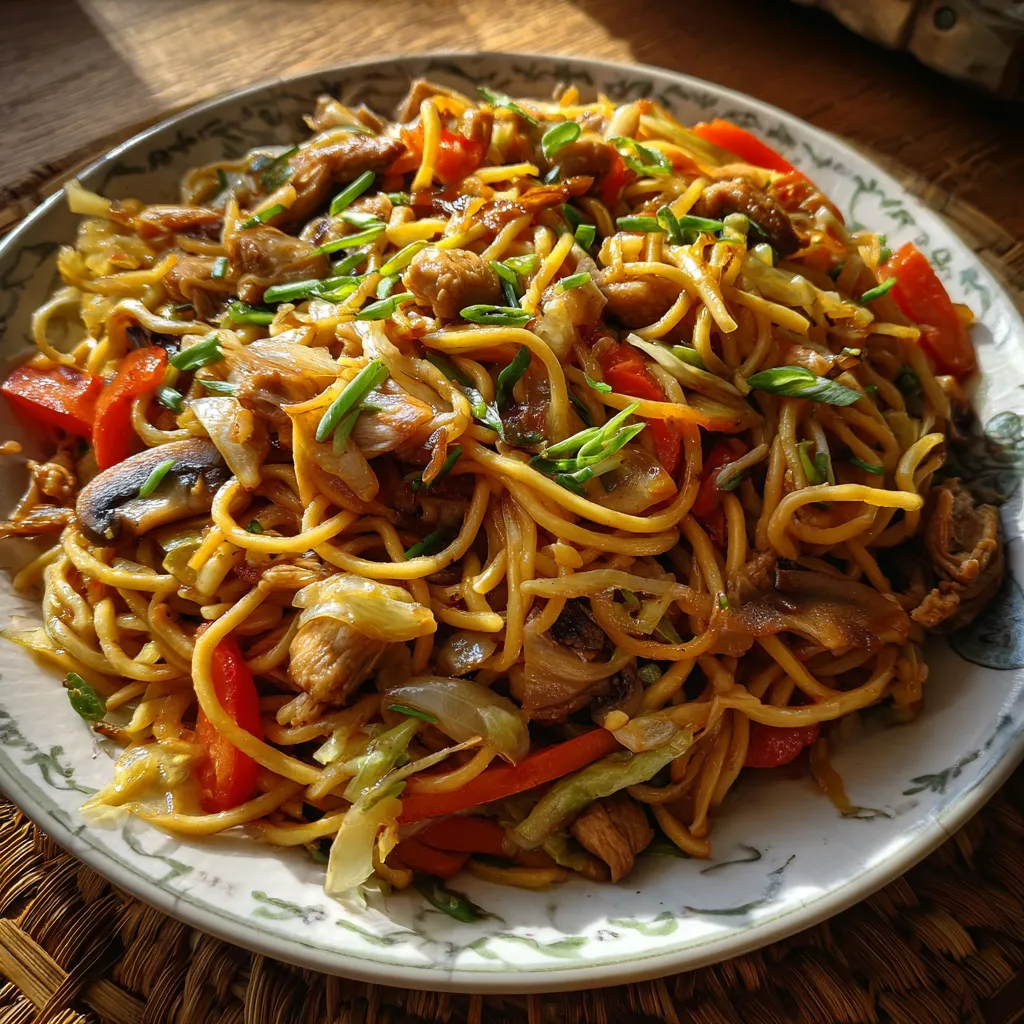

Homemade Chow Mein
Description
Tender chow mein noodles twirl around succulent chicken and crisp veggies, all bathed in a glossy sauce kissed with garlic, ginger, and sesame. Each forkful bursts with savory crunch and fragrant heat.
Ingredients
Instructions
-
Cook the chow mein noodles in boiling water according to package instructions until just al dente then drain and rinse under cold water.
-
In a small bowl combine soy sauce oyster sauce sesame oil water cornstarch and sugar to make the sauce then set aside.
-
Heat 1 tablespoon of vegetable oil in a large wok or skillet over medium-high heat then add the chicken and stir fry until cooked through then remove and set aside.
-
Add the remaining oil to the wok then stir fry garlic and ginger for about 30 seconds until fragrant.
-
Add onion carrot cabbage and bell pepper and stir fry for 2 to 3 minutes until vegetables are tender-crisp.
-
Return the chicken to the wok then add the noodles and pour in the sauce and toss everything together to coat well.
-
Stir in the green onions then cook for another minute until the sauce has thickened and the noodles are heated through.
-
Transfer to a serving plate and garnish with extra green onions if desired.
Note
- For a vegetarian version omit chicken and use tofu or extra vegetables.
- Adjust the amount of soy and oyster sauce to taste for saltiness.
- Make sure not to overcook the noodles to keep them springy.
- Serve immediately to maintain the noodles’ texture.

