

Gourmet Seafood Cassolette is one of those dishes that feels effortlessly elegant, yet it’s surprisingly approachable for a cozy weeknight or a special celebration. Creamy white wine and seafood stock meld together into a velvety sauce that lovingly coats tender scallops and plump shrimp, finishing under a golden blanket of Gruyère cheese. From the very first spoonful, you’re greeted with a delicate balance of richness and brightness—a testament to the magic that happens when high-quality ingredients meet a home cook’s touch. Whether you’re planning a romantic dinner for two or a casual gathering with friends, this seafood bake fits seamlessly into any menu, taking center stage with its impressive presentation and soul-warming taste.
As an intermediate-level recipe, the Gourmet Seafood Cassolette invites you to explore techniques like creating a classic roux, deglazing with wine, and achieving the perfect sear on scallops without fear. With about 30 minutes of prep time and another 30 minutes in the oven, plus a short rest before serving, it’s wonderfully manageable—even if you have limited time. And at roughly 525 calories per serving, it strikes a nice balance between indulgence and portion control, especially when paired with crisp sides. Trust me, once you master this dish, it’ll become your go-to when seafood cravings strike or you want to show off a little in the kitchen.
KEY INGREDIENTS IN GOURMET SEAFOOD CASSOLETTE
Every standout recipe starts with top-notch ingredients, and this cassolette is no exception. You’ll want to source the freshest seafood and quality pantry staples to fully capture the rich, layered flavors of the dish. Below is a breakdown of each component and why it plays a crucial role in crafting this creamy, dreamy bake.
- Fresh sea scallops – These sweet, tender morsels are the star of the show. When seared properly, scallops develop a light caramelized crust that contrasts beautifully with the silky sauce.
- Large shrimp, peeled and deveined – Shrimp bring a plump, slightly briny bite that pairs perfectly with scallops. Peeling and deveining ensures a clean, tender texture.
- Dry white wine – A splash of acidity and fruitiness helps deglaze the pan, lifting up browned bits and adding depth without overpowering the seafood.
- Fish or seafood stock – This liquid backbone infuses the sauce with savory, oceanic undertones, creating a complex flavor profile that’s far more interesting than plain water.
- Heavy cream – Providing luscious richness, the cream transforms the deglazed base into a thick, velvety sauce that hugs each piece of seafood.
- Shallot, finely chopped – Milder than onions, shallots offer a subtle sweetness and delicate layering of flavor right from the start.
- Garlic, minced – Garlic’s aromatic punch forms the recipe’s flavor foundation, waking up your taste buds from the very first sauté.
- Unsalted butter – Using unsalted butter lets you control seasoning precisely while adding luxury to both the roux and the final sauce.
- All-purpose flour – Flour is your thickening agent for the roux, giving the sauce body and a silky consistency.
- Gruyère cheese – Nutty and slightly sweet, Gruyère melts into a bubbling, golden crust that is the ultimate finishing touch.
- Chopped fresh parsley – Fresh parsley adds a pop of color and a bright, herbaceous note that cuts through the creaminess.
- Salt and freshly ground black pepper – Essential seasonings that accentuate the natural flavors of seafood and balance the richness of the sauce.
- Lemon wedges – A final squeeze of lemon brightens each bite, enhancing the seafood’s delicate sweetness with refreshing acidity.
HOW TO MAKE GOURMET SEAFOOD CASSOLETTE
Let’s walk through the step-by-step process of building flavors, preparing your seafood, and finishing with that irresistible golden cheese crust. Follow these detailed instructions for a flawless seafood cassolette every time.
1. Preheat your oven to 375°F (190°C) so it’s ready to transform your assembled cassolette into a bubbly, cheese-topped delight.
2. In a large skillet, melt 1 tablespoon of butter over medium heat. Add the finely chopped shallot and minced garlic, sautéing until they’re soft and fragrant—about 2–3 minutes without browning.
3. Add the flour to the skillet and stir continuously to create a roux, allowing it to cook for about 1 minute. This step thickens the sauce and removes any raw flour taste.
4. Gradually whisk in the dry white wine and fish stock, scraping up any flavorful bits from the bottom of the pan. Bring the mixture to a simmer and cook until it thickens slightly.
5. Slowly stir in the heavy cream, allowing the sauce to gently bubble and thicken. Season generously with salt and freshly ground black pepper to taste.
6. In a separate pan, melt the remaining tablespoon of butter over medium-high heat. Add the scallops and shrimp, cooking just until they begin to turn opaque—about 2 minutes total. Be careful not to overcook, as they’ll finish cooking in the oven.
7. Stir the seared scallops and shrimp into the creamy sauce, then fold in half of the chopped parsley, mixing until everything is evenly coated.
8. Divide the mixture into individual baking dishes or one large cassolette dish if you prefer a communal presentation. Top generously with grated Gruyère cheese for that signature golden finish.
9. Place the dishes in the preheated oven and bake for 10–12 minutes, or until the cheese is bubbling and perfectly golden-brown.
10. Remove from the oven, garnish with the remaining parsley, and serve hot with lemon wedges on the side for a bright, citrusy lift.
SERVING SUGGESTIONS FOR GOURMET SEAFOOD CASSOLETTE
Now comes the fun part—serving up this luxurious bake in a way that elevates every mouthful. Whether you’re dishing out individual cazolettes for each guest or plating a large communal dish, presentation and pairing make all the difference. Below are a few creative ways to complete the meal and impress your dinner companions.
- Crusty artisan bread – Offer thick slices of a crunchy baguette or sourdough loaf for mopping up every last bit of the creamy sauce. Warm the bread briefly in the oven for extra comfort.
- Zesty arugula side salad – Toss fresh arugula with a simple lemon vinaigrette (olive oil, lemon juice, a pinch of salt) to provide a crisp, peppery contrast that cuts through the richness.
- Chilled Sauvignon Blanc – A glass of bright, citrus-forward white wine complements the delicate seafood flavors and balances the creaminess with crisp acidity.
- Herb and citrus garnish – Sprinkle additional chopped parsley and serve lemon wedges alongside each portion. The vibrant green and sunny yellow make every plate pop and provide a flavor boost.
HOW TO STORE GOURMET SEAFOOD CASSOLETTE
Storing your cassolette correctly ensures you can enjoy delightful leftovers without sacrificing taste or texture. With seafood and dairy in the mix, proper refrigeration and, if desired, freezing techniques are key to preserving freshness. Follow these guidelines to keep your dish at its best.
- Refrigerate in airtight containers – Allow the cassolette to cool to room temperature, then transfer leftovers into sealed, food-safe containers. Store in the fridge for up to 2 days to maintain optimal flavor and seafood quality.
- Freeze for longer storage – If you want to save a portion for later, freeze cooled leftovers in freezer-safe, airtight containers. Label with the date and use within 1 month. Thaw overnight in the refrigerator before reheating.
- Gentle reheating methods – Rewarm individual portions in a preheated oven at 325°F (160°C) until heated through, about 10–15 minutes, to avoid overcooking the seafood. You can also use a covered skillet over low heat, stirring occasionally.
- Avoid room-temperature storage – Seafood and dairy-based dishes shouldn’t sit out longer than two hours. Prompt refrigeration prevents bacterial growth and keeps flavors vibrant.
CONCLUSION
Thank you for joining me on this culinary adventure into the world of Gourmet Seafood Cassolette. We’ve explored every step—from sourcing the finest scallops and shrimp to building a silky white wine and cream sauce, crafting a smooth roux, and finishing under a bubbling layer of Gruyère. You’ve learned how to balance richness with brightness, master intermediate techniques like sautéing, deglazing, and creating a cheese gratin, and even how to pair and store your delicious creation. Whether you’re serving this as an elegant appetizer, a stunning main course, or a hearty lunch, this recipe is designed to deliver show-stopping flavor with every bite. Feel free to print out this article and save it for your recipe binder—or tuck it into your digital collection for future dinner-party inspiration.
I hope this guide has given you the confidence to dive into this creamy seafood bake, and I can’t wait to hear about your experiences! If you try the recipe, please leave a comment with your thoughts, tweaks, or any questions you encountered along the way. Want to know more? Scroll down to find our FAQ below. Your feedback, tips, and stories are always welcome—let’s keep the conversation going and make every meal a delicious memory.
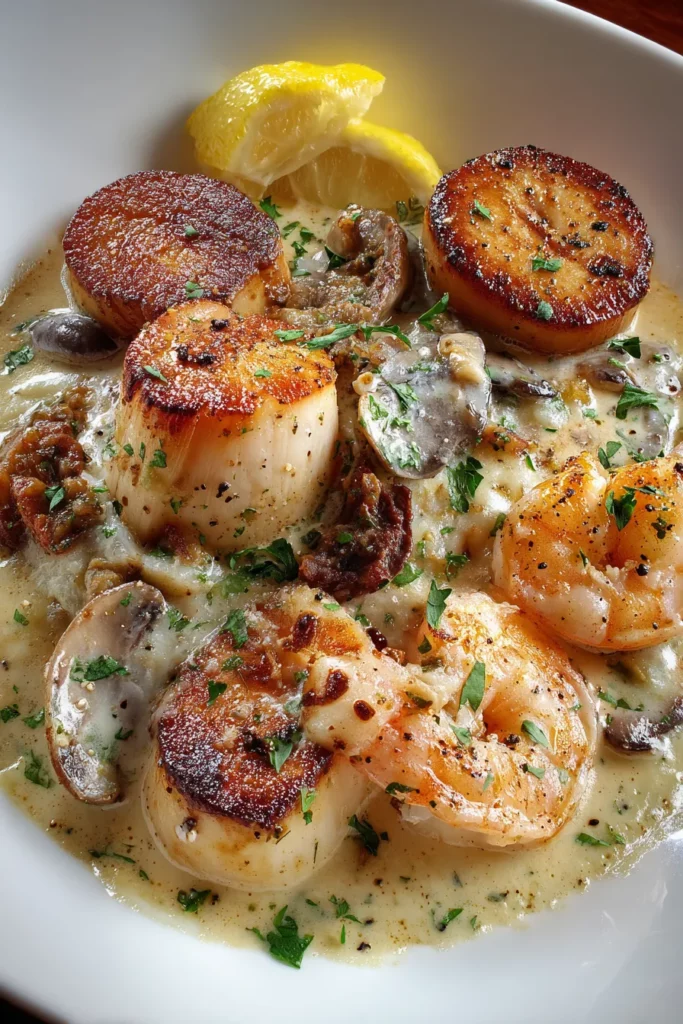

Gourmet Seafood Cassolette
Description
Experience succulent scallops and shrimp nestled in a rich, velvety white wine and cream sauce, all baked to golden, bubbly perfection with Gruyère cheese. A truly decadent delight!
Ingredients
Instructions
-
Preheat your oven to 375°F (190°C).
-
In a large skillet, melt 1 tablespoon of butter over medium heat. Add the shallot and garlic, sautéing until they are soft and fragrant.
-
Add the flour to the skillet and stir to create a roux, allowing it to cook for about 1 minute.
-
Gradually whisk in the white wine and seafood stock, bringing the mixture to a simmer until it thickens slightly.
-
Slowly stir in the heavy cream, allowing the sauce to gently bubble and thicken. Season with salt and pepper.
-
In a separate pan, melt the remaining tablespoon of butter over medium-high heat. Add the scallops and shrimp, cooking just until they begin to turn opaque, about 2 minutes. Do not overcook as they will finish cooking in the oven.
-
Stir the scallops and shrimp into the creamy sauce, and add half of the parsley. Mix until everything is well distributed.
-
Divide the mixture into individual baking dishes or one large baking dish if preferred. Top with grated Gruyère cheese.
-
Place the baking dish or dishes into the preheated oven and bake for 10-12 minutes, or until the cheese is bubbling and golden.
-
Remove from the oven, garnish with the remaining parsley, and serve hot with lemon wedges on the side.
Note
- Scallops should be dry to ensure proper searing; pat them dry before cooking.
- Adjust the types of seafood according to availability or personal taste, such as including mussels or lobster.
- Serving the cassolette with crusty bread makes for an excellent accompaniment to soak up the rich sauce.
- For added richness, consider mixing a small amount of lobster or crab meat into the dish.

