

There’s something truly comforting about a plate of golden-brown potato pancakes that crackle with crisp edges and yield a tender, fluffy interior. One bite of these German Potato Pancakes and you’re transported to a cozy kitchen, where laughter bubbles up and conversations flow as freely as the munching. Crispy, golden-brown German Potato Pancakes that are simple to make and utterly delicious! I recall the first time I made these beauties for a Sunday brunch—my kitchen filling with the sound of sizzling potatoes meeting hot oil and the delightful waft of paprika and garlic powder blending into a warm symphony. Landing that perfect crunch on the outside while keeping the inside soft becomes a joyful mission, almost like capturing sunshine on a plate. These pancakes are more than just fried potatoes; they’re a celebration of texture, flavor, and tradition, a comforting hug that fits right into any meal slot—appetizer, lunch, or dinner. And the combination of tangy sour cream and sweet applesauce? Absolutely irresistible, adding an interplay of flavors that hits every craving. Trust me, once you master the simple art of grating potatoes and coaxing out their moisture, you’ll find yourself dreaming up excuses to whip these up more often than Sundays. Whether your goal is to impress brunch guests or just treat yourself to a soul-warming snack, these pancakes have the power to become a go-to comfort food that never gets old.
From russet potatoes and finely grated onion to a sprinkle of parsley and a hint of paprika, every ingredient plays its part in crafting the perfect bite. These German Potato Pancakes are beginner-friendly, requiring just thirty minutes of prep, twenty minutes of cooking, and a ten-minute rest before serving. With a total time of one hour, they’re an attainable treat that feels anything but ordinary. At roughly 350 calories per serving, they balance richness and comfort without breaking the bank. I love how this recipe invites personalization—add breadcrumbs for extra crispness, toss in garlic powder for depth, or experiment with fresh chives for a herbal twist. The straightforward steps take you on a step-by-step journey, guiding you from peeling and grating to frying and plating, all while keeping the mood light and playful. Whether you’re planning an appetizer spread, fueling up for dinner, or pulling together a cozy lunchtime feast, these golden rounds deliver big on flavor and nostalgia. I still remember the joy of watching my kids dip each pancake into sour cream, their cheeks stuffed with smiles. That simple moment—forks clinking, eyes twinkling—reminds me why I love home cooking so much. Grab your box grater, fire up a skillet, and let’s dive into this recipe that’s sure to become a family favorite.
KEY INGREDIENTS IN GERMAN POTATO PANCAKES
Before we dive into the step-by-step guide, let’s talk about the stars of the show. Each ingredient brings its own unique contribution to flavor, texture, and overall success of these pancakes. Whether you choose to include the optional elements or stick to the basics, you’ll see how these components harmonize to create that irresistible crisp exterior and fluffy interior.
- Russet potatoes: High in starch and low in moisture, russets are ideal for achieving a golden-brown crust. Peeling and grating them gives the batter structure and chew.
- Onion: Adds savory sweetness and moisture. Grating ensures it blends seamlessly, distributing flavor without large chunks.
- Eggs: Act as a natural binder, keeping the pancake mixture together and lending richness for a tender bite.
- All-purpose flour: Helps bind the grated potato and onion mixture, absorbing moisture and contributing to the overall texture.
- Breadcrumbs: Optional but fantastic for an extra layer of crunch. They prevent pancakes from becoming too dense.
- Salt: Essential for enhancing the natural flavors of the potatoes and balancing the aromas of spices.
- Black pepper: Provides a gentle kick and earthy warmth, brightening every mouthful.
- Garlic powder: A subtle way to introduce a savory depth without overwhelming the pancake’s delicate potato flavor.
- Paprika: Optional for a mild smoky note and a touch of color, elevating visual appeal.
- Fresh parsley: Adds freshness and a pop of green, cutting through the richness with herbal brightness.
- Vegetable oil: Perfect for frying—neutral in flavor and capable of reaching the right temperature for crisping.
- Sour cream: Smooth and tangy, this classic topping cools the palate and contrasts the hot, crispy cakes.
- Applesauce: Brings sweet, fruity balance that complements the savory pancakes and makes each bite playful.
HOW TO MAKE GERMAN POTATO PANCAKES
Now that we know what goes into our pancakes, let’s get cooking! This section walks you through each step, from preparing the potatoes to serving those golden rounds hot off the skillet. Follow along, and you’ll have a plateful of crispy deliciousness in no time.
1. Prep the potatoes by peeling and grating them with a box grater or food processor. Transfer the shreds to a clean kitchen towel or cheesecloth, then firmly squeeze out excess moisture. This crucial move ensures the pancakes become extra crispy rather than soggy.
2. Combine grated ingredients: Place the dried potato strands into a large mixing bowl. Add the finely grated onion and gently toss to distribute the onion evenly.
3. Build the batter: Crack the eggs into the bowl, then sprinkle in the flour, breadcrumbs (if using), salt, pepper, garlic powder, paprika, and parsley. Stir vigorously until the mixture holds together but remains light. You’re aiming for a batter that’s cohesive yet still scoopable.
4. Heat the oil: Pour the vegetable oil into a large skillet and warm over medium-high heat. To test readiness, drop a small spoonful of batter into the pan—if it dances and sizzles, you’re good to go.
5. Form and fry: Use a spoon to scoop portions of the potato mix, shaping them into small patties. Carefully place each into the hot oil, then gently flatten with the back of the spoon. Cook for 3–4 minutes per side, or until each is golden brown and crispy.
6. Drain excess oil: Transfer finished pancakes to a plate lined with paper towels. This step whisks away extra grease and keeps each cake perfectly light.
7. Serve immediately: Plate the German potato pancakes while they’re still hot, offering a dollop of sour cream and a side of applesauce. The contrast of warm, crunchy cakes with cool, creamy, and sweet accompaniments makes every bite magical.
SERVING SUGGESTIONS FOR GERMAN POTATO PANCAKES
When it comes to enjoying these potato pancakes, presentation and accompaniments can transform a simple stack into a memorable meal. Whether you’re hosting brunch, crafting a cozy dinner, or putting together a comfort-food lunch, these ideas will inspire delicious pairings and charming plating styles.
- Sour Cream Swirl: Spoon a generous dollop of sour cream onto each pancake, then use the back of a spoon to create a soft swirl. Sprinkle with chopped fresh parsley or chives for a pop of color and herby aroma.
- Apple-Chive Duo: Serve with a side of homemade applesauce mixed with finely diced green apples for extra texture. Top the pancakes with a sprinkle of fresh chives to balance the sweetness.
- Hearty German Feast: Elevate the experience by pairing with smoked sausage and tangy sauerkraut. Layer one or two pancakes beneath the sausage, then spoon sauerkraut over the top for a full-bodied, savory platter.
- Brunch Flavor Boost: Top each pancake with a poached egg and a light drizzle of hot honey or maple syrup. The runny yolk blends with the crisp edges, creating a luxuriously rich bite.
HOW TO STORE GERMAN POTATO PANCAKES
Storing your leftover pancakes properly ensures you can enjoy that delightful crunch and tender interior again and again. Whether you plan to refrigerate for a couple of days or freeze for future meals, following these tips will keep your pancakes tasting fresh and delicious.
Keeping them in the refrigerator is ideal if you plan to eat them within 48 hours. Let the pancakes cool completely before transferring to an airtight container. Place a sheet of paper towel between layers to absorb any lingering moisture and prevent sogginess. When you’re ready to enjoy, reheat in a hot skillet until warmed through and crisp on both sides.
For longer storage, follow these steps before freezing:
- Arrange cooled pancakes in a single layer on a baking sheet lined with parchment paper, ensuring they don’t touch.
- Freeze for about two hours, then transfer the semi-frozen cakes to a resealable freezer bag. Remove as much air as possible to prevent freezer burn.
- To reheat, pop frozen pancakes back into a hot skillet—no need to thaw—and cook until crisp and heated through.
If you prefer glasses or bowls, wrap your pancake stack tightly in plastic wrap or place inside a sealed container. Make sure each pancake is cool and dry to maintain texture. Always warm them gently to revive that signature crispiness, whether from fridge or freezer.
CONCLUSION
This journey through the world of German Potato Pancakes has shown how a handful of simple ingredients can create something extraordinary. Starting with peeled russet potatoes, a touch of onion, and a mix of spices, you’ve learned how to craft pancakes that are crispy on the outside and tender on the inside. We covered every step in detail—removing moisture, building the batter, frying to golden perfection, and serving with classic accompaniments like sour cream and applesauce. You even discovered ideas for pairing with smoked sausage, sauerkraut, or a brunch-style poached egg, along with smart storage techniques to keep them fresh. Whether you’re a beginner cook or a seasoned home chef, these pancakes are approachable, fun to make, and guaranteed to become a crowd-pleaser at any meal.
Feel free to print this article or save it in your favorite recipe file for easy reference. You can also find an FAQ below if you have any questions about substitutions, troubleshooting, or tips to get that extra-crispy edge. If you give this recipe a try, I’d love to hear how it turns out—drop a comment with your thoughts, let me know if you added your own twist, or ask any questions if you need help along the way. Your feedback and kitchen stories always brighten my day and help our community get even more creative with these timeless German Potato Pancakes. Enjoy every crunchy, savory bite!
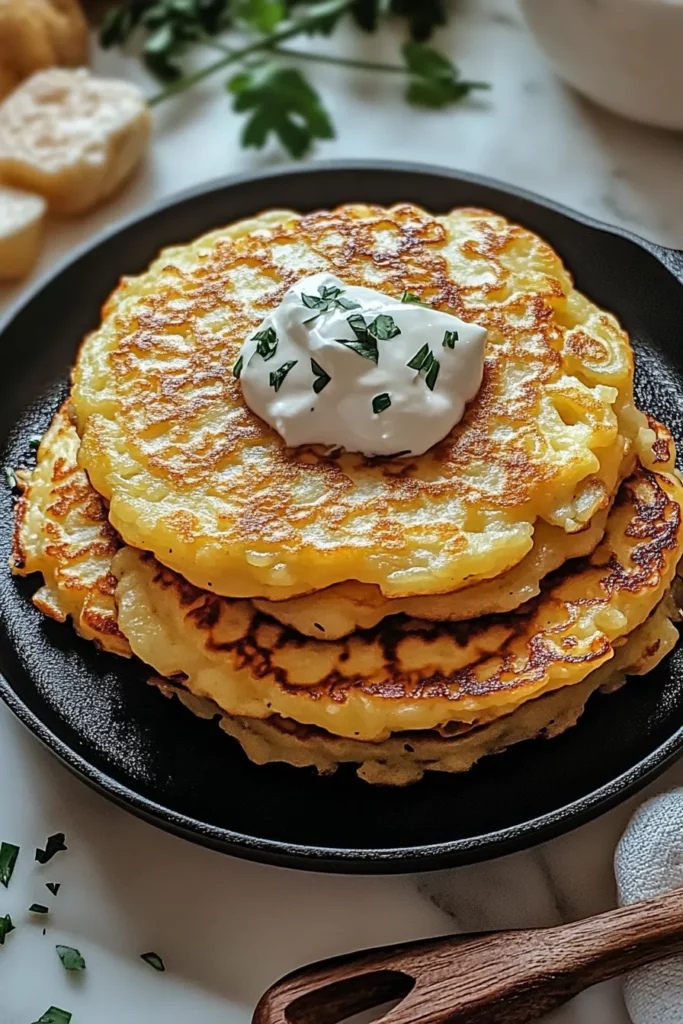

German Potato Pancakes
Description
These German Potato Pancakes are incredibly crispy on the outside and tender on the inside, served hot with sour cream and applesauce for the perfect bite!
Ingredients
Instructions
-
Start by peeling the potatoes and grating them using a box grater or food processor. Place the grated potatoes in a clean kitchen towel or cheesecloth and squeeze out as much moisture as possible. This helps the pancakes stay crispy.
-
Once the moisture is removed, place the grated potatoes in a large mixing bowl. Add the finely grated onion to the bowl and stir to combine.
-
Crack the eggs into the bowl with the potatoes and onions. Add the flour, breadcrumbs (if using), salt, pepper, garlic powder, paprika, and parsley. Stir everything together until the mixture is well combined. The batter should hold together but not be too thick.
-
Heat the vegetable oil in a large skillet over medium-high heat. You can test if the oil is hot enough by dropping a small spoonful of batter into the pan—if it sizzles, the oil is ready.
-
Using a spoon, scoop out portions of the potato mixture and shape them into small patties. Carefully place the patties into the hot skillet, flattening them slightly with the back of the spoon. Fry the pancakes for about 3-4 minutes per side, or until they are golden brown and crispy.
-
Once the pancakes are done, transfer them to a paper towel-lined plate to drain any excess oil.
-
Serve the German potato pancakes hot with a dollop of sour cream and a side of applesauce, if desired.
Note
- The key to getting crispy pancakes is to remove as much moisture as possible from the grated potatoes.
- If you prefer a bit more flavor, you can add herbs like thyme or chives to the batter.
- These pancakes can be stored in the fridge for up to 2 days. Reheat them in a hot skillet to restore their crispiness.
- Serve with a side of sauerkraut or smoked sausage for a full German-inspired meal!

