

When you crave that satisfying combination of tender chicken, crisp vegetables, and chewy noodles, homemade Chicken Chow Mein hits the spot like nothing else. This savory soy-hoisin stir-fry brings together juicy marinated chicken breasts, vibrant bell pepper strips, julienned carrots, and delicate bean sprouts, all tossed in a garlicky-ginger sauce and coated in golden chow mein noodles. Whether you’re aiming to recreate Chinese takeout at home or just want a quick chicken stir-fry for a weeknight dinner, this intermediate-level recipe delivers restaurant-quality flavor in about an hour from start to finish (20 minutes prep, 15 minutes cooking, and a 15-minute marinade rest). At around 550 kcal per serving, it’s hearty enough for lunch or dinner yet light on cleanup—no delicate dim sum wrappers or messy steaming baskets needed, just one wok or large skillet and your favorite stir-fry noodles.
I still smile thinking about flipping those noodles in a hot wok for the first time—hearing the gentle sizzle as the sauce clings to every strand and vegetable. The secret lies in layering flavors: first a simple three-sauce marinade of soy, oyster, and hoisin that seeps deep into the thinly sliced chicken, then a final drizzle of sesame oil for that nutty finish. This Chicken Chow Mein isn’t just about convenience; it’s about capturing that signature Chinese takeout feel right in your own kitchen. With just a few pantry staples and fresh produce, you’ll master the art of stir-frying and infuse each bite with the bright, garlicky zing of fresh ginger. So tie on your apron, ready your wok, and let’s embark on a noodle-tossing adventure that’ll have your dinner companions begging for seconds.
KEY INGREDIENTS IN CHICKEN CHOW MEIN
Before we dive into cooking, let’s meet the stars of this dish. Each ingredient brings its own texture, flavor, and character, working in harmony to create that crave-worthy chicken chow mein you know and love.
- Chicken Breasts
Thinly sliced boneless, skinless chicken provides tender protein that soaks up the savory marinade, ensuring each bite bursts with flavor.
- Soy Sauce
A salty, umami-rich backbone to both the chicken marinade and the final stir-fry sauce, soy sauce deepens the dish’s savory profile.
- Oyster Sauce
This slightly sweet, thick sauce adds a luxurious depth and a hint of ocean-kissed richness to the chicken.
- Hoisin Sauce
A sweet-savory condiment made from fermented soybeans, garlic, and spices; it brings a subtle hint of sweetness and complexity.
- Sesame Oil
A drizzle of aromatic sesame oil at the end elevates the dish with its nutty fragrance and rounds out the flavors.
- Vegetable Oil
A neutral-flavored oil perfect for heating to high temperatures, delivering that essential wok hei (breath of the wok) when stir-frying.
- Onion
Thinly sliced onion brings a mild sweetness and slight crunch when stir-fried, balancing the richer sauces.
- Carrot
Julienne-cut carrots provide a colorful crunch and vibrant sweetness that contrast beautifully with the tender chicken.
- Bell Pepper
Thin strips of bell pepper add a juicy, crisp texture and a pop of color that livens up the plate.
- Garlic
Minced garlic infuses a pungent, aromatic punch, building the foundation of the garlicky-ginger sauce.
- Fresh Ginger
Grated ginger lends a warm, zesty bite that awakens the palate and harmonizes with the garlic.
- Chow Mein Noodles
Pre-cooked stir-fry noodles absorb the sauce and carry the flavors, providing that classic chewy texture.
- Chicken Broth
A splash of broth (or water) helps loosen the sauce, ensuring every noodle and vegetable is evenly coated.
- White Pepper
Delicate and slightly floral, white pepper adds subtle heat and a nuanced spice finish without overwhelming the other flavors.
- Green Onions
Chopped green onions brighten the dish with fresh, oniony notes and a crisp garnish.
- Bean Sprouts
(Optional) These add an extra layer of crunch and a refreshing contrast to the warm noodles.
- Salt
To taste, ensuring all elements hit the perfect savory balance.
HOW TO MAKE CHICKEN CHOW MEIN
Now that our ingredients are prepped and ready, follow these step-by-step instructions to bring this classic Chinese takeout favorite to life in your own kitchen. Each move focuses on building layers of flavor, from the initial marinade to the final sizzle of the wok.
1. In a bowl, combine the sliced chicken with 1 tablespoon soy sauce, 1 tablespoon oyster sauce, and 1 tablespoon hoisin sauce. Mix well so each piece is coated, then set aside to marinate for about 15–20 minutes. This step infuses the protein with deep, savory flavor.
2. Heat 1 tablespoon vegetable oil in a large skillet or wok over medium-high heat until shimmering. Add the marinated chicken in a single layer and stir-fry until fully cooked through and lightly browned, about 5–7 minutes. Remove the chicken from the pan and set it aside on a plate.
3. In the same pan, add 1 tablespoon sesame oil. Once hot, toss in the sliced onions, julienned carrots, and bell pepper strips. Stir-fry for about 3 minutes until the vegetables begin to soften but still retain a bit of crunch.
4. Add the minced garlic and grated ginger to the pan. Stir-fry for another minute, stirring constantly, until you smell their fragrant aroma release.
5. Slide in the cooked chow mein noodles and use tongs or chopsticks to toss everything together, ensuring the noodles, vegetables, and aromatics are well mixed.
6. Pour in 1/4 cup chicken broth and 1 tablespoon soy sauce. Stir continuously for 2–3 minutes so the noodles absorb the savory liquid and the mixture heats through evenly.
7. Return the cooked chicken to the pan and toss once more. Sprinkle with 1/4 teaspoon white pepper and salt to taste, making sure every strand of noodle and slice of chicken has a hint of spice.
8. Stir in the chopped green onions and the optional bean sprouts, allowing them to warm through just a moment before removing from heat. This preserves their crisp texture.
9. Serve immediately in warm bowls, garnished with extra green onions if desired, and enjoy your vibrant Chicken Chow Mein!
SERVING SUGGESTIONS FOR CHICKEN CHOW MEIN
When it comes to serving, Chicken Chow Mein really shines as the centerpiece of an Asian-inspired meal. Present it in a large noodle bowl or family-style platter right off the stove so the heat and steam lock in those fresh aromas. With its mix of tender chicken, crunchy veggies, and savory sauce-coated noodles, you can keep things simple or build a full themed spread around it—either way, the goal is to highlight that perfect combination of texture and flavor. Below are a few ideas to elevate your presentation and round out the experience, whether you’re entertaining guests or just making yourself a cozy weeknight dinner.
- Steamed Jasmine Rice
A side of fluffy jasmine rice is the ultimate companion for chicken chow mein. Scoop a spoonful of noodles onto the rice to soak up every drop of sauce.
- Fresh Lime Wedges
Add brightness with lime wedges on the side. A quick squeeze over the noodles before eating brings a lively citrus note that cuts through the richness.
- Chili Oil Drizzle
For those who love heat, offer a small dish of chili oil or crushed red pepper flakes. A subtle drizzle over each serving introduces a welcome kick.
- Crispy Spring Rolls
Serve golden spring rolls alongside your chow mein for extra crunch and savory filling. The contrast in textures makes each bite more exciting.
HOW TO STORE CHICKEN CHOW MEIN
Leftovers of this Chicken Chow Mein are almost as good as the fresh-from-the-wok version—if you store them correctly. Because the noodles can absorb moisture and soften over time, a few smart storage tips will help maintain the right balance between chewiness and sauce. Always allow your chow mein to cool to room temperature before refrigerating to prevent excess condensation, which can make everything soggy. Transfer in airtight containers and label with the date so you know when to enjoy them by. Below are some reliable methods to keep your stir-fry tasting fresh.
- Refrigeration
Place cooled chow mein in an airtight container. It will keep well in the fridge for up to 2 days. Reheat in a hot skillet with a splash of chicken broth to restore moisture and heat evenly.
- Freezing (Not Recommended for Optimal Texture)
If you must freeze, portion chow mein into freezer-safe bags, removing as much air as possible. Freeze for up to one month. Thaw overnight in the fridge and reheat gently to minimize mushiness.
- Separate Storage of Noodles and Sauce
For meal prep, store the cooked noodles separately from the sauce and stir-fried veggies. Combine and reheat just before eating to preserve noodle texture.
- Reheating Tips
Always reheat on the stovetop over medium heat rather than the microwave. Add a teaspoon of vegetable oil or broth and toss constantly to bring back that fresh-off-the-wok flavor and chew.
CONCLUSION
What started as a simple craving for a weeknight dinner has transformed into a vibrant, homemade Chicken Chow Mein experience that rivals your favorite Chinese takeout. From marinating tender chicken in a trio of sauces to mastering the art of stir-frying vegetables and noodles in a hot skillet, every step in this recipe reinforces core cooking techniques while highlighting fresh flavors. We’ve covered everything you need—ingredient breakdowns, detailed cooking instructions, creative serving ideas, and smart storage tips—plus prep and cooking times that add up to an hour from start to finish. Feel free to print or save this article for future reference; you can always return here when you’re ready to whip up another batch of savory, garlic-ginger goodness. And don’t forget, you’ll find a helpful FAQ section below to answer any lingering questions you might have.
I’d love to hear how your Chicken Chow Mein turns out! If you have any comments, questions, or feedback—whether it’s a tweak you made with extra veggies, a spice level adjustment, or suggestions for pairing drinks—drop a note and let me know. Cooking is all about sharing experiences and tips, so your insights might help someone else nail this recipe on their first try. Happy stir-frying, and thanks for joining me in the kitchen!
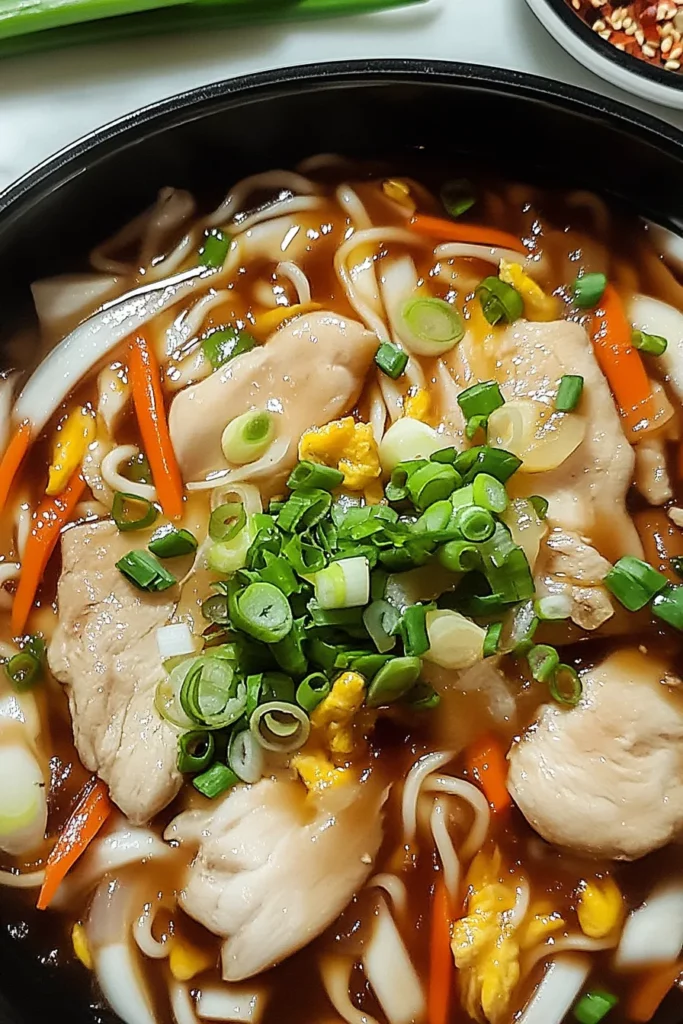

Chicken Chow Mein
Description
This vibrant Chicken Chow Mein blends juicy marinated chicken, crunchy bell peppers, carrots, and bean sprouts in a garlicky-ginger sauce, then coats it all over golden noodles for irresistible flavor.
Ingredients
Instructions
-
In a bowl, combine the sliced chicken with 1 tablespoon soy sauce, 1 tablespoon oyster sauce, and 1 tablespoon hoisin sauce. Set aside to marinate for about 15-20 minutes.
-
Heat 1 tablespoon vegetable oil in a large skillet or wok over medium-high heat. Add the marinated chicken and stir-fry until fully cooked, about 5-7 minutes. Remove the chicken from the pan and set it aside.
-
In the same pan, add the sesame oil. Add the sliced onions, carrots, and bell peppers. Stir-fry for about 3 minutes until they begin to soften.
-
Add the minced garlic and grated ginger to the pan. Stir-fry for another minute until fragrant.
-
Add the cooked chow mein noodles to the pan. Toss everything together, making sure the vegetables and noodles are well-mixed.
-
Pour in 1/4 cup of chicken broth and 1 tablespoon of soy sauce. Stir everything together and cook for another 2-3 minutes until heated through and the noodles absorb some of the sauce.
-
Add the cooked chicken back into the pan, and toss everything together. Sprinkle with white pepper and salt to taste.
-
Stir in the green onions and optional bean sprouts for a crunchy texture.
-
Serve immediately, garnished with more green onions if desired.
Note
- If you prefer a spicier dish, you can add a small amount of chili paste or crushed red pepper flakes.
- You can use any kind of stir-fry noodles, but chow mein noodles are traditionally used for this dish.
- This recipe can be customized with other vegetables such as snow peas, mushrooms, or bok choy.
- For a richer flavor, try adding a teaspoon of sugar to balance the savory elements of the sauce.
- Leftovers can be stored in the fridge for up to 2 days, but the noodles may become softer when reheated.

