

Beef stir fry with vegetables is one of those weeknight heroes that seems to pull all the right strings in the kitchen, balancing vibrant colors, bold flavors, and speedy prep. Tender strips of beef glisten as they hit the sizzling pan, searing to rich caramelized perfection while releasing steam that carries hints of soy and ginger. Every slice of red and yellow bell pepper adds a juicy crunch that contrasts beautifully with crisp broccoli florets and delicate snap peas. It’s the kind of dish that makes you feel like a home chef master, even if you’re pressed for time. The quick marinade of soy, oyster, and hoisin sauces, stirred with cornstarch and a dash of sesame oil, infuses the beef with a deep, savory-sweet profile and tenderizes each strip so that they practically melt on your tongue. As the garlic and freshly grated ginger hit the hot vegetable oil, your entire kitchen becomes a stage for a delicious dance of textures and tastes. With under thirty minutes from start to finish, this recipe proves you can enjoy restaurant-quality sizzle and flavor any night of the week.
Every time I stir up this recipe, my kitchen feels like the most happening spot in the house. Last Friday, I invited my neighbor Sam over for an impromptu dinner and, within twenty minutes, the skillet of beef and veggies stole center stage. Sam watched with wide eyes as I tossed the vibrant medley, then took that first bite and paused—both of us grinning at the perfect harmony of salty, sweet, and umami notes. That moment captured everything I love about cooking: it’s fast, it feels a bit fancy, and it brings people together. This beef stir fry isn’t just a quick fix; it’s proof that home cooking can be healthy without sacrificing taste. Whether you’re feeding a busy household after soccer practice or aiming to impress at a casual weeknight gathering, you’ll find this recipe brilliantly adaptable. Swap in mushrooms, zucchini, or bok choy for a fresh twist, or dial up the heat with sliced chilies or a swirl of sriracha. Soon enough, you’ll be swapping stories and slurping noodles over this sizzling, flavor-packed plate that’s become a beloved classic in my kitchen—and could soon be a new favorite in yours.
KEY INGREDIENTS IN BEEF STIR FRY WITH VEGETABLES
Before we dive into the cooking process, let’s take a closer look at the ingredients that make this beef stir fry with vegetables truly shine. Each component plays its own part in creating a perfect balance of texture, flavor, and color on your plate. From the mains that bring in savory depth to the aromatics that add warmth, every item on this list is essential for building that unforgettable stir fry experience. Here are the stars of the show:
- Beef sirloin or flank steak: Provides tender, juicy protein when thinly sliced against the grain and quickly seared.
- Soy sauce: Delivers a salty, savory base and helps season both the meat and the sauce.
- Oyster sauce: Adds a rich, slightly sweet umami boost that deepens the overall flavor profile.
- Hoisin sauce: Brings a touch of sweetness, tang, and complexity to the marinade and stir fry sauce.
- Cornstarch: Thickens the marinade into a glossy coating and helps lock in moisture on the beef.
- Sesame oil: Lends a nutty aroma and flavor that complements the ginger and garlic.
- Vegetable oil: Creates the high-heat cooking medium needed for a perfect stir fry without smoking.
- Red bell pepper: Contributes crunchy texture and vibrant color, plus a mild sweetness.
- Yellow bell pepper: Offers the same satisfying crunch with a sunny hue for visual appeal.
- Small onion: Provides natural sweetness and a bit of bite when thinly sliced.
- Garlic: Infuses the dish with aromatic depth and a gentle pungency.
- Fresh ginger: Adds warm, spicy notes and bright freshness when grated.
- Broccoli florets: Offer hearty crunch and a rich green contrast, loaded with nutrients.
- Carrot: Brings natural sweetness and a pop of orange that brightens every bite.
- Snap peas: Add crisp sweetness and an extra burst of green freshness.
- Rice vinegar: Balances the sauce with a hint of acidity to brighten flavors.
- Water: Helps loosen the sauce so it coats every piece evenly.
- Salt and pepper: Essential seasonings to taste, ensuring every element is perfectly balanced.
- Sesame seeds (optional): Provide a toasty crunch and a pretty garnish on top.
- Green onions (optional): Add a fresh, oniony pop of color and flavor when sprinkled over the finished plate.
HOW TO MAKE BEEF STIR FRY WITH VEGETABLES
With the ingredients prepped and your marinade bubbling with flavor, it’s time to bring everything together in a hot wok or skillet. This section breaks down each step in detail, from coating the beef in that zingy sauce to achieving the perfect char and crunch on your vegetables. As you move through each numbered instruction, pay attention to timing and temperature—these are key for locking in juices and preserving the bright textures that make stir fry so irresistible.
1. In a small bowl, combine soy sauce, oyster sauce, hoisin sauce, cornstarch, and sesame oil along with a pinch of salt and pepper. Whisk thoroughly until the cornstarch dissolves and the mixture becomes smooth. This marinade will coat the beef and form the base of your sauce.
2. Add the thinly sliced beef to the bowl, using tongs or clean hands to toss every piece until it’s evenly coated. Let it marinate for at least 15 minutes at room temperature, allowing the flavors to penetrate deeply.
3. While the beef is soaking up those savory notes, prepare your veggies: julienne the red and yellow bell peppers, slice the onion, mince the garlic, grate the ginger, slice the carrot, and chop the broccoli into small florets. Arrange everything neatly on a cutting board or plate.
4. Place a large skillet or wok over medium-high heat. Once it’s hot, add the vegetable oil, swirling to coat the surface. The oil should shimmer but not smoke.
5. In batches, lay strips of the marinated beef flat in the skillet, making sure not to overcrowd. Cook each batch for about 2–3 minutes until the edges turn golden brown. Use a spatula or tongs to flip, then transfer the seared beef to a clean plate and set aside.
6. In the same skillet, add the minced garlic and grated ginger. Stir constantly for about 30 seconds until fragrant—this moment is where those warm, spicy aromas really bloom.
7. Add the broccoli, carrots, and snap peas to the pan. Stir-fry for 3–4 minutes, tossing often so they start to soften but still hold plenty of crunch.
8. Toss in the bell peppers and onion, continuing to stir-fry for another 2 minutes. The peppers should still be bright and the onions slightly tender.
9. Return the cooked beef to the skillet and pour in the rice vinegar and water. Stir vigorously, scraping any browned bits from the bottom of the pan so they mix into the sauce and coat every ingredient.
10. Allow everything to cook together for 1–2 more minutes, until the sauce thickens slightly and glazes the beef and vegetables beautifully. Taste, then adjust seasoning with extra salt and pepper if needed.
11. Transfer your stir fry to a serving dish and finish with a sprinkle of sesame seeds and chopped green onions if desired. Serve piping hot alongside steamed rice or your favorite noodles for a complete meal.
SERVING SUGGESTIONS FOR BEEF STIR FRY WITH VEGETABLES
After you’ve mastered the stir fry, how you present and pair it can elevate your dinner from great to unforgettable. The balance of savory sauce, tender beef, and crisp vegetables works wonderfully with a variety of sides and accompaniments that highlight different aspects of the meal. A thoughtful serving strategy can turn a simple plate into a vibrant feast that tantalizes every sense—from visual appeal to texture contrasts and complementary flavors. Below are four ideas to take your presentation and pairing to the next level:
- Serve over steamed jasmine rice: Spoon the stir fry onto a bed of fluffy, fragrant jasmine rice to soak up every drop of that glossy sauce. For a pop of color, garnish the rice with lightly toasted sesame seeds and a few cilantro leaves.
- Toss with lo mein or rice noodles: If you’re craving something more slurp-worthy, cook lo mein or thin rice noodles until just tender, toss them in the hot skillet with the stir fry for the final minute, and finish with a drizzle of chili oil for a spicy twist.
- Add fresh garnishes: Top each portion with a handful of chopped green onions, a shower of sesame seeds, and a squeeze of lime for brightness. Fresh cilantro or Thai basil leaves can also bring an herby lift that cuts through the richness.
- Present in warm bowls: Preheat serving bowls with hot water, then dry and fill them with the stir fry. The residual heat keeps the dish piping hot at the table, ensuring every bite stays perfectly warm from first spoonful to last.
HOW TO STORE BEEF STIR FRY WITH VEGETABLES
If you’ve made a generous batch or want to save leftovers for busy nights, proper storage is key to keeping flavors bright and textures delightful. Beef stir fry holds up well in the fridge for a few days, and with the right method you can even freeze portions for later. Paying attention to how you cool, seal, and reheat the dish will preserve that fresh-cooked quality and ensure each reheated bite is just as enjoyable as the first. Consider these tips for maximum flavor retention and convenience:
- Refrigerate promptly: Allow the stir fry to cool to room temperature (no longer than two hours), then transfer it to an airtight container. Store in the refrigerator for up to 3 days, ensuring that condensation is minimized to prevent sogginess.
- Freeze in portions: Divide the cooled stir fry into individual freezer-safe containers or resealable bags, pressing out excess air. Label with the date and freeze for up to 2 months—perfect for quick meals down the line.
- Reheat gently: For best texture, reheat frozen portions by thawing overnight in the fridge, then warming in a hot skillet over medium heat with a splash of water or broth. This method revives the sauce and crisps the vegetables slightly, mimicking the original stir-fry experience.
- Separate garnishes: Keep sesame seeds and chopped green onions stored in a small container in the fridge. Add them fresh just before serving to maintain their crunch and color impact.
CONCLUSION
It’s amazing how a handful of simple ingredients—tender beef, crisp vegetables, and a luscious sauce—can come together so quickly to create a dinner that tastes like it took hours of effort. From whisking up a savory marinade to firing up the wok, each step in this beef stir fry with vegetables recipe is an invitation to play with textures, colors, and flavors while honing your cooking skills. You’ve seen how key components like soy, oyster, and hoisin sauces harmonize with cornstarch and sesame oil to coat every strand of beef in glossy umami goodness. The bright crunch of bell peppers, broccoli, snap peas, and carrots brings balance—and a feast for the eyes. Whether you follow the serving suggestions and plate it over steaming rice, toss it with noodles, or garnish with fresh herbs and seeds, you’ll find this dish shines in so many contexts. Don’t forget to store leftovers properly in airtight containers or freeze single-serve portions for effortless future meals. The result is a versatile, quick dinner that feels both comforting and a little bit special.
Feel free to print this article or save it for reference the next time you need a speedy, crowd-pleasing meal. You can also find a helpful FAQ below to answer common questions about ingredient swaps, reheating tips, and more kitchen tricks. If you give this recipe a try, I’d love to hear how it turned out—drop a comment with your favorite vegetable additions or any tweaks you made. Have questions, suggestions, or feedback? Let me know in the comments below. Happy cooking, and here’s to more delicious meals that bring people together around the table!
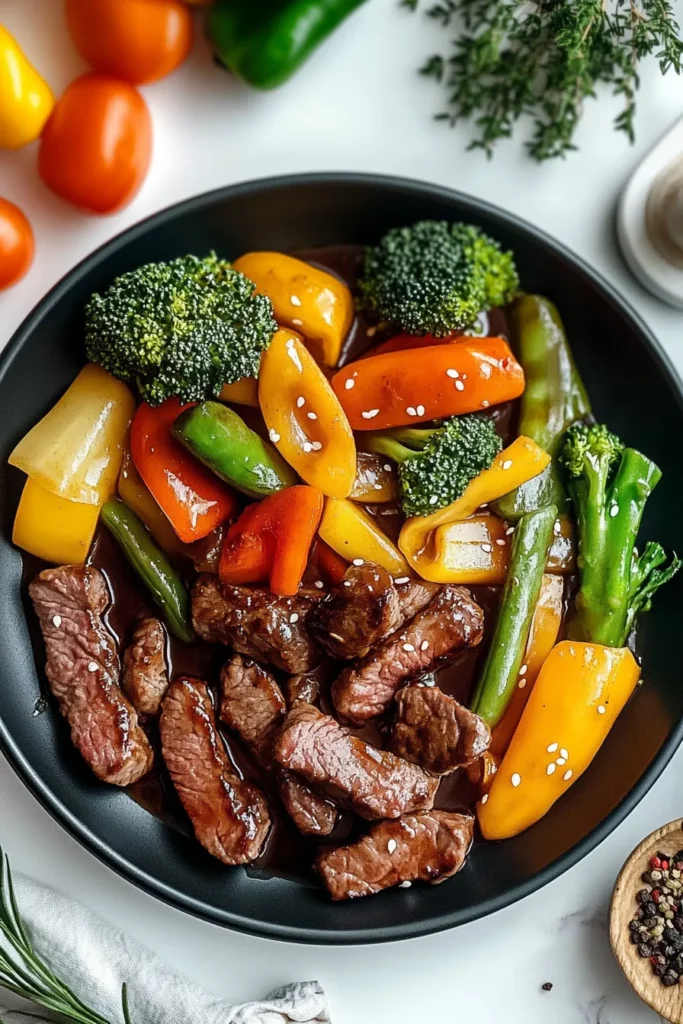

Beef Stir Fry with Vegetables
Description
Experience a delightful symphony of tender beef and vibrant veggies tossed in a savory marinade, ready in under 30 minutes for a quick weeknight dinner.
Ingredients
Instructions
-
In a small bowl, mix the soy sauce, oyster sauce, hoisin sauce, cornstarch, sesame oil, and a pinch of salt and pepper. Stir well to form a marinade.
-
Place the thinly sliced beef into the marinade, tossing to coat evenly. Let it sit for at least 15 minutes to absorb the flavors.
-
While the beef is marinating, prepare your vegetables. Julienne the bell peppers, slice the onion, mince the garlic, grate the ginger, and slice the carrot. Cut the broccoli into small florets and set everything aside.
-
Heat a large skillet or wok over medium-high heat and add the vegetable oil.
-
Once the oil is hot, add the beef in batches, cooking it quickly for about 2-3 minutes until browned. Remove the beef from the skillet and set it aside.
-
In the same skillet, add the garlic and ginger, stirring for about 30 seconds until fragrant.
-
Add the broccoli, carrots, and snap peas to the skillet and stir-fry for about 3-4 minutes, until they start to become tender.
-
Add the bell peppers and onions, continuing to stir-fry for another 2 minutes.
-
Return the beef to the skillet and pour in the rice vinegar and water. Stir everything together, ensuring the beef and vegetables are well combined.
-
Cook for an additional 1-2 minutes until everything is heated through and the sauce thickens slightly. Taste and adjust the seasoning with more salt and pepper if needed.
-
Garnish with sesame seeds and chopped green onions, if desired. Serve hot with steamed rice or noodles.
Note
- For a spicier version, add sliced chili peppers or a dash of sriracha to the stir fry.
- This recipe works great with a variety of vegetables, so feel free to substitute or add other veggies like mushrooms, zucchini, or bok choy.
- You can use chicken or tofu as a substitute for beef for a different flavor profile.
- Stir fry is best cooked on high heat to retain the crunchiness of the vegetables and the tenderness of the beef.

