

Ready to spice up your weeknight lineup with something that tastes gourmet but requires zero fuss? Balsamic Glazed Chicken and Veggies are my go-to dinner hack when I want flavors that hit every note—sweet, tangy, herby, and downright comforting. Succulent chicken breasts get a quick sear until they’re perfectly golden, then swim in a luscious honey-balsamic reduction that clings to every bite. Meanwhile, a rainbow of zucchini, red and yellow bell peppers, and red onion roast until their natural sugars caramelize, creating tender veggies with a hint of smokiness. Each forkful delivers that satisfying contrast of juicy chicken and crisp-tender vegetables, all infused with fresh herbs and a touch of Dijon mustard.
What I love most about this one-pan wonder is how easy it is to customize. Want it sweeter? Drizzle in an extra spoonful of honey. Craving more veggies? Toss in cherry tomatoes or carrots. Trying to keep carbs in check? Serve everything over cauliflower rice or alongside a crisp green salad. Even better, it’s a beginner-friendly recipe that looks like you spent hours in the kitchen—but the total prep and cook time clocks in under an hour. I’ve whipped this up for busy weeknights, cozy date nights at home, and even impromptu dinner parties when friends drop by. Trust me, once you master this honey-balsamic glaze and get a feel for roasting your veggies just right, you’ll keep coming back to this recipe again and again. So grab your skillet, preheat that oven, and let’s dive into this flavor-packed feast!
KEY INGREDIENTS IN BALSAMIC GLAZED CHICKEN AND VEGGIES
Before you dive into cooking, let’s chat about what gives this dish its signature flavor and texture. Each ingredient plays a unique role: from building the base of juicy chicken to creating that sweet-tangy glaze and colorful, caramelized vegetables that round out the plate. Here’s what you’ll need:
- Boneless, skinless chicken breasts
Lean and tender, these form the protein-packed centerpiece. Their mild flavor soaks up the balsamic glaze beautifully.
- Olive oil
Used twice—first for searing the chicken to a golden crust, then for giving veggies that silky roast without sticking.
- Salt and pepper
Simple seasonings that amplify every other flavor. Don’t skimp on seasoning your chicken and veggies.
- Garlic powder
Adds a warm, savory depth without any chopping required, making it perfect for busy cooks.
- Onion powder
Provides a subtle sweetness and rounds out garlic’s savory punch, enhancing the glaze and seasoning.
- Fresh thyme leaves
Brings an earthy, herbal brightness. If you only have dried thyme, it still infuses great flavor.
- Fresh rosemary, chopped
Offers a piney aroma and slightly woodsy note. Works beautifully in the chicken seasoning.
- Balsamic vinegar
The star of the glaze—its rich, tangy-sweet profile reduces into a syrupy finish that clings to chicken.
- Honey
Balances the vinegar’s sharpness with natural sweetness, creating that perfect honey-balsamic harmony.
- Dijon mustard
Adds a subtle tang and emulsifies the glaze, ensuring it coats the chicken evenly.
- Butter
Swirled in at the end to give the glaze a silky, glossy finish and a touch of richness.
- Zucchini, sliced
Offers a tender bite and mild flavor that soaks up roasting juices and glaze drippings.
- Red bell pepper, sliced
Brings vibrant color and a sweet crunch that contrasts with the soft zucchini.
- Yellow bell pepper, sliced
Adds sunny hues and a subtly sweeter pepper flavor for visual and taste appeal.
- Red onion, sliced
Roasts to tender, jammy perfection, contributing a hint of natural sweetness and a pop of color.
- Fresh parsley, chopped
Sprinkled on top as a garnish, it lends a fresh, green brightness and a hint of peppery flavor.
HOW TO MAKE BALSAMIC GLAZED CHICKEN AND VEGGIES
Let’s walk through transforming these simple ingredients into a deliciously glazed, oven-roasted masterpiece. You’ll sear the chicken, whip up the honey-balsamic reduction, roast colorful veggies, and finish everything to juicy perfection. Follow these steps, and you’ll have a memorable dinner in under an hour.
1. Preheat the oven to 400°F (200°C).
Ensure the oven is fully heated before you begin roasting to achieve that perfect caramelization on both chicken and veggies.
2. Season the chicken breasts.
Pat the chicken dry, then evenly coat both sides with salt, pepper, garlic powder, onion powder, thyme, and rosemary. This herby-spiced rub is the foundation for flavor.
3. Heat the skillet and sear.
In a large oven-safe skillet over medium-high heat, warm 2 tablespoons of olive oil until it shimmers. Add the chicken and cook for 5–6 minutes per side, or until each side is golden brown. Transfer the chicken onto a plate and set aside.
4. Make the balsamic glaze.
In the same hot skillet, pour in the balsamic vinegar, honey, and Dijon mustard. Stir to combine and bring the mixture to a gentle simmer. Let it cook for 4–5 minutes, allowing the glaze to thicken slightly and intensify in flavor.
5. Bake the chicken.
Return the seared chicken to the skillet, spooning some of the balsamic glaze over each piece. Slide the skillet into the preheated oven and bake for 15–20 minutes, or until the chicken reaches an internal temperature of 165°F (75°C).
6. Prepare the roasted veggies.
While the chicken bakes, toss the zucchini, bell peppers, and red onion in a bowl with 1 tablespoon of olive oil, plus a pinch of salt and pepper. Spread the vegetables in a single layer on a baking sheet.
7. Roast the vegetables.
Place the sheet pan in the oven alongside the chicken (or in a separate slot). Roast for 20–25 minutes, tossing halfway through, until they’re tender and lightly caramelized.
8. Finish the glaze.
Once the chicken is done, remove the skillet from the oven and let it rest for 5 minutes. Stir in the butter to the balsamic glaze in the skillet, whisking until you achieve a silky, glossy sauce.
9. Plate and garnish.
Serve each juicy chicken breast alongside a generous heap of roasted veggies. Drizzle the remaining glaze over the top and sprinkle with fresh parsley for a burst of color and freshness.
SERVING SUGGESTIONS FOR BALSAMIC GLAZED CHICKEN AND VEGGIES
This flavorful chicken and veggie dish shines on its own, but these serving ideas will take it to the next level. Whether you want to keep it light, add a cozy carb, or introduce a crunchy contrast, these suggestions have you covered. Pick one (or mix and match) and watch your plate transform into a restaurant-worthy meal at home.
- Over fluffy rice
Spoon the balsamic glaze and chicken juices over a bed of steamed jasmine or basmati rice. The rice soaks up every bit of flavor, making each bite deeply satisfying.
- With cauliflower rice
For a low-carb twist, swap regular rice for cauliflower rice. Lightly sauté the cauliflower grains with a drizzle of olive oil and a pinch of salt, then let them cradle your glazed chicken.
- Topped on mixed greens
Turn this into a hearty salad by piling chopped romaine or spring mix on a plate, adding sliced chicken and roasted veggies, and drizzling extra glaze as dressing.
- Garnished with toasted nuts
Sprinkle toasted pine nuts or slivered almonds over the finished dish. The crunchy texture and nutty flavor add an exciting dimension to every forkful.
HOW TO STORE BALSAMIC GLAZED CHICKEN AND VEGGIES
Once you’ve enjoyed a plateful of this delicious meal, you’ll want to keep those leftovers tasting just as vibrant. Proper storage ensures the chicken stays tender and the veggies retain their roasted charm. Follow these simple tips to maintain flavor and freshness for up to three days in the fridge or longer in the freezer.
- Refrigerate in airtight containers.
Divide the chicken and veggies into meal-sized portions and seal them in airtight containers. This prevents moisture loss and keeps the glaze from making everything soggy.
- Freeze for longer storage.
If you’d like to stash some for another week, wrap each chicken breast tightly in plastic wrap, then place in a freezer bag with roasted veggies. Label with the date and freeze for up to one month.
- Separate sauce if needed.
To avoid overly soft vegetables, store the extra balsamic glaze in a small jar or container. Reheat the chicken and veggies, then spoon on the warmed glaze just before serving.
- Reheat gently.
Warm leftovers in a 350°F (175°C) oven for about 10–12 minutes, or microwave in short bursts, to avoid drying out the chicken. Add a splash of water or extra glaze to revive moisture.
CONCLUSION
Congratulations—you’ve just mastered a versatile, flavor-packed recipe that’s as beautiful as it is delicious. Balsamic Glazed Chicken and Veggies deliver everything we love about a home-cooked meal: juicy protein, a sweet-tangy sauce, colorful roasted vegetables, and simple steps that even beginner cooks can tackle with confidence. From the first sear of those chicken breasts to the final swirl of butter in the glaze, every moment in the kitchen is an opportunity to savor aromas, tweak seasoning to your taste, and create a dish that feels both comforting and exciting. With less than an hour of active cooking time and easily customizable ingredients, this one-pan dinner fits into busy weeknights, casual lunch gatherings, or whenever you need a reliable crowd-pleaser.
Feel free to print this article and save it for later use—trust me, you’ll be coming back to these instructions again and again. You can also find a FAQ below to answer any burning questions about substitutions, reheating tips, or ingredient swaps (no spoilers here!). If you give this recipe a try, I’d love to hear how it turns out. Drop a comment, ask a question, or share your own twists and feedback. Whether you have a tip for adding extra veggies, a hack for speeding up prep, or simply want to say hello, your thoughts help our cooking community grow. Happy cooking!
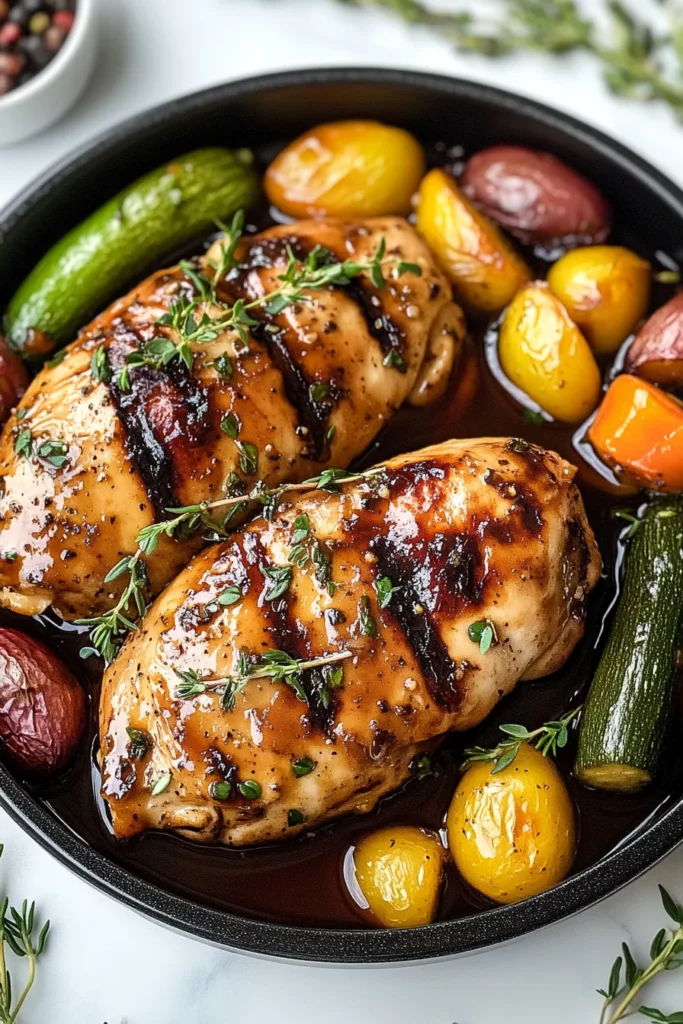

Balsamic Glazed Chicken and Veggies
Description
Succulent chicken breasts glisten in a honey-balsamic reduction, each bite tangy-sweet. Vibrant zucchini, bell peppers, and red onion roast until caramelized, delivering a colorful, flavor-packed plate.
Ingredients
Instructions
-
Preheat the oven to 400°F (200°C).
-
Season the chicken breasts with salt, pepper, garlic powder, onion powder, thyme, and rosemary on both sides.
-
Heat 2 tablespoons of olive oil in a large oven-safe skillet over medium-high heat. Once hot, add the chicken breasts and cook for 5-6 minutes per side, or until golden brown. Remove the chicken from the skillet and set it aside.
-
In the same skillet, add the balsamic vinegar, honey, and Dijon mustard. Stir to combine and bring the mixture to a simmer. Allow it to cook for 4-5 minutes until it thickens slightly.
-
Return the chicken breasts to the skillet, spooning some of the balsamic glaze over the chicken. Transfer the skillet to the preheated oven and bake for 15-20 minutes, or until the chicken reaches an internal temperature of 165°F (75°C).
-
While the chicken is baking, prepare the roasted veggies. In a separate bowl, toss the zucchini, bell peppers, and red onion with 1 tablespoon of olive oil, salt, and pepper.
-
Spread the veggies on a baking sheet in a single layer and roast in the oven for 20-25 minutes, or until they are tender and slightly caramelized.
-
Once the chicken is done, remove it from the oven and let it rest for 5 minutes. Stir in the butter to the balsamic glaze in the skillet to finish the sauce.
-
Serve the balsamic glazed chicken alongside the roasted veggies. Drizzle the remaining glaze over the chicken and garnish with fresh parsley.
Note
- You can add other vegetables such as cherry tomatoes or carrots to the roasting mix for variety.
- If you prefer a sweeter glaze, increase the amount of honey.
- For a low-carb version, serve the chicken and veggies with cauliflower rice instead of regular rice.
- The balsamic glaze can also be used as a marinade for the chicken before cooking for extra flavor.
- Leftover glazed chicken can be stored in the refrigerator for up to 3 days.

