

There’s a special joy in layering chewy sweet potato starch noodles with crisp, colorful vegetables and a savory-sweet sauce that hugs every strand—welcome to the world of Authentic Korean Japchae Noodles! This dish is a vibrant celebration of textures: the dangmyeon (sweet potato noodles) bring a delightfully springy bite, while the julienned carrots, red and green bell peppers, and tender shiitake mushrooms add bursts of freshness and umami. Each forkful feels like a festival of flavor, where a whisper of sesame oil and a touch of sugar transform simple ingredients into something truly memorable. Whether you’re cooking for a laid-back weeknight dinner or aiming to impress at your next potluck, these noodles deliver comfort and elegance in equal measure.
Beyond its irresistible taste, Japchae also tells a story of balance and harmony—a philosophy deeply rooted in Korean cuisine. You’ll find yourself savoring the dance between sweet and savory, soft and crisp, earthy and bright. And don’t get me started on that final flourish of thinly sliced egg omelette and a sprinkle of sesame seeds and green onions! It’s more than just a garnish; it’s a sign that every detail matters. Plus, with just a bit of prep and around 40 minutes from start to finish, this is a beginner-friendly recipe that rewards you with restaurant-quality results. So grab your wok, summon your inner chef, and get ready to dive into a dish that feels like a warm hug from the heart of Korea.
KEY INGREDIENTS IN AUTHENTIC KOREAN JAPCHAE NOODLES
To make these Japchae noodles shine, you’ll need a handful of pantry staples and fresh produce that each play a crucial role in building layers of flavor and texture. Here’s what you’ll gather:
- Sweet potato starch noodles
These chewy, translucent strands (dangmyeon) are the heart of Japchae. They soak up sauces beautifully and add a satisfying springy texture.
- Sesame oil
A fragrant finishing oil that imparts nutty warmth. It’s drizzled at the end and used for stir-frying to bring everything together.
- Vegetable oil
A neutral oil for stir-frying. It helps prevent burning and allows the other flavors to shine through.
- Onion
Thinly sliced for sweetness and a bit of bite. Onions soften quickly, creating a mellow base for the stir-fry.
- Carrot
Julienned to add crunchy sweetness and a pop of orange color. Carrots balance savory notes with their natural sugars.
- Red bell pepper
Thin strips provide a fruity sweetness and vibrant hue that makes the dish look as good as it tastes.
- Green bell pepper
Offering mild peppery crunch, this green counterpart enhances visual contrast and adds subtle vegetal flavor.
- Spinach
Blanched and squeezed dry for tender greens that still hold their color. Spinach lends a pop of freshness and a slight earthiness.
- Shiitake mushrooms
Thinly sliced to introduce a rich, umami depth. You can swap or mix in other mushrooms if you like.
- Garlic cloves
Minced to infuse a robust, aromatic kick. Garlic unleashes its flavor quickly during stir-frying.
- Soy sauce
The salty, savory backbone of the sauce. It brings depth and helps the noodles glisten.
- Sugar
Balances the saltiness with a touch of sweetness, rounding out the overall flavor profile.
- Oyster sauce
(Optional) Adds extra umami and a hint of ocean savoriness for a deeper, more complex taste.
- Sesame seeds
(Optional garnish) Toasted or raw, they give a final nutty crunch and visual appeal.
- Green onions
Chopped as a bright, fresh garnish. The crisp, oniony bite lifts the rich, saucy noodles.
- Eggs
Beaten into an omelette and sliced into strips for a silky, golden garnish that complements every forkful.
- Salt
A pinch here and there to adjust and sharpen flavors without overpowering.
HOW TO MAKE AUTHENTIC KOREAN JAPCHAE NOODLES
Let’s dive into the step-by-step process of transforming these simple ingredients into a harmonious Japchae masterpiece. Follow these instructions closely, and you’ll be rewarded with glossy, flavorful noodles that taste like you spent hours cooking.
1. Cook the noodles
Bring a large pot of water to a rapid boil. Add the sweet potato starch noodles and cook for about 6–7 minutes, or until they’re soft yet chewy. Drain and immediately rinse under cold water to halt the cooking and maintain that desirable springiness. Set aside.
2. Prep the vegetables
Julienne the carrot, red bell pepper, and green bell pepper into thin, matchstick-like pieces. Thinly slice the onion and mushrooms so they cook evenly. Blanch the spinach in boiling water for 30 seconds, then plunge into ice water to preserve its bright green color. Squeeze out excess moisture and set aside.
3. Stir-fry the onions
Heat sesame oil and vegetable oil together in a large frying pan or wok over medium heat. Add the onions and cook, stirring, for about 2 minutes until they become soft and translucent.
4. Add remaining veggies
Toss in carrots, bell peppers, and mushrooms. Stir-fry for 3–4 minutes until the vegetables are just tender but still crunchy. Remove them from the pan and keep them warm on a plate.
5. Aromatics and noodles
In the same pan, add the minced garlic and sauté for 30 seconds until fragrant. Introduce the cooked noodles and stir-fry for 2–3 minutes, evenly heating everything.
6. Sauce it up
Whisk soy sauce, sugar, and oyster sauce (if using) in a small bowl. Pour over the noodles, tossing to coat every strand. Return the cooked vegetables and spinach to the pan, mixing gently until well combined.
7. Make the omelette
Whisk eggs with a pinch of salt. Pour into a lightly greased pan over medium heat and cook until set. Flip to finish the other side, then remove, roll, and slice into thin strips.
8. Garnish and serve
Top your Japchae with omelette strips, chopped green onions, and sesame seeds. Drizzle with a little extra sesame oil for a finishing touch. Enjoy hot or at room temperature.
SERVING SUGGESTIONS FOR AUTHENTIC KOREAN JAPCHAE NOODLES
Japchae is wonderfully versatile, shining as a standalone main dish seasoned to perfection or complementing a spread of grilled meats and other banchan (side dishes). Its vibrant colors and tender textures are sure to turn heads and delight taste buds at any gathering. This dish can be plated elegantly on a large serving platter with the garnishes artfully arranged on top, or scooped into individual bowls for a casual family meal. Whether you’re hosting a festive dinner or packing lunches for the week, these serving ideas will help elevate your Japchae to the next level:
- Serve alongside Korean BBQ: Arrange Japchae next to sizzling bulgogi or galbi for a classic combination. The sweet-savory noodles provide a perfect foil to the smoky, marinated meats.
- Present as a lunchbox star: Pack cooled Japchae into bento boxes or meal prep containers. It travels well and tastes delicious at room temperature, making it ideal for midday fuel.
- Pair with crispy dumplings: Offer a side of pan-fried mandu (Korean dumplings). The juicy filling and crispy wrapper contrast beautifully with the silky noodles.
- Create a buffet display: Place Japchae in a decorative bowl with tongs. Surround it with various toppings—extra sesame seeds, chili flakes, or pickled vegetables—so guests can customize their bowls.
HOW TO STORE AUTHENTIC KOREAN JAPCHAE NOODLES
One of the best things about Japchae is how well it holds up after cooking, allowing you to enjoy leftovers that taste almost as good as the first day. Storing it properly ensures those signature flavors and textures remain intact. Whether you’re saving a little for tomorrow’s lunch or making a big batch for later in the week, here are some tried-and-true methods to keep your noodles fresh and delicious:
- Refrigerate in an airtight container: After cooling to room temperature, transfer the Japchae to a sealed container. Chilling slows bacterial growth and keeps the noodles from drying out. It will stay fresh for up to 3–4 days.
- Separate garnishes: If you want to preserve the bright color and texture of omelette strips and green onions, store them in a small container apart from the noodles. Add them fresh before serving cold or reheated dishes.
- Freeze for longer storage: Spread Japchae in a single layer on a baking sheet and freeze until firm. Transfer to freezer bags, remove excess air, and store for up to one month. Thaw overnight in the fridge and reheat gently.
- Gentle reheating: Warm leftovers in a non-stick pan over low heat with a splash of water or sesame oil. Stir occasionally until heated through to revive the noodles’ chew and bring back that glossy shine.
CONCLUSION
Recapping the journey of making Authentic Korean Japchae Noodles, we’ve discovered how simple ingredients—sweet potato starch noodles, seasonal vegetables, and a harmonious sauce—come together to create a dish that’s both visually stunning and deeply satisfying. From the first step of boiling the dangmyeon to the final garnish of omelette ribbons, every moment in the kitchen builds layers of color, flavor, and aroma. You’ve learned how to maximize chewiness in the noodles, preserve vibrant vegetable hues, and infuse each mouthful with that irresistible sesame-soy glaze. Whether you decide to make this meal as a centerpiece for guests or tuck bowls away for quick lunches, Japchae adapts beautifully to your lifestyle and tastes.
Feel free to print this article and save it for later use—its step-by-step guide, serving inspiration, and storage tips are designed for busy home cooks who crave both flair and ease. Below, you’ll find a FAQ section to troubleshoot common questions, from noodle texture to seasoning adjustments. And if you give this recipe a spin, I’d love to hear how it turned out! Drop a comment with your variations, ask any questions you’ve got, or share your feedback so we can keep perfecting our culinary skills together. Happy cooking and enjoy every colorful, chewy bite!
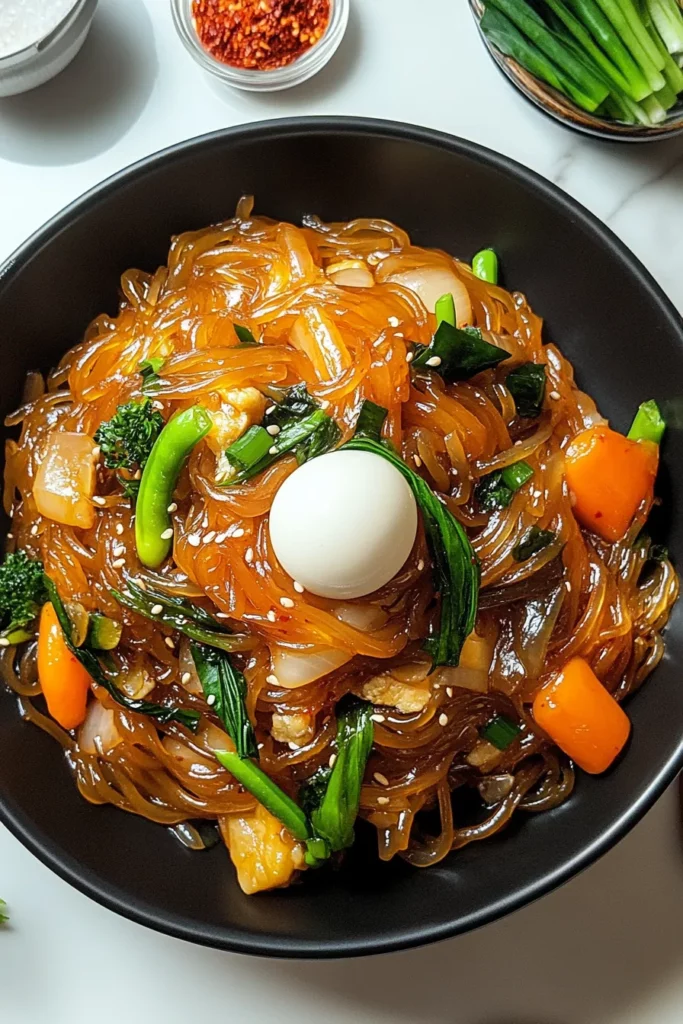

Authentic Korean Japchae Noodles
Description
Experience a symphony of textures and flavors with sweet potato starch noodles, vibrant veggies, and a savory sauce that brings everyone together. Japchae is truly a feast for the senses!
Ingredients
Instructions
-
Begin by preparing the sweet potato starch noodles (dangmyeon). Bring a large pot of water to a boil. Add the noodles and cook for about 6-7 minutes or until they become soft but still chewy. Drain the noodles and rinse them under cold water to stop the cooking process. Set aside.
-
Prepare the vegetables: julienne the carrot, red bell pepper, and green bell pepper. Thinly slice the onion and mushrooms. Blanch the spinach in boiling water for 30 seconds, then quickly transfer it to a bowl of ice water to preserve the green color. Squeeze out excess water from the spinach and set it aside.
-
In a large frying pan or wok, heat 1 tbsp of sesame oil and 1 tbsp of vegetable oil over medium heat. Add the onions and cook for about 2 minutes until they become soft.
-
Add the carrots, bell peppers, and mushrooms to the pan. Stir-fry for 3-4 minutes until the vegetables are slightly tender but still crunchy. Remove the vegetables from the pan and set them aside.
-
In the same pan, add the minced garlic and cook for about 30 seconds until fragrant. Add the cooked noodles to the pan and stir-fry for 2-3 minutes to heat through.
-
In a small bowl, mix the soy sauce, sugar, and oyster sauce (if using). Pour this sauce over the noodles and stir well to coat the noodles evenly. Add the cooked vegetables, spinach, and mix everything together.
-
Prepare the egg omelette: Whisk the eggs with a pinch of salt and pour them into a lightly greased frying pan. Cook over medium heat until set, then flip and cook the other side. Remove from the pan and cut the omelette into thin strips.
-
Garnish the japchae with the omelette strips, green onions, and sesame seeds. Drizzle with a little more sesame oil if desired. Serve hot or at room temperature.
Note
- Japchae is a versatile dish, so feel free to add or remove vegetables based on personal preference or availability. Common additions include zucchini, asparagus, and sweet potatoes.
- For a vegan version, simply skip the egg omelette and oyster sauce or use a plant-based alternative.
- The noodles should retain their chewy texture, so avoid overcooking them during the boiling process.
- Japchae can be served as a main dish or as a side dish alongside grilled meats or Korean BBQ.

