
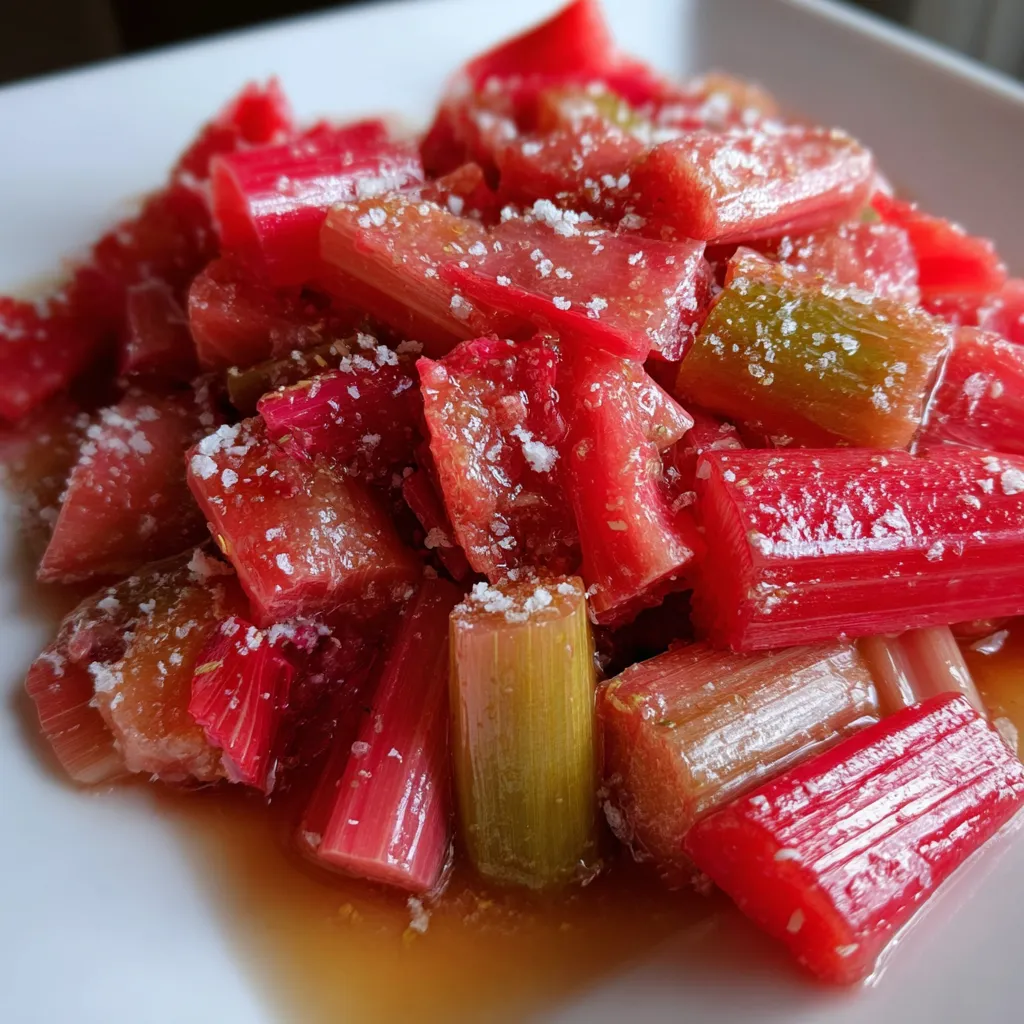
Old-Fashioned Stewed Rhubarb brings a nostalgic twist to your dessert table, where vibrant stalks cook down into a glossy, ruby compote that’s both tangy and subtly sweet. Chunks of rhubarb simmer in sugar water until tender, then get a finishing splash of lemon and vanilla for the perfect balance of sweet and tart notes. Serve it warm over pancakes or chilled as a refreshing treat—it’s so simple, you’ll wonder why you didn’t make it sooner!
Before you dive into cooking, gather these simple ingredients—they create the perfect balance of tang and sweetness in every spoonful of stewed rhubarb.
Transforming raw rhubarb into a luscious compote is easier than you might think. With just a saucepan and gentle heat, you’ll coax out sweet-tart juices and build layers of flavor. Pay attention to cooking times so your rhubarb stays tender with just a hint of structure, and don’t rush the finishing touches—they make all the difference.
1. Place chopped rhubarb, water, sugar, and salt in a medium saucepan over medium heat. Ensure the rhubarb pieces form an even layer so they cook uniformly.
2. Stir gently until the sugar dissolves and the mixture begins to simmer, watching closely to prevent sticking.
3. Cook for 8 to 10 minutes, stirring occasionally, until the rhubarb is tender but still holds some shape—this gives the compote lovely texture.
4. Remove the pan from heat and stir in lemon juice and vanilla extract, folding them in until fully incorporated for a bright, aromatic finish.
5. Allow the stewed rhubarb to cool slightly before serving warm or chill in the refrigerator for a cold treat that’s perfect on a hot day.
Whether you’re serving this compote as part of brunch or a cozy dessert, these suggestions will help you present it beautifully and maximize every tangy-sweet bite. From breakfast staples to unexpected cocktails, the versatility of stewed rhubarb shines through in each pairing. Here are a few ideas to get you started—feel free to mix and match based on what you have on hand and your mood!
Mastering the perfect stewed rhubarb is all about balancing sweetness, texture, and flavor. These tips will help you adjust the ingredients to suit your taste and even explore fun variations. Keep them in mind next time you fire up the stove—small tweaks can make a big difference!
Once you’ve made a batch of stewed rhubarb, proper storage keeps that bright flavor and tender texture intact so you can enjoy it later in the week. Whether you prefer it cold on your morning yogurt or reheated as a warm topping, these methods will help maintain its quality and taste.
Got questions about stewing rhubarb? Here are answers to common queries—straightforward and friendly!
It takes about 5 minutes to chop the rhubarb and measure ingredients, plus 8 to 10 minutes of cooking time. Plan for a total of 15 to 20 minutes before the rhubarb is ready to serve or chill.
Yes. Thaw the frozen rhubarb and drain any excess liquid before cooking. You may need to reduce the added water slightly to prevent the mixture from becoming too watery, and adjust sugar as needed since frozen rhubarb can be slightly more mellow in flavor.
If the rhubarb releases more liquid than desired, simmer a few minutes longer uncovered to evaporate excess water. For a quicker fix, mix 1 teaspoon of cornstarch with 1 tablespoon of cold water, stir it into the hot rhubarb, and let it cook for another minute until the sauce thickens.
Serve warm over plain or flavored yogurt, vanilla ice cream, pancakes, waffles, or oatmeal. It also makes a lovely topping for pound cake or pancakes. For a tangy cocktail, swirl a few spoonfuls into sparkling water or gin and tonic.
Transfer cooled stewed rhubarb to an airtight container and refrigerate. It will stay fresh for up to 3 days. Before serving leftovers, you can enjoy it cold or gently reheat in a saucepan over low heat for a few minutes.
Absolutely. Start with the ¾ cup of granulated sugar, then taste once the rhubarb begins to soften. Add up to an additional 2 tablespoons if you prefer sweeter, or use as little as ½ cup if your rhubarb is unusually tart. Adjust gradually until you reach your desired balance.
Look for firm, crisp stalks that are vibrant red or pink, avoiding any that are wilted, spotted, or soft. Leaves should be fresh and unwilted—though you’ll discard them, their condition indicates stalk freshness. Thinner stalks tend to be more tender and less stringy.
While the rhubarb simmers, sprinkle in a pinch of ground cinnamon, ground ginger, or even a dash of allspice. Start with ¼ teaspoon of your chosen spice, taste midway through cooking, and adjust to achieve a warm, aromatic flavor without overwhelming the rhubarb’s natural tang.
This old-fashioned recipe works because it highlights rhubarb’s natural tang, then tames it with just the right amount of sugar, lemon, and vanilla. It’s foolproof for beginners and utterly charming for seasoned cooks who love a bit of nostalgia on their spoon. Whether you serve it hot over pancakes or chilled alongside ice cream, it’s bound to brighten your day. Feel free to print and save this article for easy reference, and drop a comment below if you give it a try or have any questions!
Chunks of rhubarb simmer in sugar water until tender, releasing a tangy aroma. Finished with a dash of vanilla and lemon, this ruby-red compote balances sweet and tart notes. Serve warm or chilled.

Hi, I'm Matthew Roberts, founder of Food Recipes USA! As a culinary historian and fourth-generation restaurateur, I've dedicated my life to preserving, celebrating, and evolving the rich tapestry of American cuisine.