
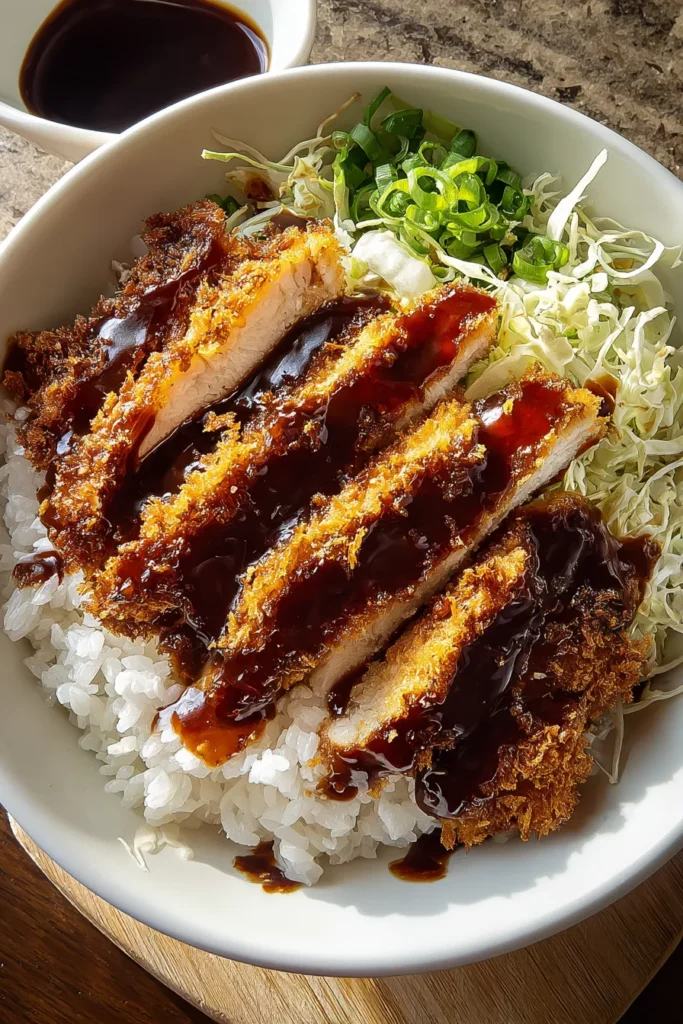
Craving something that’s both comfortingly familiar and delightfully crunchy? Japanese Katsu Bowls with Tonkatsu Sauce are exactly what you need to brighten up your weeknight dinners or elevate your weekend brunch game. A symphony of textures starts with succulent slices of pork (or chicken) enveloped in a blanket of golden panko breadcrumbs—each bite offering that signature crispiness you can’t help but savor. Nestled on a bed of steaming white rice and topped with a crisp handful of shredded cabbage, this dish balances heartiness and freshness in perfect harmony. The crowning glory, a homemade Tonkatsu sauce with a sweet-savory depth, ties everything together: it’s rich enough to feel indulgent yet nuanced enough to tease out each layer of flavor.
Talking about flavor layers, this recipe hits all the right notes. The meat is seasoned simply but thoughtfully, allowing the star ingredient to shine through. The panko coating adds a light airiness you won’t get from standard breadcrumbs—it practically crackles beneath your fork! As you drizzle that velvety Tonkatsu sauce over the katsu, bits of its tangy, umami-packed magic seep into the rice, infusing every grain with personality. Meanwhile, the cabbage offers a cooling counterpoint, its pale green strands adding crunch and a refreshing palate cleanser that preps you for another mouthful of that crispy, saucy goodness. Trust me: once you’ve mastered this bowl, you’ll want to invite friends over, share stories over steaming bowls, and savor every crunchy, saucy bite together.
Every great dish rests on quality ingredients, and these bowls are no exception. From the proteins and coatings that deliver that addictive crunch to the simple elements that pull the flavor together, each component has a role to play in crafting this lunchtime or dinnertime favorite.
Let’s walk through the process step by step so you can whip up these crunchy, saucy bowls with confidence. From mixing the perfect Tonkatsu sauce to frying and assembling, here’s how to turn your kitchen into a mini Tonkatsu haven.
1. Prepare the Tonkatsu Sauce: In a small bowl, mix together ketchup, Worcestershire sauce, soy sauce, sugar, and mirin until well combined. Set aside so the flavors meld while you prep the rest of the dish.
2. Prep the Pork (or Chicken): Season the pork chops (or chicken breasts) generously with salt and pepper on both sides. This ensures the meat is flavorful from the inside out.
3. Coat the Meat:
a. Place the flour, beaten eggs, and panko breadcrumbs into three separate shallow bowls.
b. Dredge each pork chop (or chicken breast) in flour, shaking off any excess for a light coating.
c. Dip the floured meat into the beaten eggs, ensuring complete coverage for that perfect crust.
d. Finally, coat the meat with panko breadcrumbs, pressing gently so they adhere evenly.
4. Fry the Meat:
a. Heat about 1/2 inch of vegetable oil in a large skillet over medium-high heat.
b. Test the oil temperature by dropping in a small piece of bread or breadcrumb—if it sizzles immediately, you’re ready.
c. Fry each piece of meat until golden brown and cooked through, about 4–5 minutes per side. Adjust heat as needed to avoid burning.
d. Transfer the cooked katsu to a paper towel-lined plate to drain any excess oil.
5. Assemble the Bowls:
a. Divide the cooked white rice among four serving bowls.
b. Slice the katsu into strips and arrange them neatly atop the rice, alongside the shredded cabbage.
c. Drizzle each bowl generously with the prepared Tonkatsu sauce.
6. Garnish and Serve: Optionally top with sliced green onions or a sprinkle of sesame seeds for added texture and a pop of color. Serve immediately to enjoy the crunch at its best.
Serving these katsu bowls is an experience in itself, turning a simple meal into a delightful feast. Whether you’re hosting friends or feeding your family, presentation and pairing can take your dish to the next level. Here are some ideas to make every bowl feel extra special and restaurant-worthy at home:
Storing katsu bowls properly ensures you can enjoy leftovers without sacrificing texture or flavor. While the fresh crunch of panko is best straight out of the fryer, here are some tips to help your components stay as crisp and delicious as possible, even after a meal prep session:
When refrigerating, transfer the katsu strips, rice, and sauce into separate airtight containers. This prevents moisture from the sauce or cabbage from making the breading soggy. Keep the containers in the coldest part of your fridge and consume within 2–3 days for optimal freshness.
This deep dive into Japanese Katsu Bowls with Tonkatsu Sauce has walked you through every step—from selecting and seasoning your meat to frying it to golden perfection, stirring up that lusciously sweet-and-savory sauce, and assembling a bowl that’s as pleasing to the eye as it is to the palate. You’ve learned how each ingredient contributes its own magic, how to layer textures and flavors, and how to preserve leftovers without losing that essential crunch. With intermediate-level techniques like dredging, frying at the right temperature, and balancing sauce components, you now have a versatile recipe to impress family, friends, or simply treat yourself to a restaurant-quality meal at home.
Feel free to print this article and save it in your personal recipe binder—you’ll find it’s a go-to whenever you crave something hearty, crunchy, and utterly satisfying. Keep this guide handy for future reference, and scroll down to the FAQ section below for answers to common questions about substitutions, troubleshooting, and more. If you decide to try this recipe, I’d love to hear how it turned out! Leave a comment with your thoughts, any creative twists you added, or questions you might have. Whether you’re a seasoned home cook or just starting your kitchen adventures, your feedback helps everyone cook with confidence and joy. Enjoy every crunchy, saucy bite!
Savor crunchy, golden katsu (pork or chicken) nestled on rice, paired with crisp cabbage and a perfectly balanced, homemade sweet and savory Tonkatsu sauce.

Hi, I'm Matthew Roberts, founder of Food Recipes USA! As a culinary historian and fourth-generation restaurateur, I've dedicated my life to preserving, celebrating, and evolving the rich tapestry of American cuisine.