
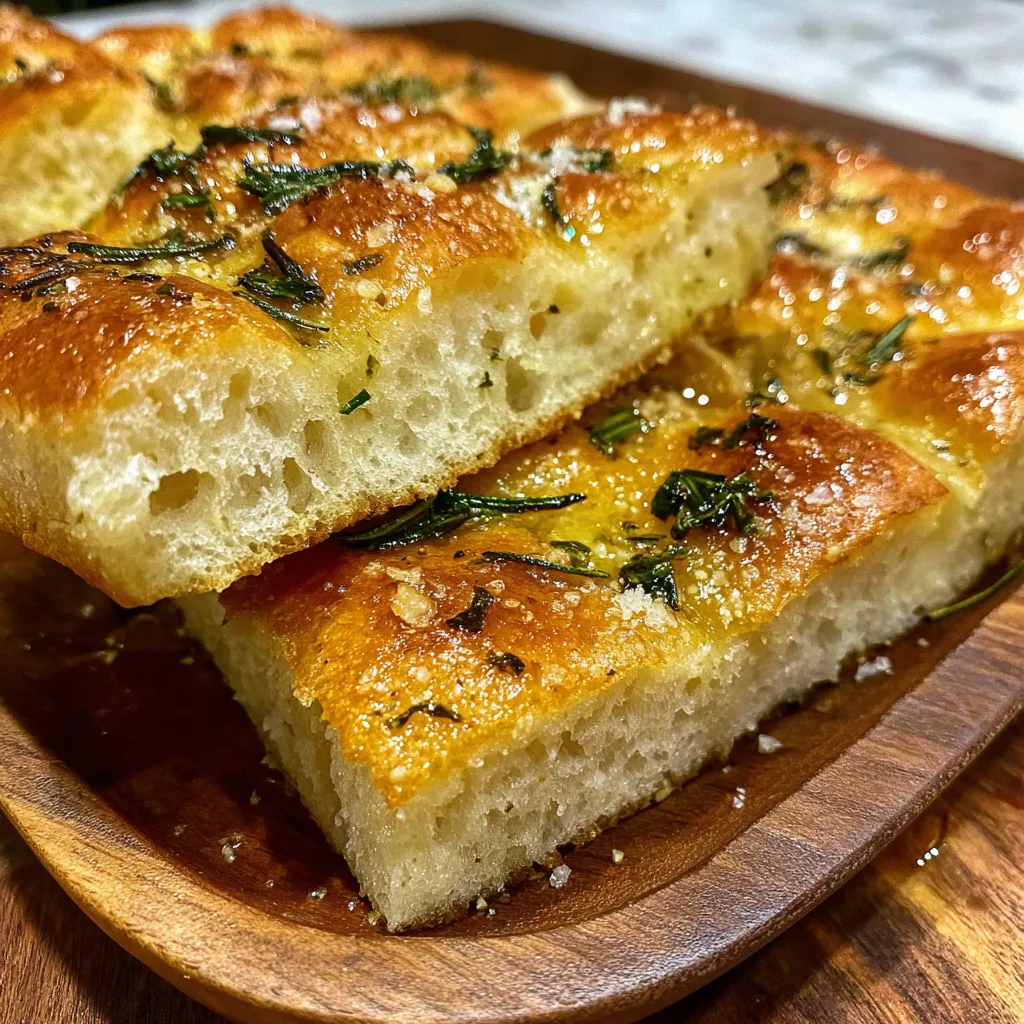
Pulling a golden focaccia from the oven, its crispy edges giving way to a tender crumb, is the kind of moment that turns any meal into a celebration. Infused with melted garlic butter and fresh rosemary, this rustic Italian bread shines alongside soups, salads, or just on its own. Get ready to fill your kitchen with cozy warmth and dive into a slice that practically begs for more.
Before we dive in, let’s gather the essentials that make this garlic butter focaccia so irresistible.
Baking this focaccia is all about simple techniques and a little patience. You’ll start by proofing your yeast, mixing and kneading a soft dough, then letting it rise until puffy. After shaping it on a pan, you’ll create those classic dimples, drizzle on olive oil, and bathe the dough in garlicky butter. With a final rise and a quick bake, you’ll end up with a loaf that’s crisp on the outside and pillowy inside.
1. In a small bowl, combine the warm water, sugar, and active dry yeast. Stir gently and allow it to sit for about 5–10 minutes until frothy, signaling that the yeast is alive.
2. In a large mixing bowl, whisk together the all-purpose flour and salt, then make a well in the center. Pour in the activated yeast mixture and 1/4 cup of olive oil.
3. Use a wooden spoon or spatula to stir the ingredients until a rough dough forms, scraping down the sides of the bowl as needed.
4. Turn the dough onto a lightly floured surface and knead for 5–7 minutes until the dough is smooth and elastic. Alternatively, use a stand mixer with a dough hook on low speed.
5. Shape the dough into a ball and place it in a greased bowl, turning to coat all sides. Cover with a clean kitchen towel and let it rise in a warm spot for 1–1.5 hours, or until doubled in size.
6. Preheat your oven to 425°F (220°C).
7. Gently punch down the risen dough to release excess air. Transfer it to a greased baking sheet or round pan, using your fingers to press it out to fit.
8. Press finger dimples all over the surface. Drizzle with a bit of olive oil, then sprinkle sea salt and the chopped rosemary evenly.
9. In a small saucepan over low heat, melt the unsalted butter, then add the minced garlic and sauté for 1–2 minutes until fragrant.
10. Pour the garlic butter evenly over the dimpled focaccia, making sure it seeps into the crevices.
11. Cover with a towel and let the dough rise for another 20–30 minutes.
12. Bake for 20–25 minutes, or until the crust turns golden brown and the inside is cooked through.
13. Remove from the oven and let it cool slightly on a wire rack. Serve warm or at room temperature.
This garlic butter focaccia is delightfully versatile and can elevate any meal with its buttery, herb-infused flavor. Whether you’re hosting friends or enjoying a quiet dinner at home, try these serving ideas to make each slice shine.
Creating an exceptional focaccia is all about attention to detail and a willingness to experiment with flavors. From ensuring the dough rises properly to infusing each bite with garlic-kissed butter, these friendly tips will help you bake like a pro in your own kitchen.
Keeping your focaccia fresh means preserving its tender crumb and crisp crust. Whether you plan to enjoy it within a couple of days or save slices for later, follow these methods to maintain that just-baked taste.
Got some lingering questions about your focaccia adventures? Here are answers to common queries!
After stirring the yeast, sugar, and warm water, the mixture should sit undisturbed for 5–10 minutes. You’ll know the yeast is active when the surface becomes frothy with bubbles and a slightly yeasty aroma. If there’s no foam, your yeast may be expired or the water temperature was too hot or cold.
You can substitute 2¼ teaspoons of instant yeast directly into the flour without proofing. Simply mix it in with the flour and salt, then add the warm water and olive oil. You may notice a slightly faster rise, so begin checking for dough doubling around 45–60 minutes.
Several factors can slow yeast activity: water that’s too cool (below 100°F/38°C); a drafty or cold proofing spot; old yeast; or too much salt contacting the yeast directly. Ensure your proofing environment is about 75–85°F (24–29°C), use fresh yeast, and mix salt into the flour before adding liquids.
Pressing your fingers into the dough creates pockets that hold olive oil, garlic butter, and seasonings. This ensures the focaccia stays moist, builds flavor in every bite, and produces its characteristic textured surface and crisp edges.
Yes. After the initial knead, place the dough in a lightly oiled bowl, cover it tightly, and refrigerate for up to 24 hours. This slow, cold fermentation deepens the flavor. Remove it from the fridge, let it warm and complete its first rise (about 30–45 minutes), then proceed with shaping, dimpling, and baking.
Store cooled focaccia in an airtight container at room temperature for up to 2 days. For longer storage, wrap it tightly in plastic and foil and freeze for up to 2 months. To reheat, bake thawed or room-temperature slices in a 350°F (175°C) oven for 5–7 minutes until warmed and slightly crisp.
Besides fresh rosemary and sea salt, you can add halved cherry tomatoes, pitted olives, thinly sliced onions, crumbled feta or parmesan, or fresh thyme. After dimpling and drizzling with olive oil, gently press your chosen toppings into the dough, then pour over the garlic butter and bake as directed.
This garlic butter focaccia really hits the sweet spot between rustic charm and flavor fireworks. Its pillowy interior, crisp edges, and that buttery, garlicky hit in every dimple make it stand out from ordinary bread. The fresh rosemary adds a hint of garden-fresh aroma that plays beautifully with soups, salads, or just a simple dip in olive oil. Feel free to print this article and save it—it’s your ticket to homemade Italian comfort anytime. If you give it a go, drop a comment or question below; I’d love to hear how your loaf turned out!
Golden focaccia with crispy edges and a tender crumb, bubbling with melted garlic butter and fragrant rosemary. Each bite reveals a salty finish and warm, herb-infused aroma—perfect alongside soups or salads.

Hi, I'm Matthew Roberts, founder of Food Recipes USA! As a culinary historian and fourth-generation restaurateur, I've dedicated my life to preserving, celebrating, and evolving the rich tapestry of American cuisine.