
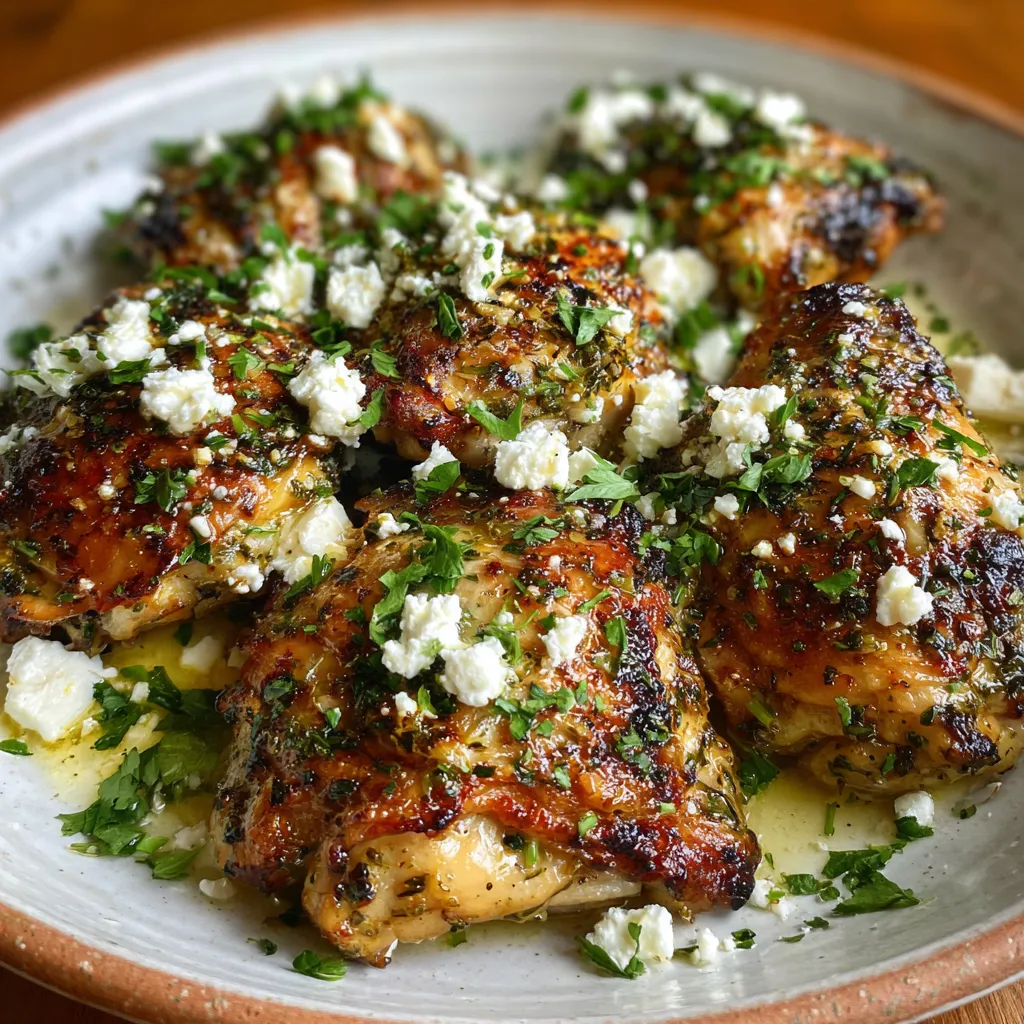
Greek Chicken with Lemon and Feta brings together golden-skinned chicken thighs bathed in a tangy lemon-oregano marinade, crowned with creamy pockets of feta and a pop of fresh parsley. This simple, beginner-friendly dish transforms everyday ingredients into a vibrant, Mediterranean-inspired feast that’s perfect for a laid-back dinner or weekend entertaining. With just a handful of pantry staples and under an hour from start to finish, you’ll love how effortlessly it turns poultry into something truly memorable.
Before we dive in, let’s gather the star players that make this recipe shine. Each ingredient brings its own flair, working in harmony to create those signature bright and savory notes.
Making this dish is downright satisfying—just a few simple steps and you’ll soon be enjoying tender, flavor-packed chicken fresh from your oven. You’ll whisk up a vibrant lemon-oregano marinade, let the thighs soak it in, and then roast everything until the skin is crisp and the meat succulent. A final sprinkle of feta turns each piece into a mini celebration of creamy, tangy goodness.
1. Preheat the oven to 200°C (400°F) so it reaches temperature while you prep.
2. Whisk the marinade: In a medium bowl, combine olive oil, lemon juice, lemon zest, minced garlic, dried oregano, salt, and black pepper until smooth and well blended.
3. Coat the chicken: Place the chicken thighs in a baking dish and pour the marinade over them, using tongs or a spoon to turn and coat each piece evenly.
4. Marinate: Let the chicken sit at room temperature for 10 minutes, or cover and refrigerate for up to 2 hours to deepen the flavors.
5. Bake: Slide the dish into the preheated oven and roast for 30 minutes, or until the juices run clear when pierced with a fork and the skin is crisp.
6. Add feta: Remove the dish, sprinkle crumbled feta cheese evenly over the chicken, and return to the oven.
7. Finish baking: Roast an additional 5 minutes, until the feta softens slightly and begins to turn golden at the edges.
8. Garnish and serve: Sprinkle chopped fresh parsley over the top and transfer the thighs to a serving platter.
When you've got a plate of Greek Chicken with Lemon and Feta coming out of the oven, you want every element on your table to complement its bright, savory flavors. Whether you're hosting friends or enjoying a cozy family meal, these serving ideas will elevate the experience. From classic sides that honor its Mediterranean roots to fresh twists that keep things exciting, each suggestion focuses on simple touches that highlight the chicken's golden skin, creamy feta, and vibrant parsley. Let’s explore four delicious ways to serve this crowd-pleaser.
A few friendly pointers can take this easy dish from great to unforgettable. Whether you’re planning ahead or tweaking it on the fly, these practical tips will help you lock in moisture, amplify flavors, and keep clean-up a breeze. With these suggestions, you’ll be serving up perfectly tangy, tender chicken every time.
After enjoying your Greek Chicken with Lemon and Feta, you’ll want to keep any leftovers tasting just as bright and satisfying. Proper storage techniques preserve its juicy texture, tangy notes, and creamy feta pockets, so every bite later feels like it’s freshly made. Here are four reliable methods to stash your chicken safely while locking in maximum flavor and preventing dryness—perfect for meal prep or simply stretching your dinner budget.
Here are answers to some common questions about this tangy, feta-topped chicken—happy cooking!
A: It takes about 15 minutes to prepare the marinade and coat the chicken, a minimum of 10 minutes to marinate (or up to 2 hours for deeper flavor), then 30 minutes of baking followed by an extra 5 minutes with feta—so roughly 1 hour in total.
A: Yes. While a quick 10-minute room-temperature marinade works, refrigerating the chicken for 1–2 hours yields juicier, more aromatic meat. For an even bolder taste, you can marinate it overnight in the fridge, just cover the dish well to prevent drying out.
A: You can swap feta with crumbled goat cheese or ricotta salata for a similar tangy profile. Queso fresco or paneer also work, though they’re milder. If you omit cheese entirely, boost flavor with a handful of chopped olives or a sprinkle of grated Parmesan after baking.
A: The chicken is done when its juices run clear when pierced near the bone and the internal temperature reaches 74°C (165°F). Insert a meat thermometer into the thickest part of the thigh without touching bone to verify doneness. The skin should be crisp and golden.
A: Yes. Swap thighs for boneless, skin-on or skinless chicken breasts, but reduce the initial bake to 20–25 minutes at 200°C (400°F). Add the feta in the last 5 minutes of cooking as directed to ensure it softens without overbrowning.
A: Store any cooled leftovers in an airtight container in the refrigerator for up to 3 days. To reheat, place on a baking sheet in a 180°C (350°F) oven for about 10 minutes or until warmed through. Alternatively, microwave on medium power for 1–2 minutes, then broil briefly to re-crisp the skin.
A: Absolutely. Fresh or dried rosemary, thyme, or dill blend nicely with lemon and garlic. Add a pinch of smoked paprika or crushed red pepper flakes for warmth, or stir in chopped fresh mint for a bright twist. Adjust salt and lemon juice as needed to balance flavors.
From the first tangy bite of lemon to the gooey crumble of feta and the crunch of fresh parsley, this Greek Chicken with Lemon and Feta strikes the perfect balance between simplicity and flavor fireworks. It works because juicy, marinated thighs soak up every drop of that bright, herby marinade, then roast to golden perfection under a blanket of creamy cheese. This dish is so delightfully easy that you might just find yourself dreaming in Greek tonight—so print this recipe, save it for later, and drop a comment if you give it a whirl or have any questions!
Golden-skinned chicken thighs soak up a zesty lemon-oregano marinade, emerging from the oven tender, fragrant, and bright. Crumbled feta melts into creamy pockets, finished with a burst of fresh parsley.

Hi, I'm Matthew Roberts, founder of Food Recipes USA! As a culinary historian and fourth-generation restaurateur, I've dedicated my life to preserving, celebrating, and evolving the rich tapestry of American cuisine.