
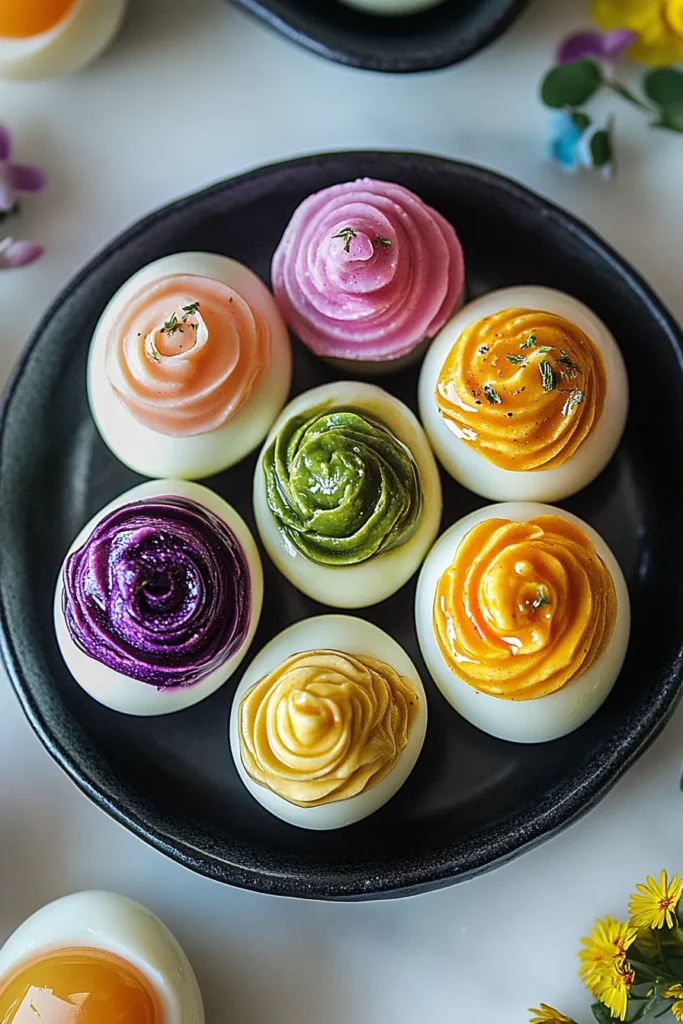
Bright, pastel-hued deviled eggs are exactly what your Easter table has been missing! These colorful deviled eggs take the classic appetizer everyone loves and give it a fun, festive twist that will have your guests oohing and ahhing before they even take a bite. Last Easter, I remember scrambling around for the perfect centerpiece, and when I dipped those egg whites into bowls of vibrant dyes, my kitchen felt like a tiny art studio. The result? A rainbow of egg halves that screamed “spring celebration” and tasted even better than they looked. Creamy yolk filling laced with tangy Dijon mustard and bright white vinegar, finished with a sprinkle of smoked paprika—it’s a flavor party in every bite and a visual feast on your table.
Whether you’re a beginner in the kitchen or a seasoned home cook looking for an easy, fun project, these deviled eggs are for you. With just 20 minutes of active prep time, 15 minutes of cooking, and a quick 15-minute rest, you’ll have a dozen dazzling deviled eggs ready to impress. They’re your go-to appetizer for any spring gathering, Easter brunch, or holiday snack spread. At roughly 660 calories for the whole batch, you can feel good about offering a filling, protein-packed treat that’s as delightful to look at as it is to munch on. So grab your favorite food-safe gloves, set up your dye station with little bowls of water and vinegar, and let’s get cracking—literally! This recipe proves that with a few simple ingredients and a splash of creativity, you can transform something ordinary into an extraordinary crowd-pleaser.
Before we dive into the fun of dyeing and filling, it’s helpful to get to know the star players in this recipe. Each ingredient has a special role, adding texture, tang, or that pop of color we all crave on Easter morning.
Fresh, large eggs provide sturdy whites that hold up well in the dye bath and velvety yolks that mash into a luxurious filling.
Provides a creamy base that binds the yolks, giving the filling a smooth, rich mouthfeel.
Adds a bright, tangy kick that balances the richness of the mayonnaise and enhances the egg’s natural flavor.
Used both in the yolk filling for a slight zippy finish and in the dye baths to help the colors adhere evenly to the egg whites.
Essential seasonings that bring out the best of the creamy filling and give each bite a perfectly balanced taste.
A final dusting on top of each deviled egg, adding a gentle smokiness and a pop of red color.
Your palette for Easter spring vibes—pick red, blue, green, yellow, or any fun hues to make your eggs stand out.
Acts as the medium to dilute food coloring and vinegar, ensuring the dyes coat the egg whites evenly.
Helps the color molecules bond to the eggshell proteins, delivering more vibrant and long-lasting hues.
Six little vessels to hold separate dye colors—easy to dip and watch your egg whites transform into pastel works of art.
Ready to jump into the kitchen and create these Instagram-worthy appetizers? This section breaks down each step—from boiling to dipping to filling—so you can achieve that perfect balance of creamy, tangy, and colorful.
1. Boil the Eggs
Place the eggs in a medium saucepan and cover them with cold water, about an inch above the eggs. Bring the water to a rolling boil over medium heat. As soon as it bubbles vigorously, cover the saucepan with a tight-fitting lid, remove it from the heat, and let the eggs sit for 10–12 minutes. This gentle finish ensures fully cooked whites and custardy yolks.
2. Cool in Ice Water
Using a slotted spoon, transfer the hot eggs to a bowl filled with ice water. Let them cool for about 5 minutes. This shock bath stops cooking immediately and makes peeling a breeze.
3. Peel and Halve
Carefully peel each egg under running water to remove any stubborn bits of shell. With a sharp knife, slice each egg in half lengthwise. Gently pop the yolks out and place them in a separate mixing bowl.
4. Mash and Mix Filling
Use a fork to mash the yolks until they’re completely smooth. Stir in the mayonnaise, Dijon mustard, white vinegar, salt, and pepper. Blend everything until the mixture is silky and uniform in color.
5. Prepare the Dye Baths
In six small bowls, combine 1 tablespoon of water and 1 tablespoon of white vinegar each. Add a few drops of food coloring to each bowl and stir until the dye is well-mixed. Adjust the drops to reach your desired pastel or bold saturation.
6. Dip the Egg Whites
Wearing food-safe gloves, gently dip each egg white half into a dye bowl. Let it soak for 3–5 minutes, checking periodically until you get the perfect shade. Use tongs or a slotted spoon to lift the eggs out and place them on a paper-towel-lined tray to dry.
7. Fill the Eggs
Once the colored whites are dry, spoon or pipe the creamy yolk mixture back into the center of each egg half, mounding it just enough to create a luscious, pillowy top.
8. Garnish and Serve
Finish with a light sprinkle of smoked paprika on each deviled egg. This not only adds flavor but ties together the spring color palette with a touch of warm red.
When it comes to showcasing these vibrant deviled eggs, presentation is everything. You’ve put in the work to achieve those perfect hues and creamy centers—now let’s talk about how to display them in style.
Arrange your colored deviled eggs on a crisp white platter nestled among fresh mint leaves and edible flowers. The contrast of pastel eggs against the bright greenery creates a visually stunning centerpiece that complements your Easter brunch table.
Line up the eggs in a gradient order—red to yellow to green to blue—for a rainbow effect that steals the show. Your guests will love the orderly spectrum, and it’s a conversation starter for kids and adults alike.
Tuck these eggs between slices of prosciutto, clusters of grapes, and wedges of cheese for a gourmet twist on a traditional charcuterie board. The creamy yolk filling pairs beautifully with savory meats and sharp cheeses.
Set up a DIY egg-decorating station for little ones to fill their own eggs. Provide topping options like chives, everything bagel seasoning, or extra paprika. Watching kids design and devour their own plates is half the fun!
Like any deviled egg recipe, these beauties are best enjoyed fresh, but with a little planning, you can prep ahead and store them safely without losing flavor or color. Proper storage keeps your eggs looking vibrant and tasting incredible up to two days in advance.
After assembling, place the deviled eggs in a single layer on a plate or shallow tray. Cover them loosely with plastic wrap or an airtight lid and store in the coldest part of your refrigerator (usually the back shelf). This prevents sweating and color bleeding.
If you want to prepare a day ahead, store the colored egg whites and the yolk filling separately. Keep the whites in one airtight container and the filling in another. When you’re ready to serve, just pipe the mixture into the eggs and garnish for maximum freshness.
Line the bottom of your storage container with a fresh paper towel to absorb any excess moisture. This little trick protects the delicate dyed surfaces from stickers or condensation marks.
For the best texture and flavor, enjoy your deviled eggs within two days of preparation. After that, the filling can dry out and the colors may start to fade.
I hope this guide to making colored deviled eggs for Easter has you feeling excited and confident to bring a burst of pastel perfection to your holiday spread. From the simple act of boiling and peeling to the almost-magical moment when your egg whites transform into rosy pinks, sunny yellows, and tranquil blues, every step is an opportunity to channel your inner creative chef. These deviled eggs strike the perfect balance: beginner-friendly, budget-friendly, and absolutely breathtaking as a table centerpiece or appetizer. With just a handful of pantry staples and your favorite food coloring, you’ve elevated a classic snack into a festive showstopper that your family and friends will remember long after the last egg is gone. Feel free to print this article, save it for later, or pop it in your favorite recipe binder so it’s always on hand for spring brunches, potlucks, or impromptu gatherings.
As you try out this recipe, I’d love to hear how your colored deviled eggs turn out. Did you mix unconventional hues? Experiment with extra garnishes? Share your comments, questions, or any fun twists you added to make this recipe uniquely yours. And if you’d like more inspiration, check out the FAQ section below for helpful tips and troubleshooting advice. Whether you’re a deviled egg devotee or a curious newcomer, these little bites of Easter joy are guaranteed to become a seasonal tradition you’ll look forward to year after year. Happy dyeing, dipping, and filling—and may your Easter table be as bright as your spirit!
Pastel-hued egg whites cradle a creamy, tangy yolk filling spiced with Dijon mustard and smoked paprika, creating a stunning and flavorful centerpiece for any spring celebration.

Hi, I'm Matthew Roberts, founder of Food Recipes USA! As a culinary historian and fourth-generation restaurateur, I've dedicated my life to preserving, celebrating, and evolving the rich tapestry of American cuisine.