
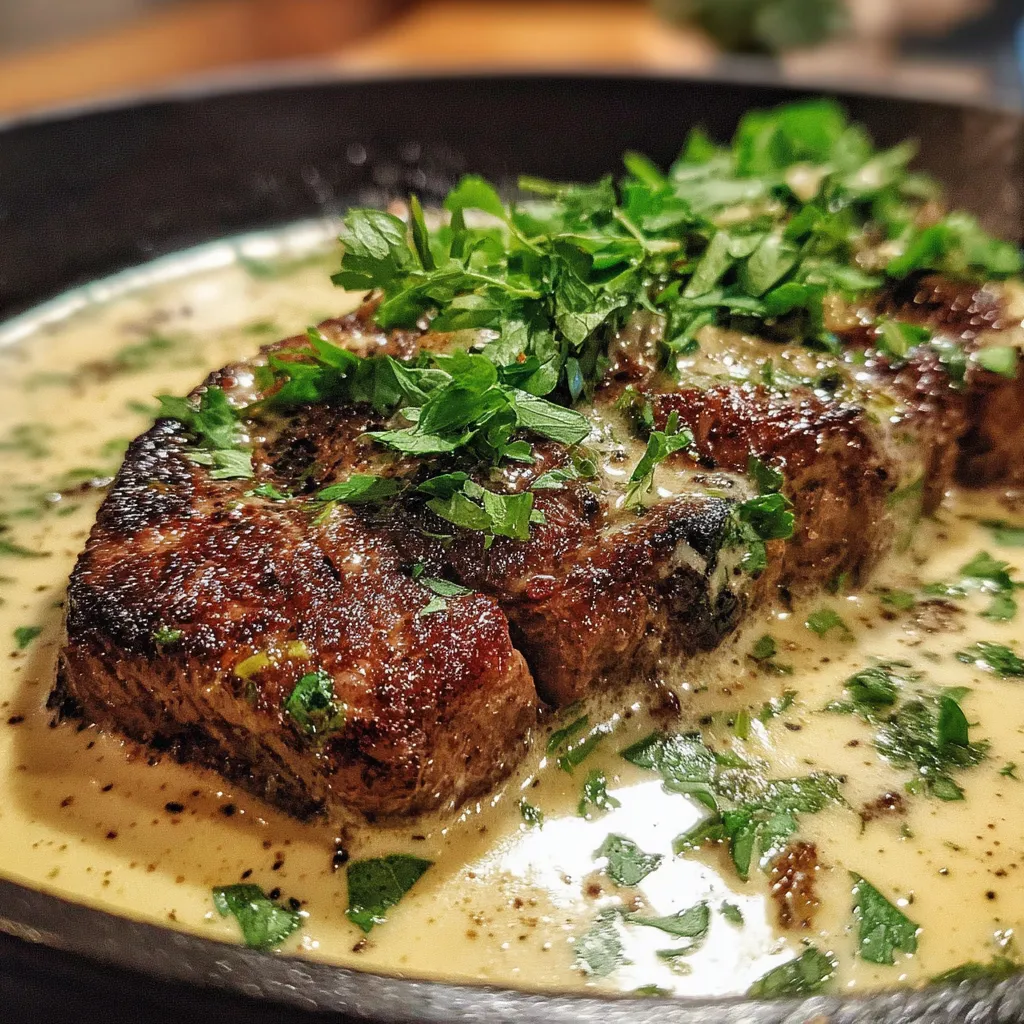
Crisp, charred edges give way to a tender bavette steak drenched in a velvety whiskey garlic cream sauce that clings to every juicy slice. This dish brings together straightforward ingredients and a trusty cast iron skillet to create a restaurant-worthy meal at home. With its rich, creamy texture and subtle herb notes, it’s the kind of dinner that sparks smiles around the table—no special cooking degree required. Grab your pan, a glass of your favorite bourbon, and let’s get cooking!
Before you fire up the skillet, let’s gather the stars of the show—simple ingredients that deliver maximum flavor.
With your ingredients at the ready, it’s time to transform a simple cut of beef into something truly special. These steps guide you through prepping, searing, and building a majestic cream sauce—each moment designed to bring out the steak’s full flavor and ensure every slice is bathed in luscious whiskey-garlic goodness.
1. Bring the bavette steak to room temperature by removing it from the refrigerator 30–45 minutes before cooking; this promotes even cooking throughout.
2. Pat the steak dry with paper towels, then season generously with salt and black pepper on both sides to develop a flavorful crust.
3. Heat a large cast iron skillet over medium-high heat. Once it’s shimmering hot, add the olive oil and swirl to coat the pan.
4. Carefully place the steak in the skillet and sear untouched for 4–5 minutes, allowing a deep golden-brown crust to form.
5. Flip the steak and sear the opposite side for another 4–5 minutes for medium-rare. Adjust timing if you prefer a different doneness.
6. Transfer the steak to a cutting board, tent loosely with foil, and let it rest for about 10 minutes so juices redistribute.
7. In the same skillet, add the minced garlic and sauté for about 1 minute until fragrant, watching closely to prevent burning.
8. Carefully pour in the whiskey, scraping the bottom of the pan with a wooden spoon to release browned bits. Simmer 2–3 minutes until the alcohol cooks off.
9. Stir in heavy cream, Dijon mustard, Worcestershire sauce, and fresh thyme; cook for 3–5 minutes, stirring occasionally, until the sauce thickens slightly.
10. Slice the rested bavette steak against the grain into thin strips to maximize tenderness.
11. Plate the steak strips, drizzle generously with the whiskey garlic cream sauce, and garnish with chopped parsley.
Serve this dish hot from the skillet or transfer to a warm platter for a striking presentation. The creamy sauce pairs beautifully with a variety of sides, turning a simple steak dinner into a memorable feast around the table.
A flawless bavette steak is all about timing, temperature, and a few insider tweaks. Keep these pointers in mind to impress even the pickiest carnivores, and don’t be afraid to make the recipe your own as you get comfortable.
Whether you have leftover steak strips or extra sauce, storing properly keeps everything tasting fresh and flavorful for your next meal.
Here are quick answers to your top questions—consider this your mini steak FAQ, straight from the skillet to your screen.
A: Rest the steak for about 10 minutes loosely tented with foil. This allows the juices to redistribute throughout the meat, ensuring a juicier and more tender bite when you slice it.
A: For medium-rare, sear 4–5 minutes per side. For rare, reduce to about 3–4 minutes per side. For medium, increase to 5–6 minutes per side. Use an instant-read thermometer: 125°F for rare, 130–135°F for medium-rare, and 140–145°F for medium.
A: After adding the whiskey, you’ll see bubbling and steam as alcohol evaporates. Simmer for 2–3 minutes, scraping up browned bits. When the raw alcohol smell dissipates and the liquid reduces slightly, it’s ready for cream.
A: Yes. Bourbon works similarly since it’s a type of whiskey. For a different twist, use a good-quality scotch for a smokier note or brandy for a fruitier depth. Keep the same quantity.
A: Aim for a 1 to 1½-inch thickness. This size allows you to get a good sear on the outside while keeping the interior at your desired level of doneness.
A: Marinating 2–4 hours or overnight can add depth of flavor. Use a simple marinade of olive oil, minced garlic, thyme, mustard, and a splash of whiskey or vinegar. Pat dry and season again before searing.
A: Bavette has long muscle fibers. Cutting against the grain shortens these fibers, making each slice more tender and easier to chew. Identify the direction of the lines in the meat and slice perpendicular to them.
This cast iron bavette steak with whiskey garlic cream sauce works because it marries a boldly seared steak with a sauce that’s both creamy and complex—no fancy techniques required. The whiskey brings warmth and depth while garlic and thyme keep it balanced. You can print this article and save it for the next time you want a showstopper dinner that feels impressive but is easier than it looks. If you give it a try or have any questions, drop a comment below—I’d love to hear how it turns out or help troubleshoot any part of the process!
Thick bavette steak seared to a caramelized crust, then sliced against the grain and drenched in a creamy whiskey-infused garlic sauce. The sauce’s rich aroma and silky texture elevate each tender, flavorful bite.

Hi, I'm Matthew Roberts, founder of Food Recipes USA! As a culinary historian and fourth-generation restaurateur, I've dedicated my life to preserving, celebrating, and evolving the rich tapestry of American cuisine.