
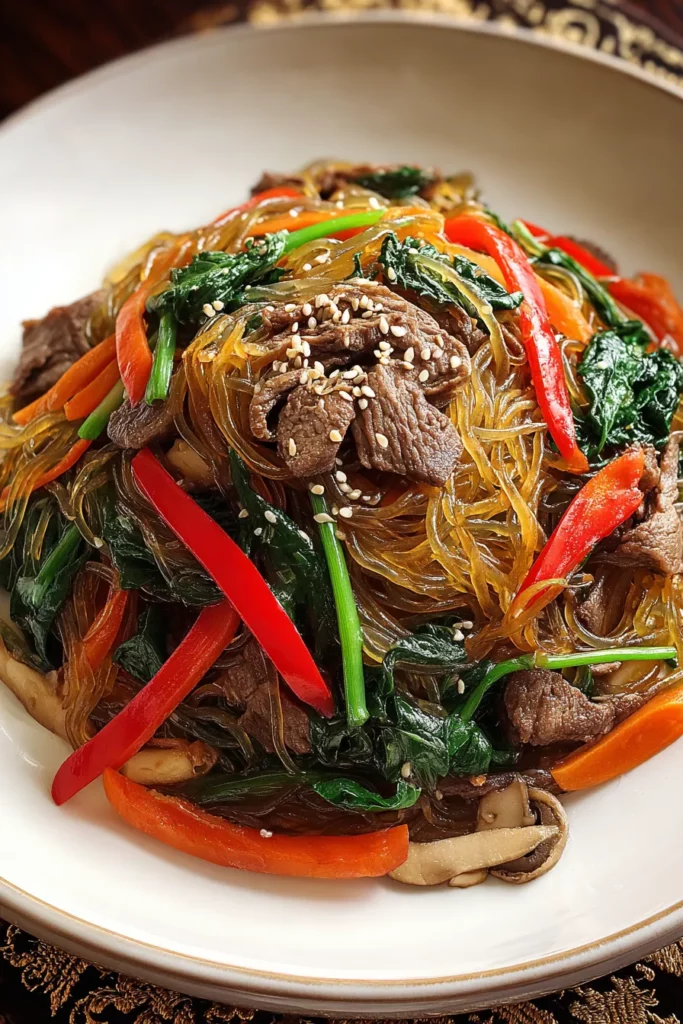
There’s something irresistible about a platter of glossy noodles intertwined with vibrant vegetables and tender slices of beef. This Authentic Korean Stir-Fried Japchae with Tender Vegetables invites you into a world of chewy sweet potato noodles (dangmyeon) dancing alongside crisp carrots, silky spinach, and earthy mushrooms. Each forkful delivers a symphony of textures and flavors—savory, slightly sweet, and nutty, thanks to the perfect balance of soy sauce, sugar, and toasted sesame oil. Whether you’re planning a cozy weeknight dinner or looking to impress guests at a festive gathering, this dish fits the bill. It’s more than just a side dish; it’s a celebration of Korean cuisine, bursting with color and personality.
What makes this japchae truly authentic is the attention to detail in every step: marinating the beef for just the right amount of time, boiling the noodles until they’re translucently tender, and stir-frying each vegetable to maintain its unique character. The result? A harmonious blend of chewy noodles, succulent beef, and a medley of vegetables that taste fresh and vibrant. With a difficulty level marked as Intermediate, this recipe promises a rewarding cooking adventure that takes about 30 minutes of prep, 20 minutes of cooking, and a 15-minute rest for the flavors to meld. At around 400 calories per serving, it’s both satisfying and nutritious—perfect for lunch or dinner. Let’s dive in and savor the rich flavors of authentic Korean japchae, and trust me—it’s a dish you’ll want to make again and again.
Before we get cooking, let’s explore the vibrant lineup of ingredients that bring this japchae to life. Each component plays an essential role in building layers of flavor, texture, and color, so gathering everything in advance ensures a smooth, joyful cooking experience.
These translucent, chewy noodles form the heart of japchae. They absorb the savory-sweet sauce beautifully and maintain a springy bite.
Thinly sliced for quick cooking, the sirloin adds rich umami and a tender, meaty contrast to the vegetables.
This introduces depth and saltiness to the marinade, infusing the beef with classic Korean umami.
Balances the soy sauce in the marinade and helps caramelize the beef during stir-frying.
A small amount in the marinade imparts a toasty, nutty aroma that permeates every slice of beef.
A neutral oil used for high-heat stir-frying without overpowering the other flavors.
Julienned for a crisp, sweet bite and a pop of vibrant orange color.
Thinly sliced to lend sweetness and a slight crunch when quickly sautéed.
Adds juicy sweetness and a bold splash of red while keeping the texture light.
Blanched and drained, it brings a tender, leafy green freshness that balances the heartier ingredients.
Offer an earthy flavor and meaty texture that complement both the beef and noodles.
Minced garlic builds a fragrant foundation, releasing aromatic oils at the start of sautéing.
Coats the noodles and vegetables with savory depth, harmonizing all of the flavors.
Lightly sweetens the overall dish, creating a nuanced balance with the soy sauce.
Drizzled at the end, it gives the japchae a glossy sheen and unmistakable nutty aroma.
Sprinkle on top for a final crunch and visual appeal, reinforcing the sesame theme.
Season to taste, ensuring every bite is perfectly balanced.
Let’s walk through the seven essential steps that transform these beautiful ingredients into a plate of delectable japchae. Each step is designed to maximize flavor and preserve the delightful textures of your noodles, beef, and vegetables.
1. Marinate the beef: In a bowl, combine the sliced beef with 1 tablespoon soy sauce, 1 teaspoon sugar, and 1 tablespoon sesame oil. Use your hands or a spoon to massage the marinade into each piece. Cover and let it rest for at least 15 minutes so the flavors penetrate deeply.
2. Boil the sweet potato noodles: Bring a large pot of water to a rolling boil. Add the noodles and cook until they turn translucent and tender, about 8–10 minutes. Drain in a colander, rinse under cold water to stop cooking, and gently shake off excess moisture. If the strands are too long, cut into shorter lengths for easier eating.
3. Stir-fry the beef: Heat 1 tablespoon vegetable oil in a large skillet or wok over medium-high heat. Add the marinated beef in a single layer, letting it sear for about 1 minute before stirring. Cook until the beef is just cooked through, then transfer to a plate and set aside.
4. Sauté the vegetables: In the same pan, add a little more oil if needed. Toss in the minced garlic and sauté until it becomes fragrant and slightly golden. Add the onions, julienned carrots, and sliced bell peppers. Stir-fry for 2–3 minutes, until the vegetables are slightly tender but still crisp.
5. Cook the mushrooms and spinach: Push the other vegetables to one side of the pan and add the sliced mushrooms. Stir-fry until they release their liquid and begin to brown, about 3–4 minutes. Finally, fold in the blanched spinach and gently toss with the other vegetables to distribute evenly.
6. Combine noodles and season: Return the cooked beef to the pan and add the prepared noodles. Pour in 3 tablespoons soy sauce, 1 tablespoon sugar, and 2 tablespoons sesame oil. Using tongs or two spatulas, toss everything together until every strand and slice is coated in the glossy sauce. Heat through for another 2 minutes.
7. Finish and serve: Transfer your japchae to a serving platter. Sprinkle toasted sesame seeds on top and season with salt and pepper to taste. Serve warm as a main dish or side dish, or let it cool to room temperature for a refreshing twist.
This japchae is wonderfully versatile, so feel free to get creative when presenting it. Whether you’re hosting a casual dinner or a festive brunch, these serving ideas will help showcase the dish’s vibrant colors and layered flavors.
Japchae is delightful fresh, but it also keeps remarkably well, making it an excellent make-ahead dish for busy weeknights or meal prep. Proper storage methods help preserve the textures and flavors you worked so hard to build.
We’ve journeyed through the heart of Korean home cooking, exploring every step from marinating the beef to the final sesame seed garnish that makes this Authentic Korean Stir-Fried Japchae with Tender Vegetables such a showstopper. This recipe brings together the chewy texture of sweet potato noodles, the savory depth of marinated beef, and a rainbow of crisp, nutritious vegetables. You’ve learned how each ingredient plays its part, how to execute key techniques like stir-frying and blanching, and even how to store leftovers for days of delicious lunches or dinners. With a total time investment of about an hour—plus a 15-minute rest—you end up with a dish that looks and tastes like it came from a restaurant kitchen.
Feel free to print this article and save it for later, tucking it into your recipe binder or pinning it on the fridge. You’ll also find a helpful FAQ section below, covering common questions and troubleshooting tips. If you try this recipe, I’d love to hear how it turns out! Drop your comments, share any tweaks you made, or ask for clarification on any step. Your feedback helps me refine these recipes and inspires other home cooks to give japchae a try. Happy cooking, and here’s to many more delicious adventures in your kitchen!
Experience a harmonious blend of chewy sweet potato noodles, marinated beef, and a medley of colorful vegetables stir-fried to perfection. It’s a comforting dish that’s both satisfying and nutritious.

Hi, I'm Matthew Roberts, founder of Food Recipes USA! As a culinary historian and fourth-generation restaurateur, I've dedicated my life to preserving, celebrating, and evolving the rich tapestry of American cuisine.